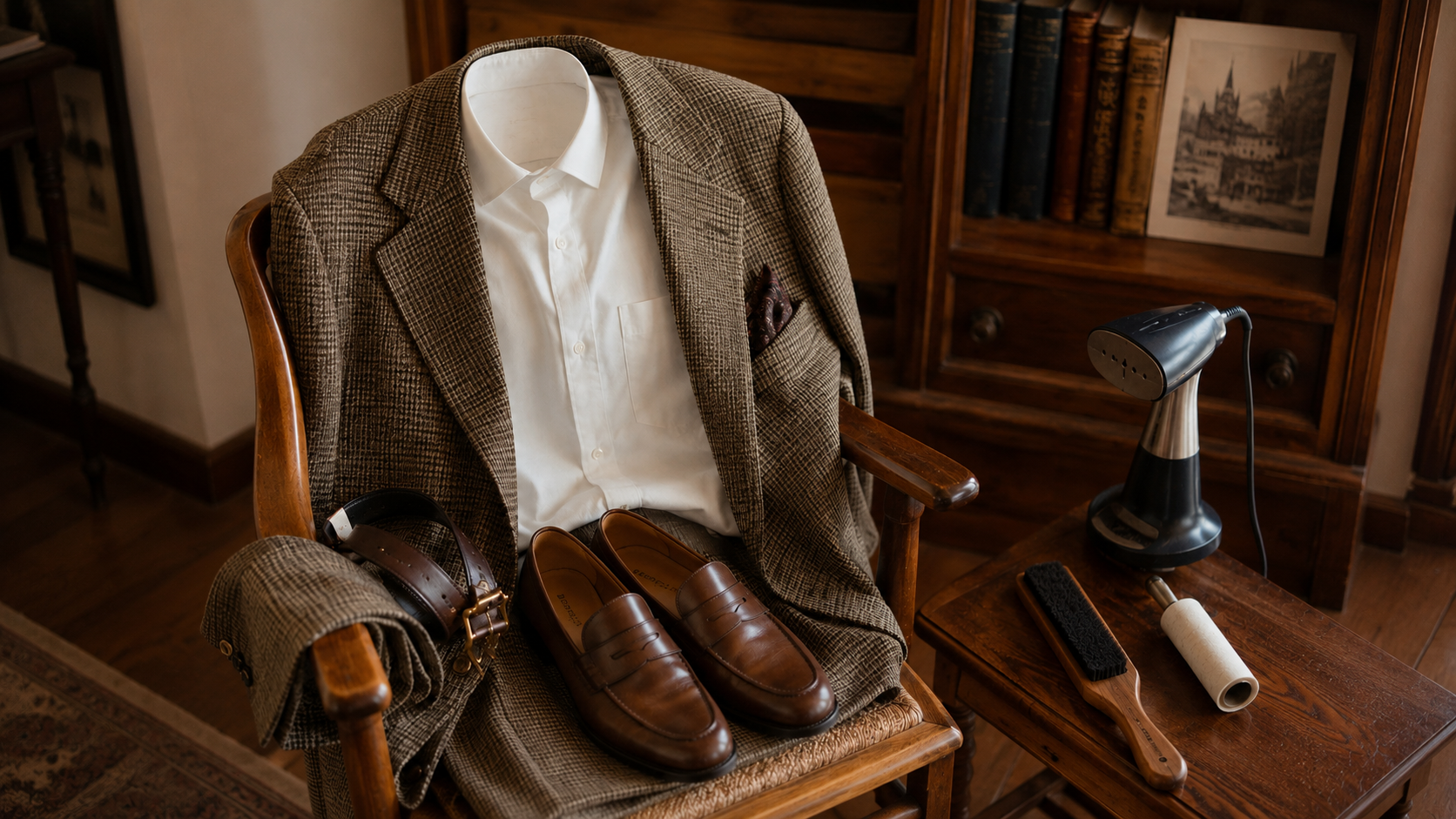
Second-hand clothes do not need to look second-best.
“Expensive” is slightly misleading, because plenty of expensive clothes look dreadful. What usually makes a garment read as valuable is more ordinary: good fit, sound cloth, a clean line, maintained details and the sense that somebody chose it deliberately.
Age can help. Softened leather, settled wool, fading and an old repair may all improve a garment. Neglect is different: lint, collapsed shape, loose buttons, tired shoes and a hem quietly giving up beneath you make even good clothes look accidental.
The useful question is whether the garment is worth restoring, and which visible details are stopping it from looking as good as it could.
First, decide whether the garment can actually be improved
A clothes brush and an iron can do a surprising amount. Neither can negotiate with a jacket whose basic fit is wrong.
Before spending time or money on a second-hand piece, check the things that are hardest to change. Button or zip it. Sit down. Reach forwards. Raise your arms. Walk around in it. Trousers that look excellent while you stand politely in front of a mirror may pull across the seat as soon as you move; a jacket can hang beautifully until reaching for something sends the whole garment towards your ears.
For clothes that need to survive office life, I use the same half-past-two test: what still fits and feels right after several hours of actually sitting in it?
Pay particular attention to the shoulders, armholes, upper back and trouser rise. Alterations vary enormously with construction. A plain hem may be a contained job; shortening a tailored sleeve can become more involved when there is a vent, working buttonholes or complicated cuff construction. Changes through the shoulders and armholes can require much more of the jacket to be opened and rebuilt.
Tailors use balance for the relationship that allows a jacket to hang correctly from front to back on the wearer. If a jacket twists, rides noticeably higher at one end or refuses to hang cleanly even when the basic size seems right, I would treat that as a reason to pause rather than assume alteration will make it disappear.
Then inspect the cloth. Wear at a cuff may be repairable, and a short opening in a lining seam can be a boring fault rather than a fatal one. Cloth worn almost transparent, brittle leather or extensive insect damage is a much less attractive proposition.
I use a stricter version of this test for winter coats in my guide to buying a second-hand wool coat: the parts that are difficult to change need to be right before the smaller repair jobs become interesting.
On tailored jackets, look closely at the fronts. Many jackets use fusible interlining — a supporting layer bonded to the outer cloth to give the garment structure. Irregular bubbling or rippling across a fused area can indicate that the layers are no longer behaving properly together.
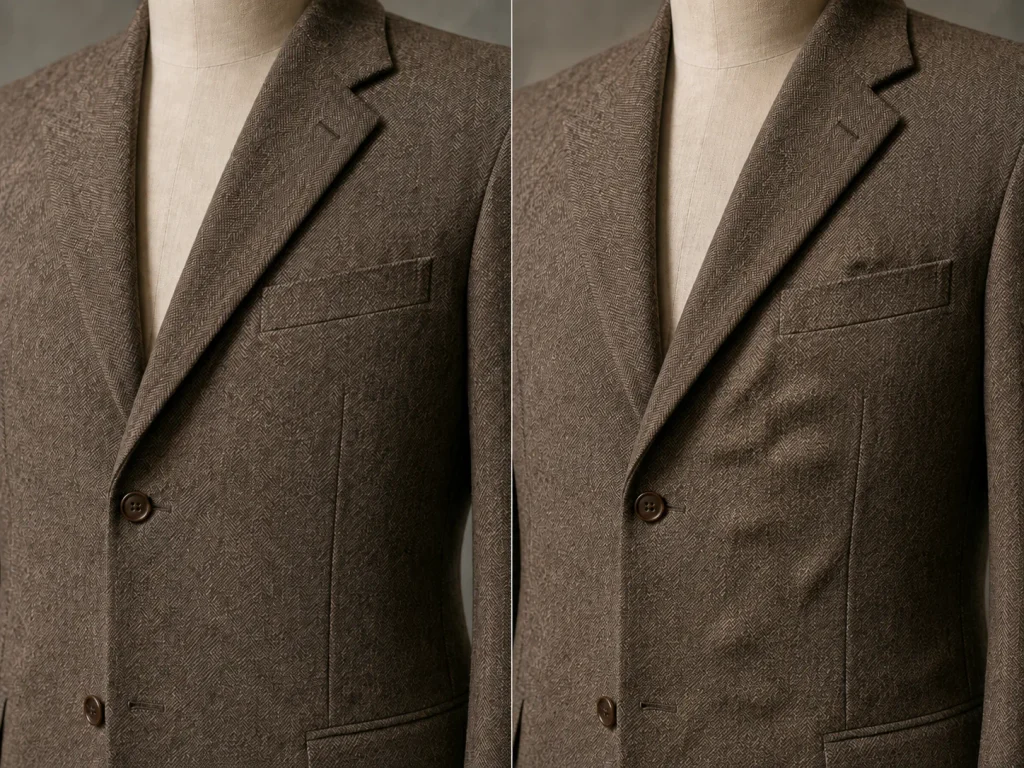
The bond between interlining and cloth can fail, but that is not the only possible cause of a rippled surface. Research into fused garment parts has also linked rippling with differences in shrinkage and the mechanical behaviour of the fabrics involved. In other words, treat unexplained bubbling as a construction warning rather than diagnosing the exact fault from the shop floor.
Ordinary creasing may respond to careful pressing or steaming. Persistent irregular bubbling across a fused jacket front is different: do not buy it on the assumption that an iron will make the underlying problem disappear.
Steam will not persuade it to become a different jacket.
That is the distinction worth learning early: small visible faults can often be fixed; structural faults tend to follow you home.
If you want the less polished reality of what is actually on the rails, I’ve written separately about what charity shops actually have, including the ordinary clothes, near misses and excellent things apparently intended for somebody with completely different shoulders.
Reset the surface
Once the garment has passed the first inspection, start with the least glamorous transformation: remove the evidence that it has been sitting around.
Dust, lint and loose surface fluff can flatten colour and obscure texture surprisingly quickly. On sturdy woven wool and coats, a clothes brush is often more useful than attacking everything with adhesive rollers; smoother everyday fabrics may tolerate a lint roller perfectly well.
Pilling can be tidied carefully, but surface grooming has limits. Removing visible pills improves what you see at that moment; it does not tell you why the fabric pilled or whether the bobbling will return. I go into that properly in what pilling actually tells you about a jumper.
Check loose threads before cutting them. A harmless stray end is one thing; the beginning of an opening seam is another.
Deal with obvious dirt and stains using a method appropriate to the fibre, construction and care label. My beginner’s guide to clothing care covers washing, stain treatment and specialist care in more detail.
Restore the line of the garment
A garment often looks tired because it has lost the line it was designed to hold.
Pressing means smoothing and shaping cloth with heat, moisture and pressure by lowering and lifting the iron rather than sliding it continuously across the fabric. New Mexico State University Extension makes that distinction explicitly: ironing uses a sliding motion, while pressing is used to shape and smooth more selectively.
That makes pressing particularly useful around tailored areas, creases and seams, but the fabric still decides what it can tolerate. Check the care label and use the lowest appropriate heat for the fibre. Be cautious with unknown vintage cloth, pile fabrics, coatings and unstable dyes; excessive heat, moisture or pressure can leave marks or flatten the surface.
Look at the intended shape rather than simply chasing every wrinkle. Does the trouser crease need restoring? Is the lapel rolling naturally rather than lying crushed flat? Has a hem twisted? Does a skirt or trouser leg hang cleanly?
A tailored jacket should still look three-dimensional when you finish. If it resembles something that has been laminated, enthusiasm has overtaken the assignment.
Repair the details that make neglect obvious
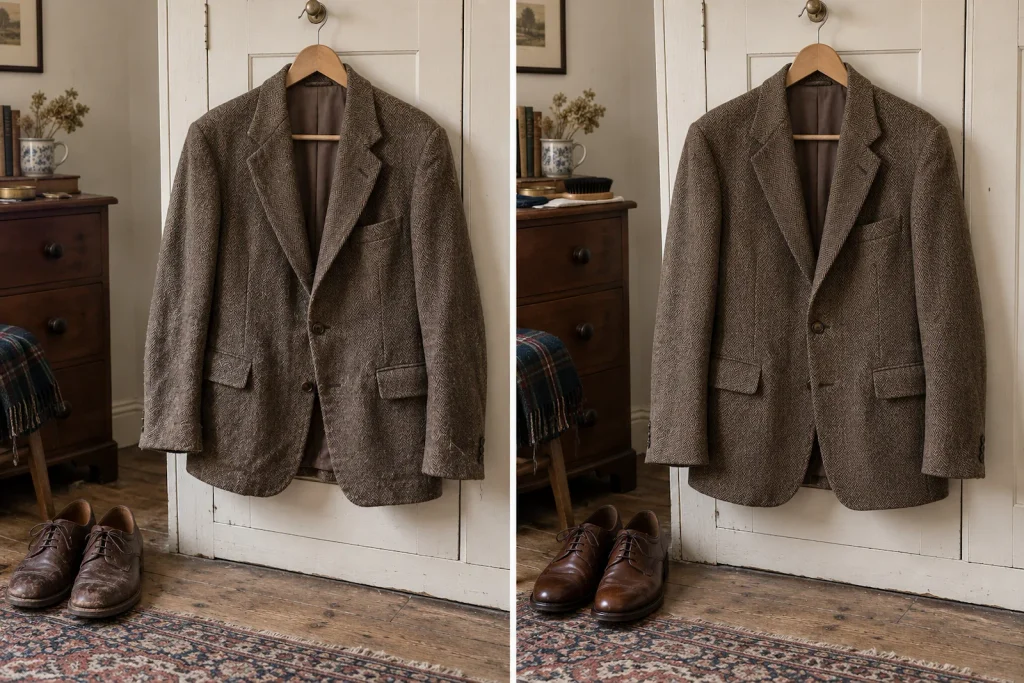
Small faults attract attention because the eye reads them as unfinished. A loose button, sagging hem or opening seam may be technically minor while still making the whole garment look tired, so deal with those before trying to style around them.
Buttons deserve particular attention. Replace missing ones securely and check whether an odd replacement looks intentional or simply accidental. On heavier coats and jackets, a sew-through button may need a thread shank — a short stem of thread beneath the button that leaves enough space for the overlapping cloth when the garment is fastened. University of Kentucky Cooperative Extension specifically recommends a shank to accommodate the thickness of the fabric and allow the button to sit properly over the buttonhole.
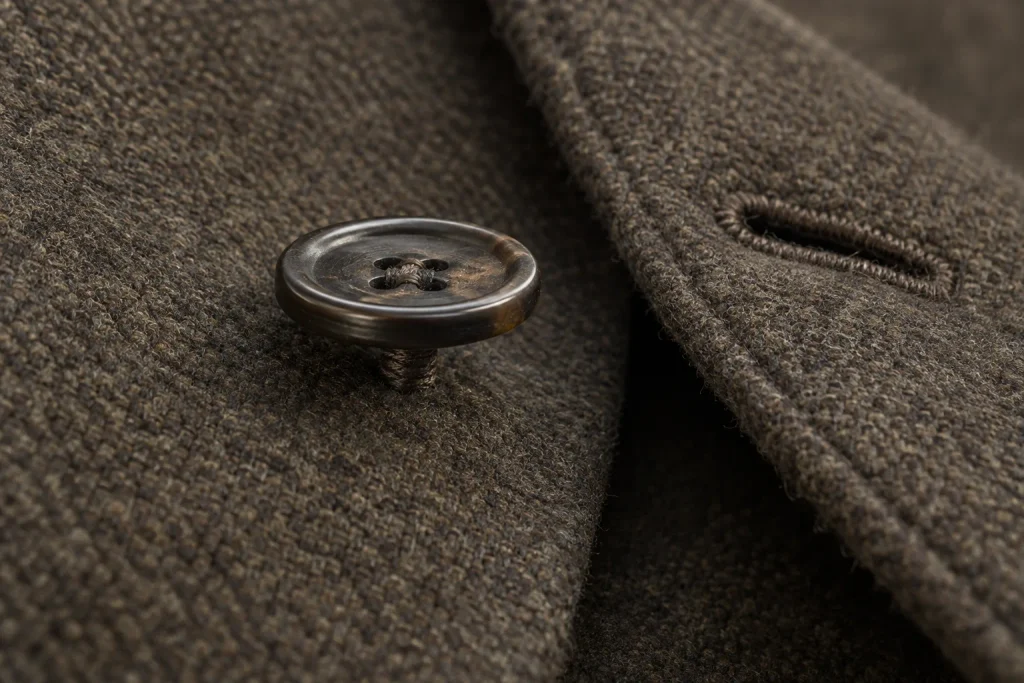
Replacing an entire button set can make sense when matching the originals is impossible, but choose buttons that suit the scale, weight and style of the garment rather than assuming larger, shinier hardware automatically looks more expensive.
Repair fallen hems and opening seams before they spread, and deal with worn pocket edges while there is still enough sound cloth to work with.
There are limits to what deserves rescuing. A cheap garment that needs substantial reconstruction, a complete new lining and specialist treatment before you can wear it may simply be an expensive project wearing a low price tag.
Second-hand shopping does not confer guardianship of every lonely jacket in Britain.
Do the shoes and bag as well
A carefully restored coat worn with neglected shoes still looks like a carefully restored coat worn with neglected shoes.
Give the accessories the same basic inspection as the garment. Clean shoes according to their material, replace failing laces and look at worn heels, separating soles and damaged linings before deciding that polish will solve the problem. With bags, remove dirt from seams and corners, check straps and fastenings, and clean or condition leather only with something suitable for that particular finish.
Condition matters more than prestige here. A modest pair of shoes in good repair will usually contribute more to an outfit than an expensive pair that looks as though it has been stored beneath a pub.
If you are deciding whether a used pair is worth buying in the first place, my guide to buying second-hand shoes — and when not to goes much further into soles, uppers, established creasing and the point at which repairability stops being a reason to hand over money.
Make the whole outfit look deliberate
Once the garment itself is sound, the clothes around it decide whether it looks like part of a wardrobe or merely an interesting thing you found.
Start with proportion. Look at where a jacket finishes against the trouser rise, how much width sits beneath a substantial coat, and whether an oversized shirt has enough structure elsewhere in the outfit to look intentional. A short jacket may suddenly make sense with higher-waisted trousers; fuller trousers can give a large shirt enough weight beneath it; a long coat can pull several ordinary layers into one clear silhouette.
Texture and colour can then provide continuity between pieces bought years apart. Brushed wool beside polished leather gives you an obvious contrast; corduroy adds another matte surface without competing with either. Repeating a colour in shoes, knitwear, a belt or a bag can make unrelated garments feel connected without requiring a strict palette.
Pay attention to sheen as well as colour. One high-sheen surface among otherwise muted cloth can become the outfit’s focal point whether you intended it to or not. That is a question of surface, not fibre: matte synthetics can sit quietly, while silk or polished leather can catch a great deal of light.
Strong garments do not automatically need quiet companions. When I worked out how to wear a dramatic shirt without looking like costume, fuller trousers were stronger than the restrained pair because their scale answered the shirt rather than retreating from it.
The broader principle is the same one I use when building a storybook wardrobe without looking like costume: distinctive pieces work together when they share enough agreement in proportion, colour, texture or formality. They do not need to match, and they certainly do not need to become boring.
Do not erase the age
The aim is to restore the garment’s line, surface and function without sanding away everything that proves it has already had a life.
Softened leather, a repaired lining, gentle fading and the small polish marks that come from actual wear can all belong. What matters is whether the garment still looks cared for and structurally sound.
Stop once the neglect has gone. If the next improvement would make the piece less itself rather than more wearable, leave it alone.
The age can stay.