Author: Billy

  • How to Look After Velvet, Silk and Other Fabrics That Ruin Easily.

    How to Look After Velvet, Silk and Other Fabrics That Ruin Easily.

    ‘Delicate’ is an annoyingly vague word.

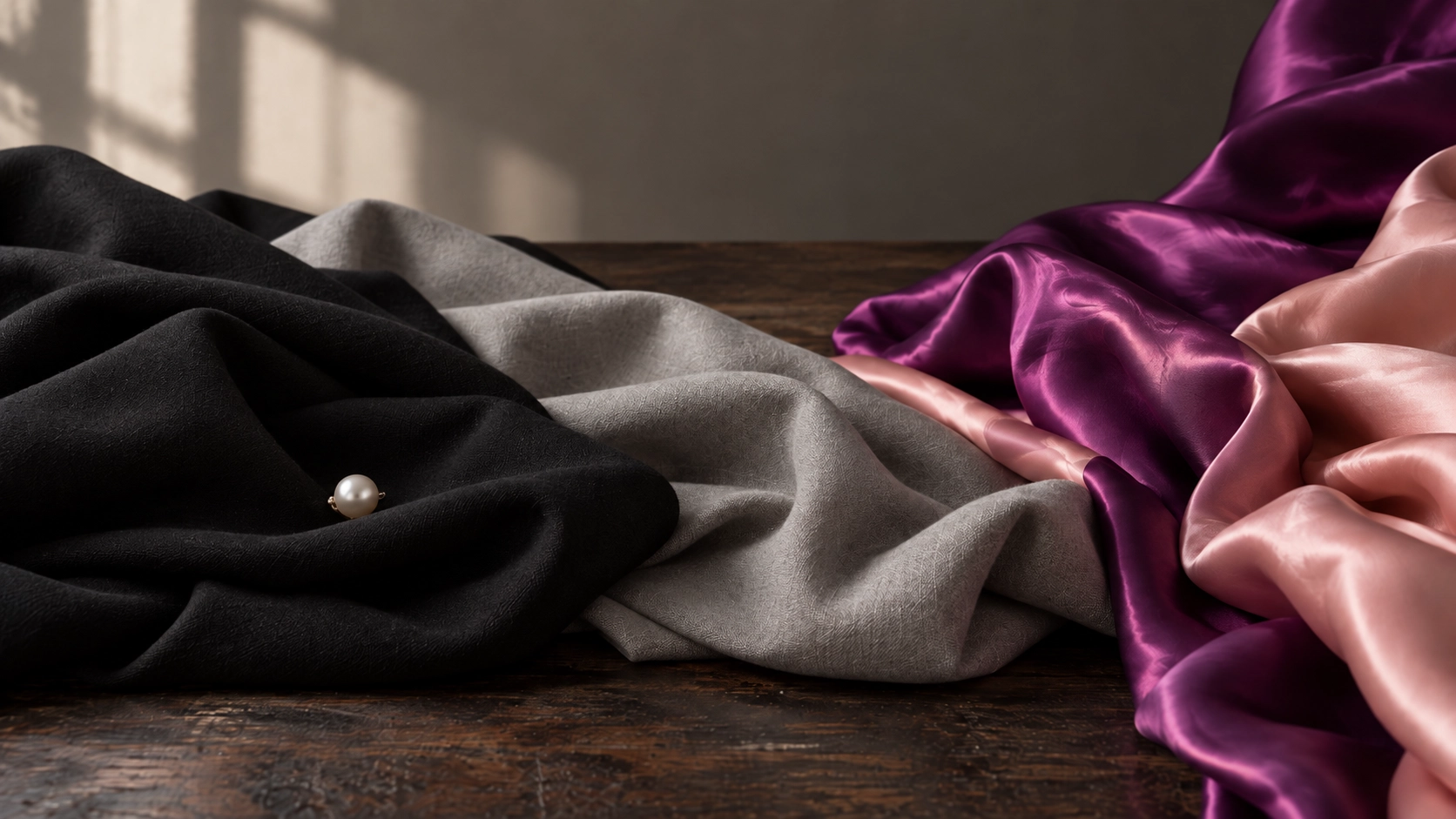
    A silk blouse, velvet jacket and cashmere shirt can all qualify, but they are not delicate in the same way. Velvet has a pile that can be flattened. Silk can mark, snag or react badly to the wrong treatment. Knitted cashmere can shrink or lose its shape. Add lining, interfacing, beading or an unstable dye and the fabric itself may no longer be the most vulnerable part of the garment.

    This is why I distrust the idea that delicate clothes simply belong on the washing machine’s delicates setting. Sometimes they do. Sometimes that is how a perfectly good garment acquires an entirely new silhouette.

    The useful question is not “Is this fabric delicate?”

    It is: what could actually go wrong with this particular garment?

    Continue reading
  • What Would a Fantasy Bard Actually Wear in Real Life?

    What Would a Fantasy Bard Actually Wear in Real Life?

    The fantasy bard is very easy to dress badly.

    I play Dungeons & Dragons regularly, so I know the wardrobe that starts assembling itself the moment somebody says bard. Begin with a white shirt whose sleeves have ambitions of their own. Add an embroidered waistcoat. Put something velvet over that, preferably in burgundy. Tie a scarf somewhere it does not need to be tied, add several rings, a pendant, a feathered hat and boots with just enough curl at the toe to create uncertainty about whether a jester is involved.

    You now look unmistakably like a bard.

    Unfortunately, you also look as though you may be required to sing for your supper.

    The obvious solution is to tone everything down. I don’t think that is quite right.

    A bard is a performer. Being noticed is not an unfortunate side effect of the clothes; it is part of the point. Colour, pattern, jewellery, unusual tailoring and fabrics that react beautifully to light all belong here. A coat that enters the room half a second before its wearer is entirely acceptable.

    The challenge is not making a bard quieter. It is translating what fantasy clothing is trying to say into clothes that still make sense once the tavern becomes a pub, the lute disappears and somebody has to catch the bus home.

    Continue reading
  • What Charity Shops Actually Have

    What Charity Shops Actually Have

    The internet has given charity shops an inventory problem.

    Watch enough second-hand shopping videos and you begin to suspect that every British high street contains a dimly lit room full of 1970s suede jackets, hand-knitted Aran jumpers, forgotten designer tailoring and one immaculate leather bag priced by somebody who has never heard of the internet.

    Then you go in.

    There are six pairs of skinny jeans, a supermarket blouse, three dresses from the same fast-fashion chain, a mug commemorating an event you did not attend and a suspicious number of copies of the same celebrity autobiography.

    This is not evidence that you have found a bad charity shop. It is evidence that you have found a charity shop.

    Continue reading
  • Edinburgh Ghost Stories: The Tales That Followed Me Home

    Edinburgh Ghost Stories: The Tales That Followed Me Home

    Edinburgh was hot for most of our visit, so the first supernatural benefit of the Double Dead Tour was that the underground vaults had excellent natural air-conditioning.

    By the time it began to rain in Greyfriars, the city had finally arranged the weather properly.

    We did not see any ghosts. Some American visitors said they had seen something curled in the foetal position in the corner of one of the vaults, alarmingly close to where I had been standing. I saw stone, shadow and absolutely nothing else. My psychic sensitivity is roughly that of a blueberry scone.

    Even so, the tour stayed with me. Not because it proved anything paranormal, but because Edinburgh understands how to make a story cling to a place. Give somebody a ring of keys, lead them through a locked gate and tell them what other people claim to have seen there, and an ordinary dark corner becomes very difficult to look at casually.

    Continue reading
  • Vintage Shops in Edinburgh for Menswear: Where I’d Go Again

    Vintage Shops in Edinburgh for Menswear: Where I’d Go Again

    Edinburgh gave me two things I will remember for a very long time: a fiancé, after I proposed to James while we were there, and a vintage-clothing haul large enough to create a minor luggage problem.

    Most guides to vintage shopping are not especially helpful when you primarily wear menswear. A shop may be beautifully arranged and full of excellent clothes, yet contain one small rail of men’s shirts somewhere behind several rooms of dresses. There is nothing wrong with that, but it is useful to know before devoting part of a short holiday to it.

    I visited two Armstrongs branches and several smaller vintage shops across Edinburgh. Stock naturally changes from week to week, so this is not a promise of what will be waiting on every rail. It is a first-hand account of which shops gave me the best menswear selection, which were still worth seeing for other reasons and where I would begin on my next visit.

    Continue reading
  • How to Store Wool Clothes and Prevent Moth Damage

    How to Store Wool Clothes and Prevent Moth Damage

    In stories, moths rarely arrive with entirely innocent intentions. They gather around forbidden libraries, pass through ruined halls and circle ancient lamps in pursuit of dangerous illumination. Before we get to how to store wool clothes safely, it helps to understand why these small creatures favour shadowed rooms, forgotten corners and garments left undisturbed.

    Real clothes moths are rather less dramatic. They are not interested in cursed manuscripts or enchanted cloaks. They want dark, quiet places where vulnerable fibres have been left undisturbed.

    I would love to tell you that my wool clothes spend summer folded in labelled boxes inside a dedicated storage cupboard. In reality, I have a small bedroom that I share with my partner, and I am usually pleased if everything fits into the wardrobe at all.

    That is one reason I prefer moth prevention to be simple. I do not have the time or space for an elaborate seasonal ritual, and because I get cold easily and live in England, my warmer coats are never very far out of reach anyway.

    Fortunately, storing wool safely does not require specialist conservation equipment or a picturesque wall of matching boxes. Clean clothes, regular movement and the occasional proper inspection matter far more than decorative sachets and complicated home remedies.

    Continue reading
  • How to Make a Modern Room Feel Old-World Without Filling It with Clutter

    How to Make a Modern Room Feel Old-World Without Filling It with Clutter

    Old-world character is easy to mistake for quantity. Add another candlestick, another stack of books, another apothecary bottle and, eventually, the scholar’s study becomes a storage problem.

    The rooms I am drawn to are rich and layered, but their magic does not come from covering every available surface. It comes from dark wood, softened colour, warm pools of light, trailing plants, worn materials and objects that look as though somebody chose them for a reason. The room suggests a scholar, herbalist, traveller or woodland host without requiring a plastic cauldron or a sign announcing that a witch lives there.

    That distinction matters. A fantasy-inspired interior should work much like a fantasy-inspired outfit: establish the silhouette, choose a coherent palette, add texture and finish with one or two memorable details. Stop before inspiration becomes costume.

    Continue reading
  • Dark Academia Outfits You Can Actually Wear in Real Life

    Dark Academia Outfits You Can Actually Wear in Real Life

    Dark academia is easy to recognise in photographs. There are shadowed libraries, old books, severe coats and enough brown wool to upholster a respectable country house.

    Turning that atmosphere into clothes you can wear to work, the shops or a quiet drink is slightly more complicated.

    Dark academia was not originally a clearly defined literary genre with agreed conventions. It is better understood as an aesthetic assembled and named after the fact: a mixture of academic nostalgia, classical literature, old institutions, sombre imagery and traditional clothing. In a peer-reviewed study of the subculture, literary scholar Simone Murray describes dark academia as an online performance of bookishness and identifies Donna Tartt’s The Secret History as its defining text.

    The label is now also applied loosely to novels about elite schools, obsessive students, secret societies, intellectual ambition and the occasional murder that makes everyone’s reading schedule considerably less manageable.

    Continue reading
  • A Beginner’s Guide to Clothing Care for a Storybook Wardrobe

    A Beginner’s Guide to Clothing Care for a Storybook Wardrobe

    Clothing care can sound like a discipline requiring a cupboard full of specialist products, a laundry room the size of a minor estate and several firmly held opinions about steam.

    In practice, most garments benefit from a much simpler approach: inspect them, use the gentlest suitable method and deal with small problems before they become expensive ones.

    A good care routine does not mean washing everything constantly or treating every second-hand coat as a museum object. It means learning which clothes should be brushed, aired, folded, washed, pressed, repaired or left in the hands of a professional.

    Good care is also one of the simplest ways to make second-hand clothes look more expensive: fit matters, but so do clean lines, brushed cloth and shoes that have not surrendered.

    This guide covers the basic habits that keep an everyday wardrobe clean, presentable and wearable for longer. Care labels and manufacturer instructions should always take priority, particularly when a garment contains mixed fibres, lining, interfacing, decoration or an unfamiliar finish.

    Continue reading
  • How to Make Second-Hand Clothes Look Expensive

    How to Make Second-Hand Clothes Look Expensive

    Second-hand clothes do not need to look second-best.

    Some of the most characterful garments have already lived a little. Softened leather, settled wool and unusual details are often the reason they are worth buying in the first place.

    The trick is not to make everything look brand new. The trick is to make it look chosen.

    A second-hand garment tends to look valuable when its cloth, cut, construction and condition work together. A good coat can carry softened edges and still look excellent; a poor one can be freshly steamed and remain badly made.

    The aim is not to disguise age. It is to recognise quality, repair the signs of neglect and style the garment with intention.

    Continue reading