An interactive guide to the parts of clothes you have probably seen for years without ever needing to name. Clothes are full of small pieces of engineering disguised as perfectly ordinary bits of cloth. The strip beneath a pocket flap has a name. So does the band holding up a shirt collar, the V-shaped cut at the back of a trouser waistband and the tiny leather gusset at the base of a glove finger. Most of the time, you do not need to know any of this. Then something tears, a tailor mentions a gorge, a product description promises side adjusters, or you find yourself trying to describe one particular bit of a garment as “you know, the little bit under the other bit”. This guide fixes that. Tap the marked details to see what each part is called and what it does. Use the controls above the illustration to move between the coat, shirt, trousers and glove, switch views and expose details that prefer not to be seen. If you came here for the name of one particular thing rather than to poke an overcoat for ten minutes, here's everything on the coat in one place. The gorge, or gorge line, is where the collar and lapel meet. On a notch-lapel coat like this one, it runs inwards from the notch towards the neck. Tailors also talk about gorge height — where that junction sits relative to the collarbone — which changes with fashion. The roll line is the line along which the lapel turns back from the front of the coat. It is not the outside edge of the lapel: it is the fold running from the collar area down towards the top button. In traditional tailored construction, the roll line can be shaped and stabilised so that the lapel rolls smoothly rather than behaving like a sharply pressed flap. A pocket flap is the shaped piece of cloth that hangs over an inset pocket opening. On this coat it covers the welt beneath it when the flap is down. The flap and welt are separate pieces of the pocket construction, despite doing a convincing impression of one object when everything is behaving itself. For what pocket mouths and the surrounding cloth can tell you when inspecting a used coat, see How to Buy a Second-Hand Wool Coat That Survives More Than One Winter. The welt is the narrow finished strip at the opening of this inset pocket. With the flap lowered it is largely hidden; raise the flap and the welt appears immediately beside the pocket opening. The undercollar is the underside of the collar — the surface facing you once the collar is turned up. It sits beneath the upper collar as part of the tailored collar construction and is worked around the back neck so that the finished collar sits and rolls correctly. On our illustrated coat, the undercollar happens to be made in the same-looking wool as the upper collar. Its position identifies it, not a contrasting material. A centre-back vent is the vertical opening rising from the lower back hem of a coat or jacket. Its practical purpose is greater ease of movement: the lower part of the garment can open as the wearer moves instead of remaining a closed tube. The back-neck hanger loop is the small loop secured at the inside centre back of the neckline. It is sewn in strongly enough to take the coat’s weight, so the coat can be hung by it. Construction specifications place coat and jacket hanger loops at the back neck and require them to be securely attached. The centre-back lining pleat is a vertical fold of extra lining fabric at the centre back. That spare width gives the lining ease across the upper back, allowing it to open as the wearer moves rather than pulling tight across the shoulders. Gertrude Strickland’s A Tailoring Manual describes extra centre-back lining width being formed into a pleat, while Seamwork independently uses a back pleat to provide ease and greater mobility. If the problem is not how the lining is constructed but what to do when it splits, see How to Repair a Coat Lining Seam at Home. The front facing is the shaped inner piece running along the front edge of a tailored coat. In the open coat above, it is the broad strip of outer cloth between the front edge and the smoother lining. Around the lapel, that facing turns outwards and becomes part of the visible exterior of the garment. A keyhole buttonhole is a buttonhole with a rounded eye at one end rather than a simple straight slit. Traditional menswear construction can also cord the worked buttonhole to give it additional body and strength. The open inside view makes the eye much easier to see than the buttoned front does. If you came here because the little band under a collar, the opening above a cuff or that triangle at the side seam has been annoying you for years, here's the shirt in one place. A point collar is a turn-down shirt collar with pointed ends set relatively close together. The classic form has a smaller spread between the points than wider spread-collar shapes. On this shirt, the two long points frame a fairly narrow opening at the neck. The collar stand, also called a collar band, is the separate band between the shirt neckline and the folding collar. It gives the collar its height and helps it curve around the neck. Turn the collar up and the stand stops hiding underneath it. The front placket is the finished vertical strip at the centre front of a shirt. It reinforces the opening and provides the structure for the fastening line; on this shirt, the buttonholes and buttons sit along the two overlapping fronts. A sleeve placket is the finished opening at the lower end of a shirt sleeve, directly above the cuff. It opens the sleeve far enough for the hand to pass through and is then closed neatly when the cuff is fastened. In traditional custom shirtmaking, the two-piece construction shown here is also called a gauntlet. A barrel cuff is the familiar shirt cuff that wraps around the wrist and overlaps at the fastening. It is usually a rectangular cuff piece formed around the wrist and secured with a button or snap; on this shirt, a single button closes each cuff. The back yoke is the separate panel running across the shoulders and upper back of a shirt. The shirt back is joined to its lower edge, while the front sections meet it around the shoulders. On a traditional shirt it may also have an inner yoke facing, enclosing those seams neatly. A box pleat is a symmetrical pleat formed from two folds opening away from the centre, leaving a flat section between them. On this shirt it begins directly beneath the back yoke, supplying extra cloth across the back without gathering the whole seam. The armscye is the armhole: the curved opening in a garment body into which the sleeve is set. Once the shirt is sewn, the visible curved seam around that opening is the armscye seam. It is not the long seam running down the underside of the sleeve. A shirt-tail hem is the curved lower edge associated with classic shirts: the hem rises towards the side seams and curves down again into the front and back tails. Those tight side curves are one reason shirt-tail hems take more care to sew neatly than a straight hem. A side gusset is the small triangular piece inserted at the bottom of the side seam where the front and back shirt tails meet. That junction is a stress point, and the gusset helps reinforce it. On this shirt the gusset is cut from the same white cloth, so its seam lines do most of the announcing. Collar stays are slim rigid strips inserted into channels on the underside of shirt-collar points. Their job is to stiffen the points so they keep their shape instead of curling. They may be plastic, metal or other rigid materials, and removable stays should come out before washing or pressing. If you came here because somebody mentioned a bearer, you found a V cut into the back of a waistband, or you have been staring at the buttons inside a pair of trousers wondering what on earth they are for, here's the pair in one place. A reverse pleat is a trouser pleat that faces towards the side seam rather than the fly. On these trousers the pleats open outwards towards the pockets. The direction is what makes them reverse pleats; it does not mean the pleats have somehow been installed backwards by a tailor having a difficult morning. A waistband extension is the part of the waistband that continues beyond the centre front so it can overlap and carry the fastening. On these trousers it is the pointed tab crossing above the fly rather than the waistband stopping abruptly at the zip. The fly shield is the folded strip sitting behind the zip, between the fastening and the wearer. It protects the body from the zip teeth and gives the inside of the fly a properly finished underlap. It is not the outer piece hiding the zip from view. A French bearer is an additional internal button fastening at the front of tailored trousers, positioned behind or beside the fly. It is fastened before the main outer closure and helps keep the trouser front lying flat. On the opened view, it is the second button fastening sitting behind the ordinary waistband closure. A double-welt back pocket is an inset pocket opening framed by two narrow finished strips of cloth: one above the opening and one below it. The coat elsewhere in this guide has a welt too; here the same basic piece of pocket engineering appears in a double-welt arrangement around each rear opening. An after-dinner split is the small V-shaped opening at the centre back of a trouser waistband. Its practical purpose is to allow more movement at the waist, especially when the wearer sits. The split is the visible opening at the top; the spare cloth hidden beneath the waistband is a different thing — the inlay. A side adjuster is an adjustable tab at the waistband, usually worked with a small buckle, that lets the wearer make a modest change to waist tension without adding a belt. It is adjustment rather than sorcery: it can fine-tune the waist, not rescue trousers that are fundamentally the wrong size. The waist curtain is the inner strip of cloth running around the inside of a tailored waistband. It covers the less decorative business underneath and, in bespoke construction, can conceal the extra cloth deliberately retained as inlays. In the inside view here it is the cream-coloured strip lifted at the centre back. Brace buttons are buttons sewn inside the waistband for traditional button-on braces. They provide the attachment points for the braces while leaving the outside of the waistband clear. A centre-back inlay is extra cloth retained inside the centre-back seam so that a tailor has material available if the trousers later need letting out. On the inside view, the broad grey wool allowances beneath the lifted waist curtain are considerably wider than the cloth required merely to sew the seam; that reserve is the useful bit. If you came here because somebody mentioned a fourchette, you found a tiny diamond of leather at a finger joint, or you want to know what those three lines on the back are called, here's the glove in one place. Points are the stitched lines running lengthways along the back of a glove. Dents defines the usual three lines — or sometimes one — as decorative stitching. Mike Redwood gives them a longer history: his glove glossary records that by 1770 the familiar three-line treatment had developed from earlier embroidery into a construction and fit feature called pointing. The visible feature kept its name even though its technical role has varied with period and construction. Fourchettes are the narrow leather pieces that form the sides of the fingers. Dents describes them as the inside finger panels on some glove styles, while Mike Redwood calls them small leather side pieces or gussets. In the classic F.A. Staite pattern Redwood reproduces, one glove requires six fourchettes — three pairs. On the palm view above, they are the long narrow panels running between the front and back of the fingers. If you are judging a second-hand pair rather than merely naming the pieces, see How Should Leather Gloves Fit? Second-Hand Guide. Quirks are small gussets sometimes inserted at the bases of the fingers. Dents describes its quirks as diamond-shaped leather pieces hand-sewn into the finger bases to improve fit; Redwood describes quirks more generally as small gussets sometimes fitted at the bases of the fingers or thumb to allow greater flexibility. They are a construction feature, not an expected badge of quality: a glove without quirks is not therefore missing a piece. The trank is the large main piece cut for a glove. Mike Redwood describes it as the palm and back of the hand and, in his account of the classic F.A. Staite pattern, as the main hand piece containing the backs and fronts of the fingers. The Classic pattern view above shows that idea opened flat, alongside the separate thumb and six fourchettes. Our diagram is an original explanatory drawing after Redwood’s description rather than a reproduction of the historical F.A. Staite illustration. 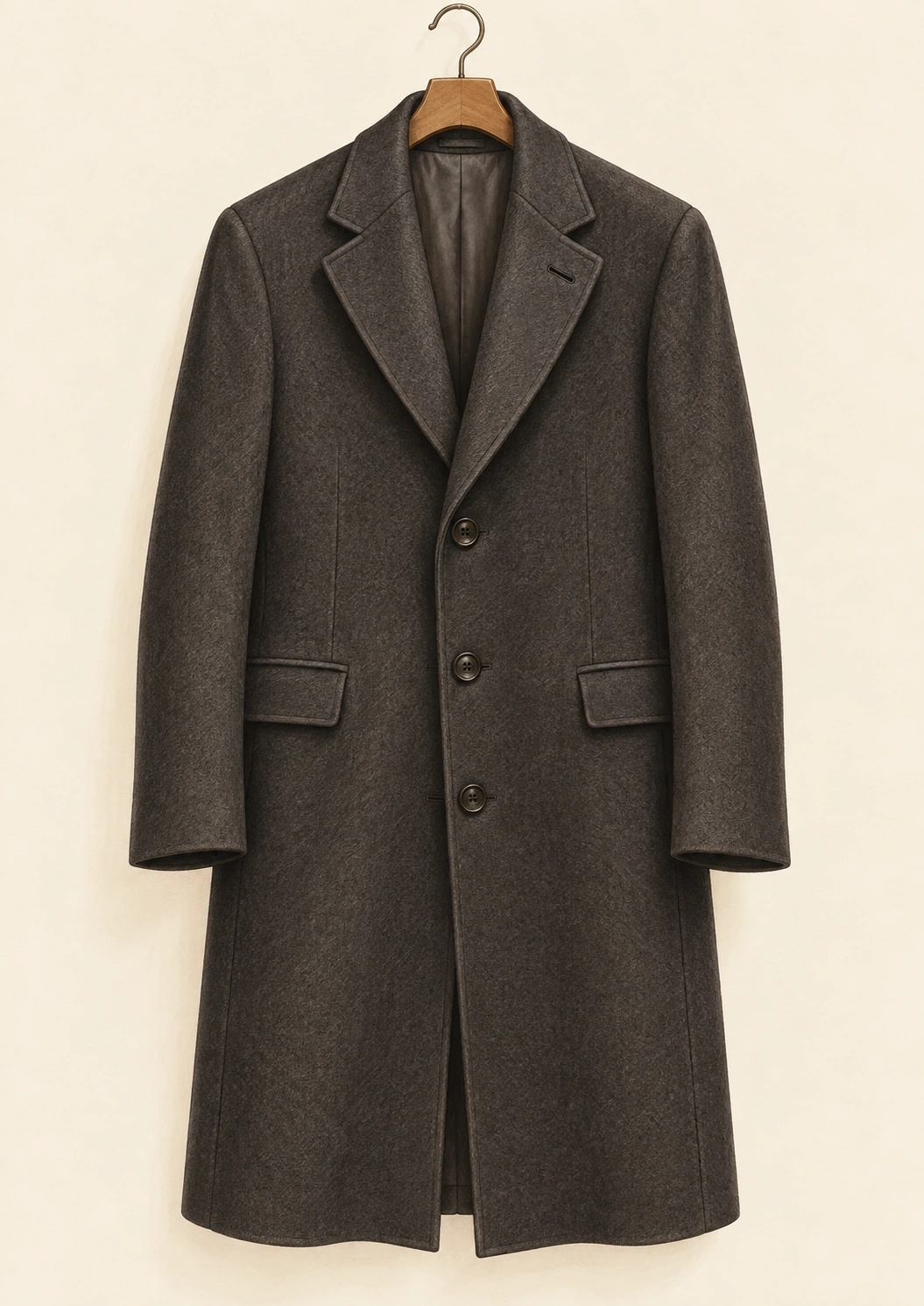
Parts of a coat: the glossary
Gorge / gorge line
Roll line
Pocket flap
Welt
Undercollar
Centre-back vent
Back-neck hanger loop
Centre-back lining pleat
Front facing
Keyhole buttonhole
Sources
Parts of a shirt: the glossary
Point collar
Collar stand
Front placket
Sleeve placket / gauntlet
Barrel cuff
Back yoke
Box pleat
Armscye
Shirt-tail hem
Side gusset
Collar stays
Sources
Parts of trousers: the glossary
Reverse pleat
Waistband extension
Fly shield
French bearer
Double-welt back pocket
After-dinner split
Side adjuster
Waist curtain
Brace buttons
Centre-back inlay
Sources
Parts of a glove: the glossary
Points
Fourchettes
Quirks
Trank
Sources