Tiny stamps attract extraordinary confidence. A seller writes hallmarked silver as though the matter has been settled by a punch the size of a breadcrumb. The object arrives. You turn it over. It says 925, or SILVER, or it has a little rectangular cartouche with all the authority of a municipal rubber stamp. Now you are expected to know whether you have bought solid silver, plated metal, something exempt from hallmarking, or merely an object whose listing got ahead of the evidence.
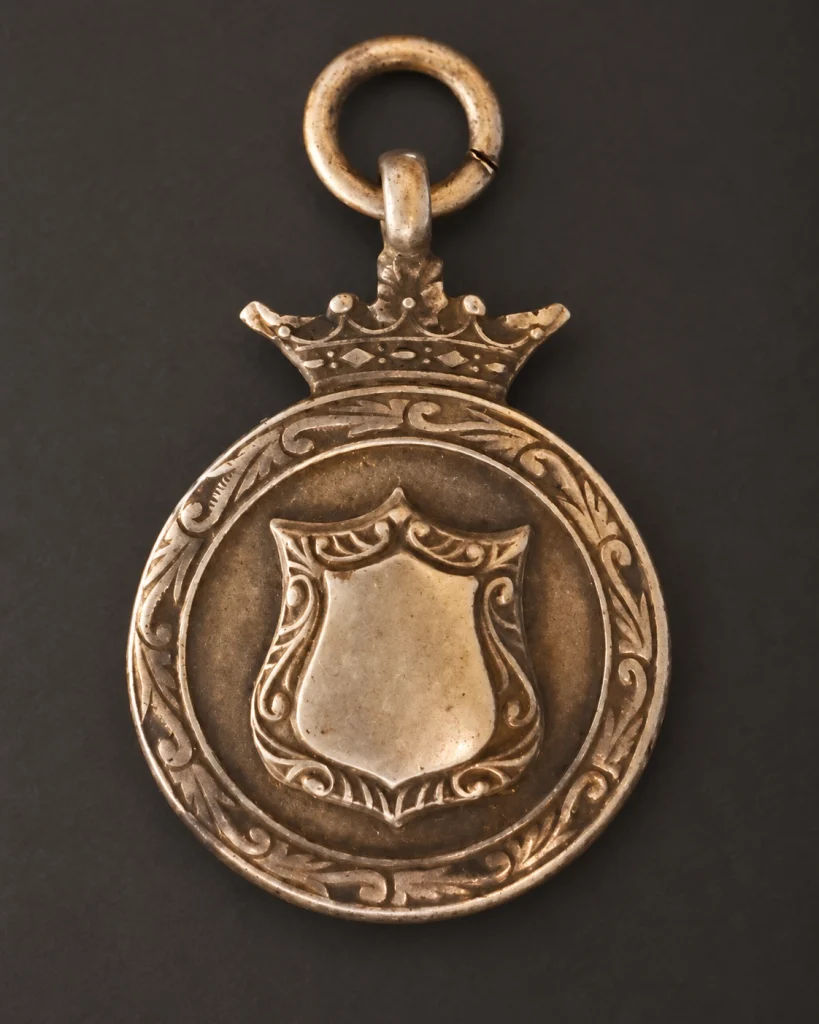
I bought two cheap pieces on Vinted for exactly this reason. One was listed as “Solid Silver Hallmarked Chain Fob Medal, 6.67g”. On the medal itself I can see the word SILVER and one rectangular punch. The other was listed as “925 Silver Plated 8mm ID Bracelet with Box Clasp Lock, 20cm”. Its clasp is stamped 925, and the bracelet weighs about 24 g.
I got no certificates or paperwork with either. I have the objects, the listings and the marks stamped into the metal. That is enough to reveal the problem: neither listing quite matches what the visible marks actually establish.
The useful skill is not memorising every tiny symbol ever hit with a hammer. It is knowing what sort of evidence a mark gives you.
Start by deciding whether the marks form a hallmark
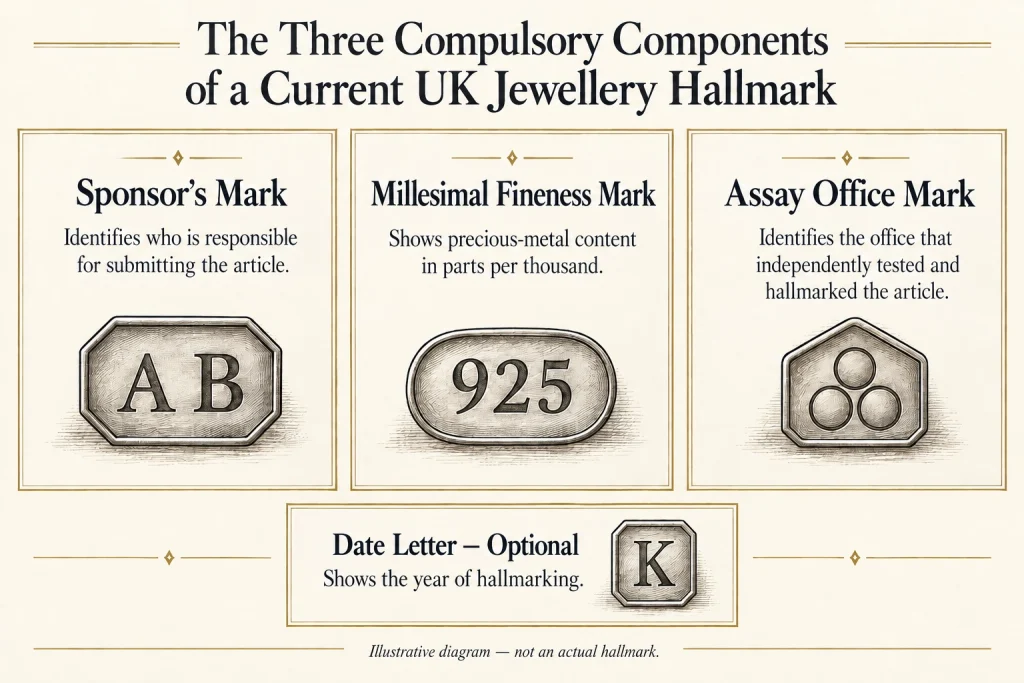
A hallmark is a set of component marks applied after an authorised Assay Office has independently tested an article of precious metal. The British Hallmarking Council says a complete current UK hallmark has three compulsory elements: the sponsor’s mark, the millesimal fineness mark and the Assay Office mark. A date letter and traditional fineness symbol can also appear, but they are optional.
That distinction matters because hallmarked is used surprisingly loosely in second-hand listings. One number is not a full hallmark. Neither is the word SILVER. Nor does a small shield become legally significant merely because somebody has hit it into metal with conviction.
What the three compulsory marks actually tell you
The sponsor’s mark identifies the person or company registered with an Assay Office under whose responsibility the article was submitted for hallmarking. London Assay Office makes an important distinction here: although people often call this a maker’s mark, its purpose is to establish responsibility and it does not necessarily identify whoever physically manufactured the piece. Manufacturers, commissioners and third parties can all submit work under a sponsor’s responsibility.
The millesimal fineness mark states the precious-metal content in parts per thousand. 925, for example, means a fineness of 925 parts per thousand. In a complete hallmark it is not floating around alone: it sits alongside the marks showing who took responsibility for submitting the article and which Assay Office tested it.
The Assay Office mark identifies the office that tested and hallmarked the article. The four current UK offices are London, Birmingham, Sheffield and Edinburgh. This tells you where the piece was assayed, not necessarily where it was made.
Together, those marks answer three rather useful questions: who submitted it, what fineness was independently verified, and where that verification happened.
That is more useful than a mysterious stamp being mysterious.
The date letter dates the hallmark, not necessarily the jewellery
A date letter is one of the marks people naturally reach for when buying vintage jewellery. It can be extremely useful, but its job is narrower than people sometimes give it.
The letter records when an item was hallmarked. It does not, by itself, prove that this was when the object was manufactured.
Sheffield Assay Office says that since 1975 all four current UK offices have used the same annual date-letter sequence, changing on 1 January. The date letter became voluntary in 1999, so its absence on a later piece is not evidence that something has gone wrong. Earlier date-letter systems varied by Assay Office.
That means the sensible order with genuinely old jewellery is to identify the Assay Office first and then use the appropriate office-specific date table. Trying to date an antique from a detached alphabet found on Google Images is an excellent way to become very certain about the wrong year.
For serious antique identification, I would go to the relevant Assay Office tables rather than expect one short article to reproduce several centuries of tiny typography.
The medal gives less evidence than its listing promises
The fob medal is a useful little object because its Vinted listing sounds much more conclusive than the marks I can actually see. Turn it over and there are two obvious stamped features near the bottom: SILVER and a separate rectangular punch.
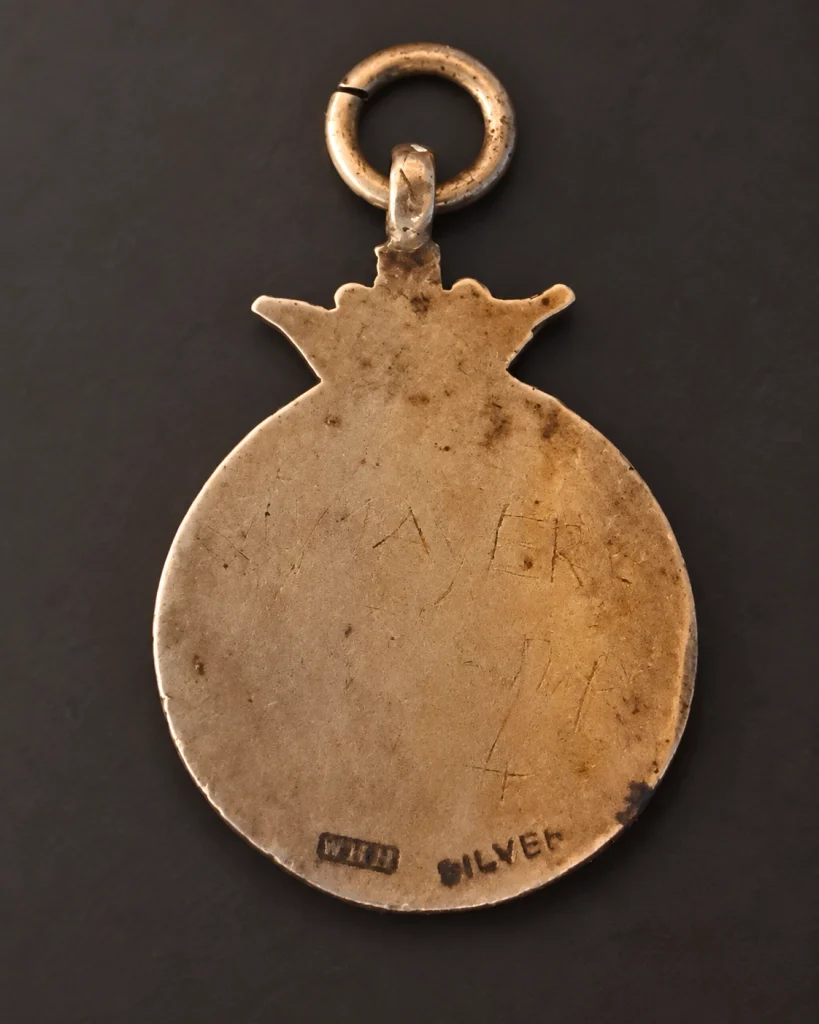
Those marks do not give me the three compulsory elements of a current UK hallmark. There is no visible numerical fineness mark alongside an identifiable Assay Office mark and sponsor’s mark. Whatever hallmarked meant in the Vinted title, that is not what the marks shown establish.
The medal was sold by itself, and the Vinted listing gave its weight as 6.67 g. The current exemption weight for silver is 7.78 g. The National Association of Jewellers confirms that silver articles below that threshold do not require a hallmark.
So the absence of a complete hallmark here does not tell us that the medal is not silver. If that listed weight is accurate, the medal falls below the current silver hallmarking threshold.
What I still cannot do is turn the word SILVER into an independent assay result. It is a mark on the object. It is not the same evidence as a complete hallmark.
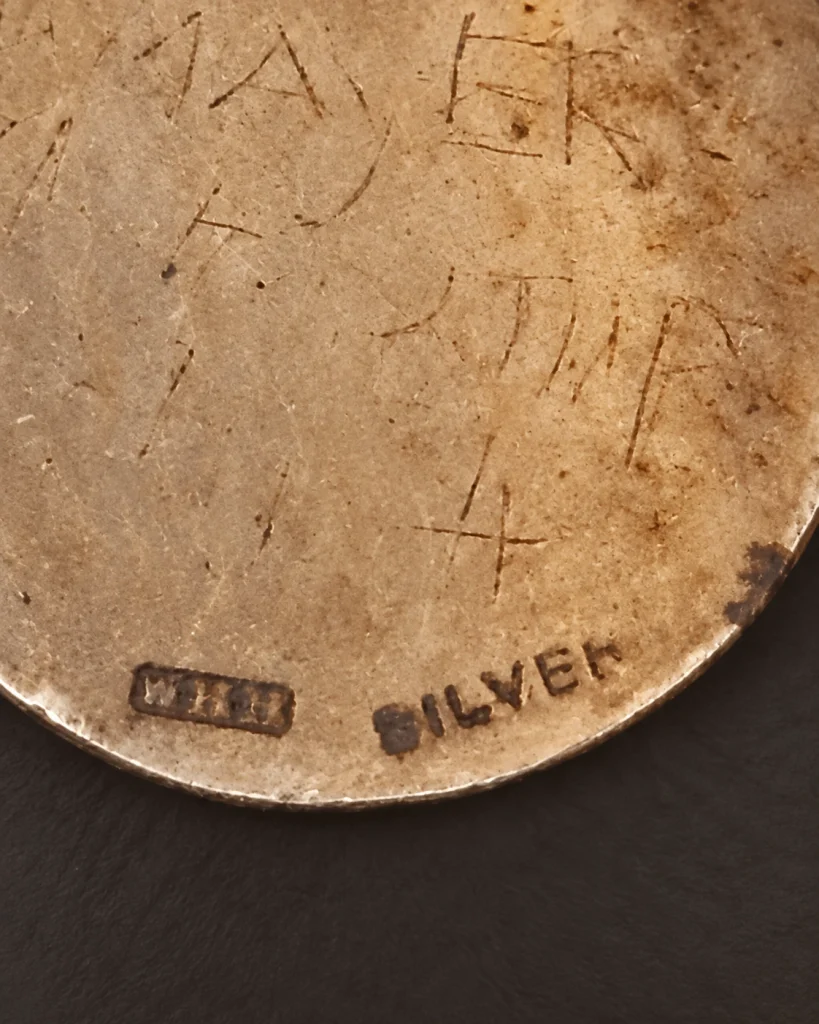
I have deliberately left that rectangular punch unidentified. It may turn out to be traceable through a reliable maker’s-mark reference, but resemblance is not identification. Tiny stamped letters are unusually good at encouraging confident nonsense.
The bracelet turns one stamp into a larger question
The bracelet is ruder.
Its Vinted listing calls it “925 Silver Plated”, the clasp is stamped 925, and it weighs about 24 g.
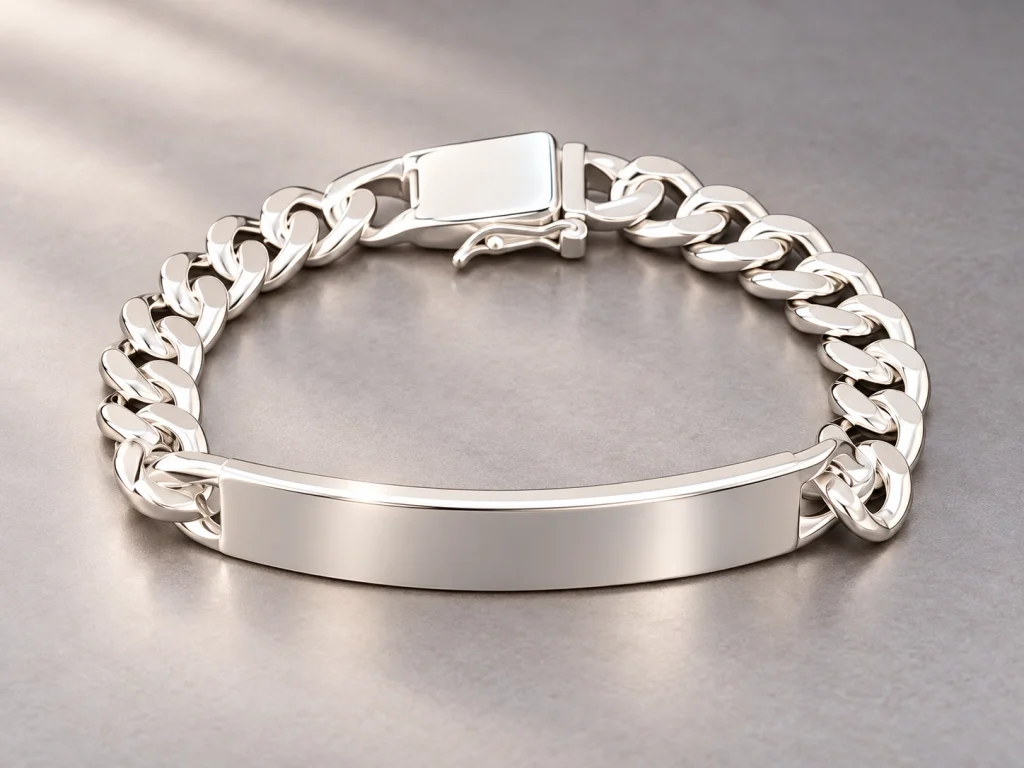
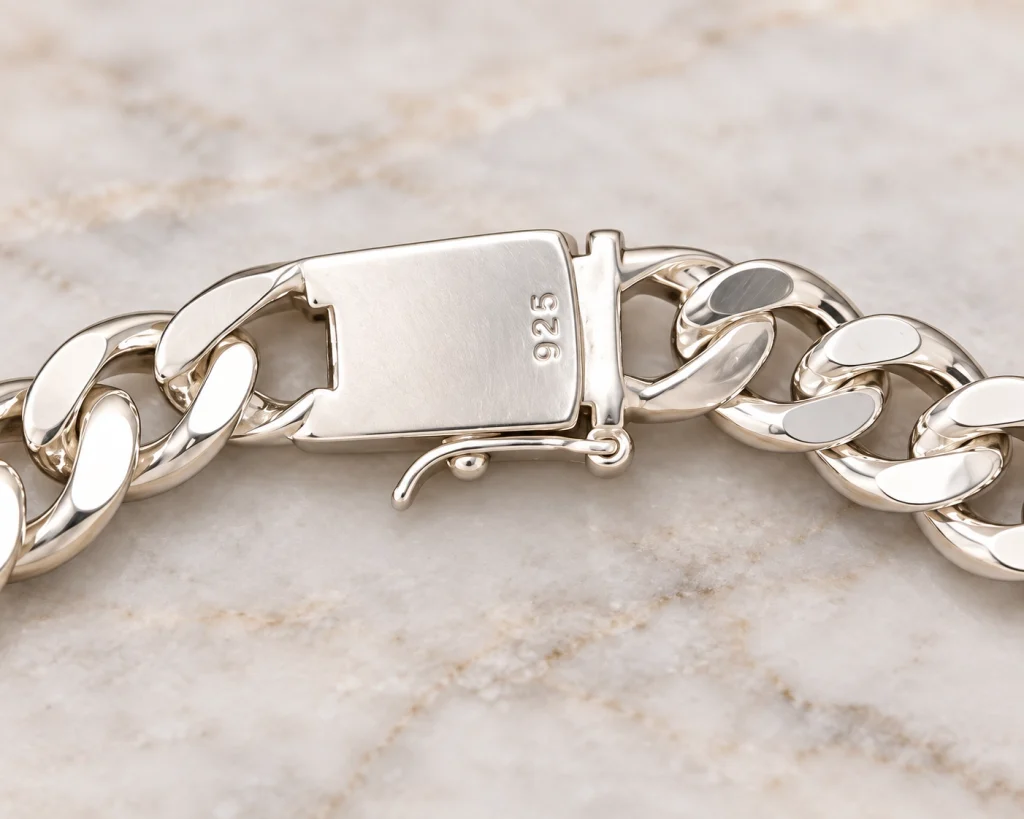
The National Association of Jewellers is very specific on this point: 925 is the recognised fineness designation for silver, but without the sponsor and Assay Office marks it does not constitute a hallmark.
Its weight makes this example more interesting than the medal. If it were solid silver throughout, its roughly 24 g weight would put it well above the 7.78 g hallmarking exemption.
That still does not let me declare what the bracelet is made from. The Vinted title itself calls it silver plated, and I have no assay result or other documentation establishing the underlying metal. If plated is the accurate part of the description, the lack of a silver hallmark is hardly mysterious. If 925 silver was meant to describe a solid-silver 24 g bracelet being sold in the UK, a lone 925 would not satisfy the hallmarking requirement.
The stamp therefore does not resolve the listing. It exposes the problem with it.
A lone 925 on a tiny pendant may be quite ordinary if the article falls below the exemption weight. A lone 925 on a much heavier item represented as solid silver gives me a better question for the seller.
With no documentation beyond the Vinted listing, the marks on the object matter more, not less.
Plating marks answer a different question
Some stamps look impressively official while telling you something quite different.
EPNS means electroplated nickel silver: a coating of silver over nickel silver, an alloy of copper, nickel and zinc that contains no silver of its own, as the Canadian Conservation Institute explains. The silver is on the surface, rather than throughout the article. The Silver Society notes that electroplated wares were sometimes given marks designed to resemble real hallmarks, including individual letters set inside shields.
Four little letters in four little boxes can therefore look magnificently official while announcing another material entirely.
This is not an argument against plate. An electroplated piece can be attractive, useful and worth buying. I object only when one material is allowed to borrow the price, description or implied provenance of another.
The distinction also applies to gold-coloured jewellery. Guidance from the British Hallmarking Council says that gold-plated silver is hallmarked as silver and must be described accordingly rather than as solid gold.
Surface colour is not a hallmark either. Jewellery is exhausting in this respect.
Weight can explain an absent hallmark
This is why a simple rule based on presence or absence falls apart so quickly.
For items currently sold in the UK, the British Hallmarking Council gives these exemption weights:
- Silver: 7.78 g
- Gold: 1 g
- Palladium: 1 g
- Platinum: 0.5 g
Older objects need more care again. The Council’s fuller guidance says that articles manufactured before 1950 can now be described and sold as precious metal without a hallmark where the seller can prove both the required minimum fineness and the pre-1950 manufacture. That includes some objects that would originally have required hallmarking, so old and unhallmarked is not a conclusion by itself.
If I were looking at a genuinely antique piece, I would treat an absent or unfamiliar mark as a research problem. I would not solve it by inventing a pleasing date.
Foreign jewellery may be using another recognised system
There is one further complication worth knowing before we sensibly stop.
The Common Control Mark, or CCM, belongs to the international Hallmarking Convention. The British Hallmarking Council identifies it as an international convention mark, with the fineness number surrounded by a scales device.
That is enough foreign hallmarking for one article.
If I find French, Italian, Scandinavian or some other national marks on a second-hand piece, I would use the specialist reference for that system. A half-remembered symbol is a poor reason to give a brooch a French passport.
What I would check before buying second-hand jewellery now
I would start with the photograph, not the seller’s adjective.
If something is described as hallmarked, I want to see whether the photographs actually show the components expected for that hallmarking system. For a current UK hallmark, that means a sponsor’s mark, millesimal fineness mark and Assay Office mark. If only 925 is visible, I know exactly what is missing. If there is no hallmark at all, I want the weight before deciding whether that matters.
On older pieces, I would identify the Assay Office before attempting to read the date letter. On plated pieces, I would take EPNS and similar marks at their actual meaning rather than regarding them as disappointing hallmarks. And if a listing somehow manages to call one object both 925 and silver plated, I would not reward its confidence by supplying the missing certainty myself.
That is what a hallmark is good for. It removes part of that uncertainty by giving you independent evidence about precious-metal fineness.
The rest of the stamps still have to earn their authority.
Leave a Reply