I play enough Dungeons & Dragons that the Tarrasque ought to delight me.
The current rules give it nearly seven hundred hit points, armour that can reflect spells, the ability to swallow people whole and a Challenge Rating of 30. It is what happens when a dungeon master decides that ordinary catastrophe has become a little pedestrian.
The creature it takes its name from had rather more going on.
At Tarascon in Provence, the Tarasque belonged to a town before she belonged to anybody’s monster manual. Jacqueline Simpson, writing for the Folklore Society, traces the legend back to a medieval Life of St Martha, written around 1187–1212, in which Martha encounters a great dragon-like beast associated with the Rhône. Tarascon then kept the creature. A processional effigy — a large representation carried through public ceremony — is recorded there from 1461, and later versions were hauled through the streets by men concealed inside the body.
This was not dignified.
The nineteenth-century Tarasque had a movable jaw and a long rigid tail. During the secular “running” of the Tarasque, the men carrying her deliberately swung that tail into the crowd. Simpson records an old cry celebrating the Tarasque having smashed somebody’s arm. On St Martha’s feast the same creature behaved very differently, led in procession by a girl representing the saint and periodically subdued with holy water.
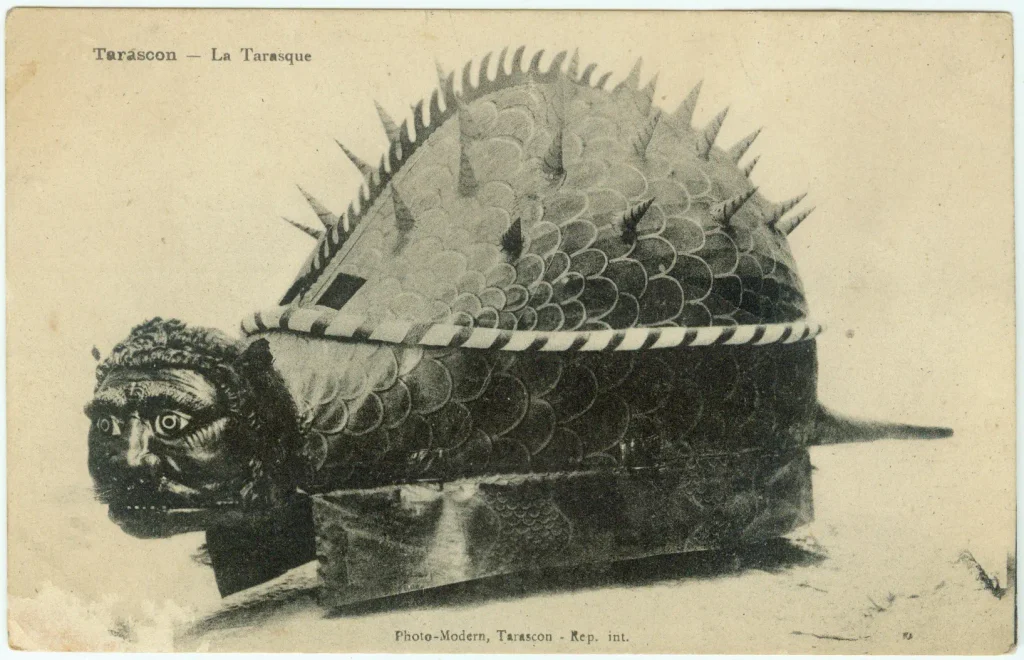

Tarascon had managed something fantasy often does not. Its monster had relationships. She belonged to a saint, a procession, local trades, feast days, particular streets and generations of people who knew when to get out of the way.
D&D kept the enormous indestructible thing.
I am not objecting to the Tarrasque. I would happily spend an evening being killed by one. What interests me is how much stranger folklore becomes when the creature is allowed to keep the inconvenient material around it: the job, the place, the cure, the social rule, the particular hill somebody knows not to linger beside.
Dragons have been asked to guard quite enough treasure. Werewolves have suffered through enough moons. Unicorns are essentially branding now.
Here are five creatures fantasy has not yet worn smooth.
One warning before opening the cupboard: these are folklore traditions rather than zoological species. Names, details and stories change between tellers, places and periods. There is no definitive monster manual lurking behind them.
The Alp-Luachra has already got inside
Douglas Hyde’s Beside the Fire begins its story of the Alp-Luachra with one of the more expensive naps in folklore.
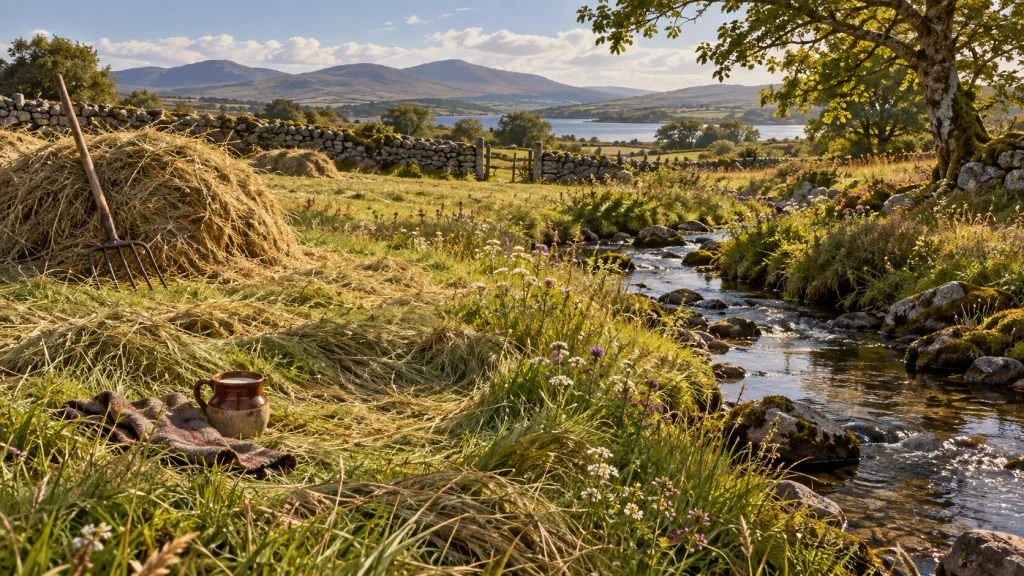
A wealthy farmer in Connacht drinks some buttermilk, falls asleep on freshly cut hay beside a stream and wakes feeling unwell. By the following day he can feel something “like a birdeen” moving in his stomach. Doctors examine him, prescribe medicines and invent increasingly impressive names for whatever is wrong. Nothing works. Months pass. The farmer becomes so thin that Hyde describes him as little more than skin and bone, and cattle have to be sold to pay the doctors.
The creature does not arrive at the climax. It has been there since near the beginning.
Eventually a travelling beggarman hears the story, inspects the meadow and announces that the farmer has swallowed an alt-pluachra, the spelling Hyde uses within the tale. The man is sent to the Prince of Coolavin, whose treatment contains considerably less medicine and substantially more salted beef.
He makes the patient eat until he can manage no more, then lies him face-down beside running water with his mouth held open above it.
The salt makes whatever is inside him thirsty.
One creature emerges, hesitates on his tongue and drops into the stream. Another follows. Then another. The Prince counts twelve of them before announcing that the clutch is out but the mother is still inside. Eventually she comes too, after several false starts and one disastrous attempt by the patient to grab her with his fingers.
It is revolting. I mean that approvingly.
A modern fantasy treatment would be tempted to turn the Alp-Luachra into a parasite monster: stat block, bite attack, perhaps some unpleasant ability involving Constitution saves. Hyde’s story makes it harder to get hold of. The frightening part is the delay between the encounter and knowing there has been one.
The field looks ordinary. The nap is ordinary. The doctors keep arriving. The farmer gets poorer and thinner while something else apparently enjoys his dinner first.
And after he recovers, he never lies down on green grass again.
That is what folklore leaves behind when it is behaving properly: not simply a monster, but somebody changing an ordinary habit for the rest of his life.
Coblynau clock in underground
Fantasy caves have a staffing problem. Eventually somebody has to put a goblin in them.
Welsh mining folklore offers something better.
Museum Wales describes Coblynau working underground: short, hairy creatures dressed like miners who could help miners locate a new seam — a layer of coal, copper or another mineral followed through the rock — and warn them of danger.
The important part is not that they live underground but that they have a job.
That changes the entire creature. Mining is dangerous, repetitive work conducted in places where sound travels strangely, a productive new seam matters enormously and an unexplained knock can acquire rather more significance when thousands of tons of rock are above your head.
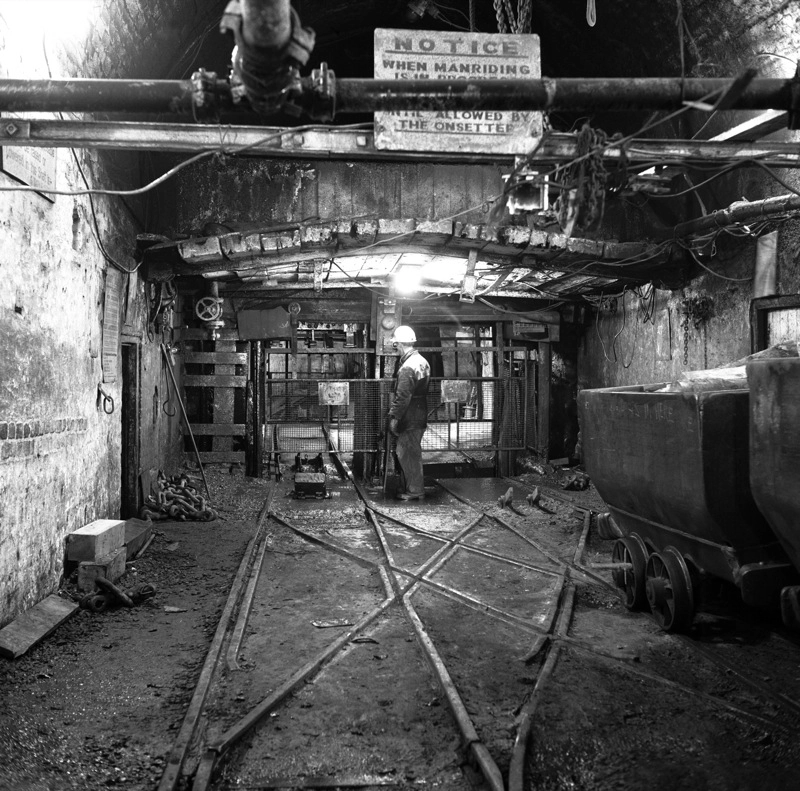
The Coblyn belongs to that environment because the people telling the stories belonged to it too.
Take the mine away and leave only “small hairy underground creature” and fantasy already has several cupboards full of those. Keep the work and the creature becomes socially useful. It can warn you. It can lead you somewhere valuable. Presumably it can also make the working day extremely peculiar without anybody receiving additional pay.
I would rather encounter a Coblyn knocking beyond the working face while everyone argues over whether it has found copper or is telling them to leave than fight another cave goblin guarding twelve silver pieces and a suspiciously convenient potion.
Trows may require a midwife
John Spence’s Shetland Folk-Lore gives trows a disturbingly complete social life.
They marry. They eat. They keep livestock. They enjoy music. They sometimes covet human cattle, women and children. Most interestingly, Spence says they require human help: fiddlers, nurses and howdies — the Shetland term here for midwives — could all be summoned into trow service.
This is a much better problem than an enemy faction.
One story concerns Catherine Tammasdaughter, a human midwife fetched during a stormy night to attend a birth. She is carried across the water and taken into a cavern where a company of strange beings has gathered. While using a mysterious ointment on the newborn child, she accidentally touches her own eye and suddenly sees something she was not supposed to see: a woman she had known who was supposedly dead.
Catherine recognises her aloud.
A trow immediately asks which eye saw her.
Catherine answers.
She loses the sight in that eye.
Elsewhere Spence records fiddlers disappearing to provide music for trow celebrations. John Herculeson is said to have spent two days playing at a trow wedding after vanishing while crossing the Hill of Wormidale. Another man supposedly heard music among rocks at Gulla Hammar clearly enough to learn the tune and pass it to a fiddler as “The Trowie Reel”.
Even the livestock relationship is peculiar. When trows wanted a good cow, Spence says, the animal might remain physically in its owner’s possession while wasting away, understood to have been “elf-shot”. One surviving cow therefore has two possible statuses at once: visibly in your byre and, in the logic of the story, somehow taken.
Trows are what happens when the supernatural already has a place in the local economy.
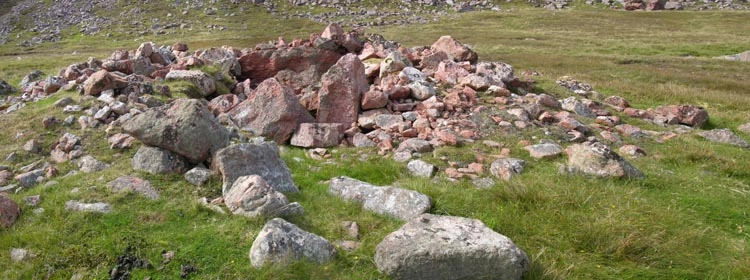
They need maternity care. They hire entertainment. They interfere with cattle. Certain hills and caverns are attached to them. People alter behaviour because there is some chance that the neighbours are not entirely human.
Modern fantasy often makes supernatural peoples legible by giving them states, hierarchies, standard appearances and pages of cultural notes. Shetland trows remain socially understandable while refusing that sort of tidiness.
Someone lives in the hill.
Someone needs a fiddler.
You may discover that these facts concern you personally.
The Fachan has been assembled incorrectly
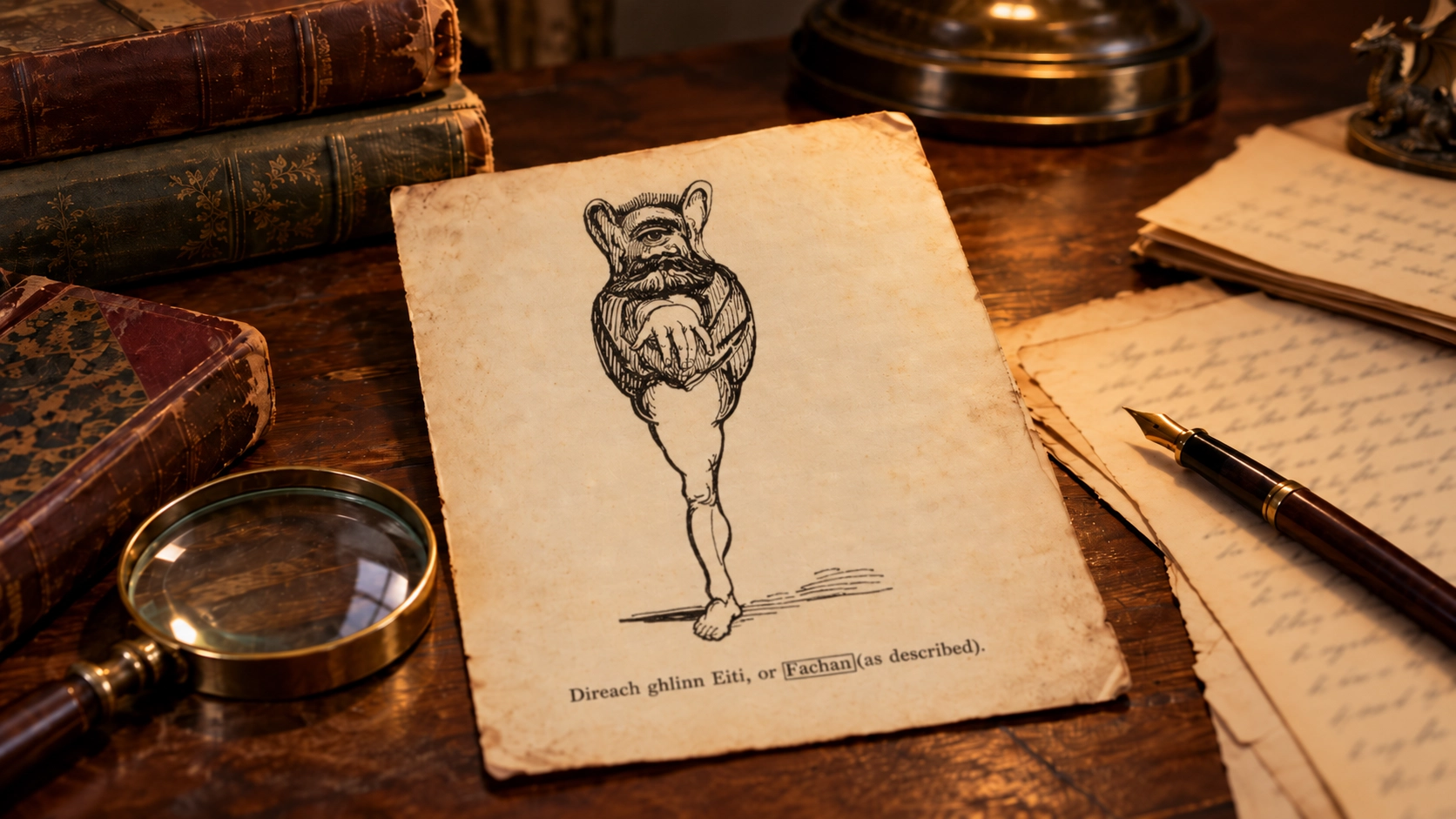
This one needs the picture.
John Francis Campbell, in Popular Tales of the West Highlands, gives the Direach Ghlinn Eitidh one hand projecting from its chest, one leg from its haunch and one eye at the front of its face.
Then Campbell drew it.
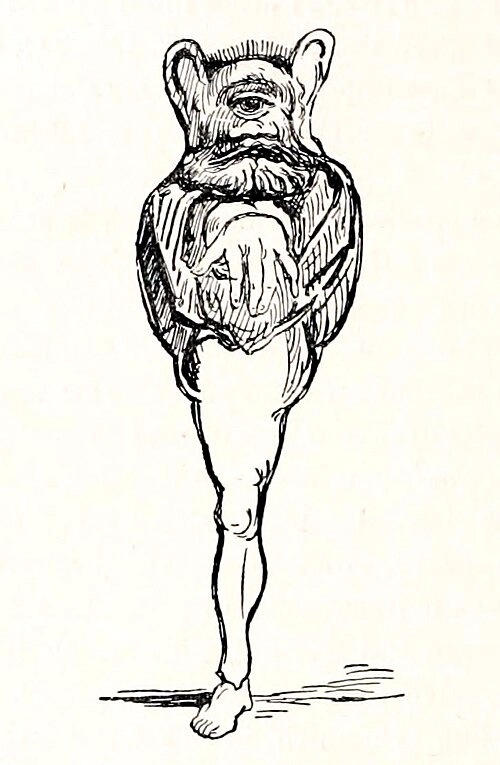

There he is.
One arm. One leg. One eye. Beard. A surprising amount of confidence.
Campbell’s own caption identifies the figure as “Direach ghlinn Eiti, or Fachan (as described)”, so this is not a modern illustrator attempting to rationalise an old description. The man responsible for recording the thing has simply shown us what he thinks it looks like. I appreciate that enormously.
Modern creature design can become obsessed with anatomical defence. Extra limbs require evolutionary explanations. Wings must attach somewhere structurally convincing. Somebody will eventually ask how the monster’s pelvis works.
The Fachan answers by having half the usual equipment in all the wrong places.
There is no advantage in improving it. A polished modern illustration would almost certainly make the silhouette more dramatic, distribute the musculature sensibly and give the creature the sort of posture from which combat looks possible.
Campbell’s drawing looks as though symmetry was withdrawn following a complaint.
That is the creature I want.
The proper fantasy lesson here is not “use a Fachan instead of an orc”. It is permission to stop making every strange thing visually reasonable. Folklore has no obligation to survive a concept-art meeting.
The Lavellan may simply be a water shrew
Thomas Pennant went looking for the Lavellan in Caithness in the eighteenth century and responded with exactly the sort of scepticism I enjoy.
He had heard that local people considered the creature harmful to cattle. A preserved skin was kept as a remedy: sick animals were given water in which that skin had been dipped. Pennant listened to the description and wrote that he suspected the Lavellan was a water shrew-mouse; he thought it was the same animal called the water mole in Sutherland.
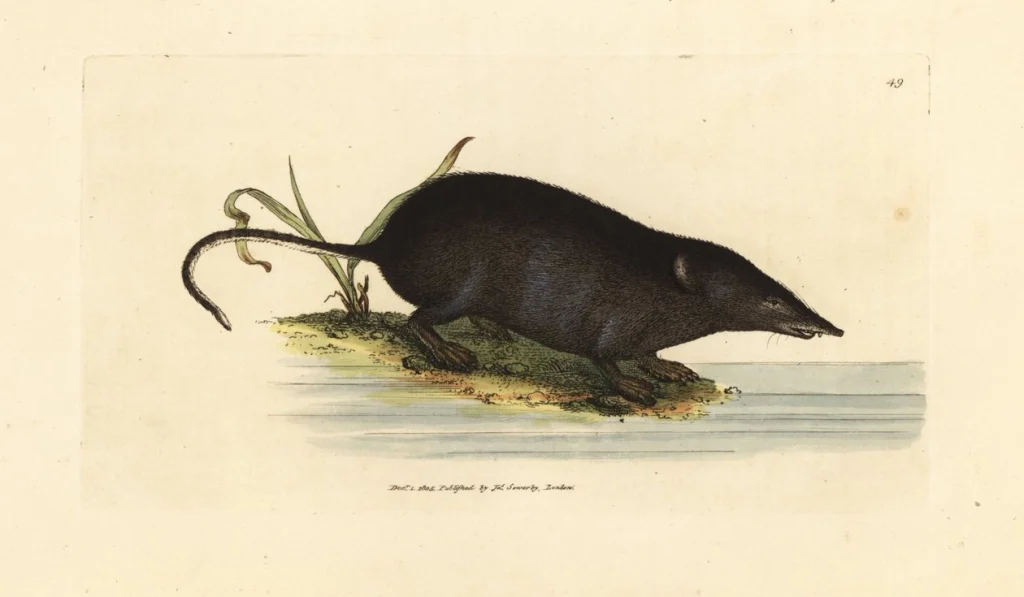

This does not ruin the creature; it improves it.
A thing does not have to be biologically impossible before people can build extraordinary beliefs around it. The Lavellan may have been an ordinary small mammal carrying a reputation vastly larger than itself. The same skin could belong to an animal blamed for harming cattle and become part of the treatment when cattle fell ill.
Fantasy usually wants the category settled.
If the Lavellan entered a game, somebody would have to decide whether it was Beast, Fey or Monstrosity. Its bite would acquire a damage value. The healing-water business would become an ability with an exact duration. Eventually there would be a wiki.
Pennant gives us a much more irritating arrangement.
There is an animal and there is a belief, and they may not agree about what the animal is for.
And then the Wulver spoiled everything
I was going to put the Wulver in this list.
It seemed almost indecently well suited to it: a Shetland wolf-headed man who lives quietly, fishes for long stretches and sometimes leaves fish for poor households. No transformation. No full moon. No overwrought struggle with the beast within. He is essentially a very hairy neighbour operating an informal seafood welfare scheme.
He is also not traditional Shetland folklore.
Brian Smith of Shetland Museum & Archives traced the creature backwards. Faroese scholar Jakob Jakobsen had recorded Shetland place names in the nineteenth century and explained a group of Wol- names through an Old Norse word for fairy. The Shetland folklorist John Spence subsequently discussed one such name as a fairy knowe.
Then Jessie Saxby arrived.
In Shetland Traditional Lore, published in 1933, Saxby supplied the wolf-headed man, his brown hair, his cave, his fishing rock and his habit of leaving part of the catch for poorer households.
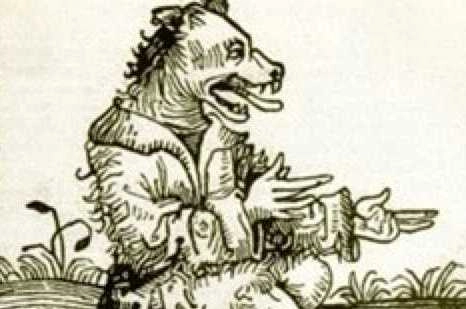
The museum’s judgement is unusually direct: Saxby had “invented the entirely fictitious creature the wulver”. Smith calls her its sole creator and says nobody before her is known to have heard of a Shetland wolf-man.
The problem is that the Wulver travels in exactly the opposite direction to the Tarasque.
The Tarasque began with an old local tradition wrapped around a particular town, saint and procession. Fantasy took the creature and largely discarded that social life.
The Wulver began with one twentieth-century writer, and repetition gradually supplied the appearance of inheritance.
I wrote recently about faux-aged furniture because I dislike new things arriving with somebody else’s fake wear already painted onto them. The scratches imply events. The rubbed corners imply hands. The object acquires the appearance of a past without having undergone one.
The Wulver has acquired something similar.
Which is irritating, because I like him.
He is a far better wolf-man than most actual werewolves. I would quite happily keep the cave, the fishing and the sillaks and piltaks — young coalfish at different stages — left for poorer neighbours.
I just cannot call the patina original.
Leave a Reply