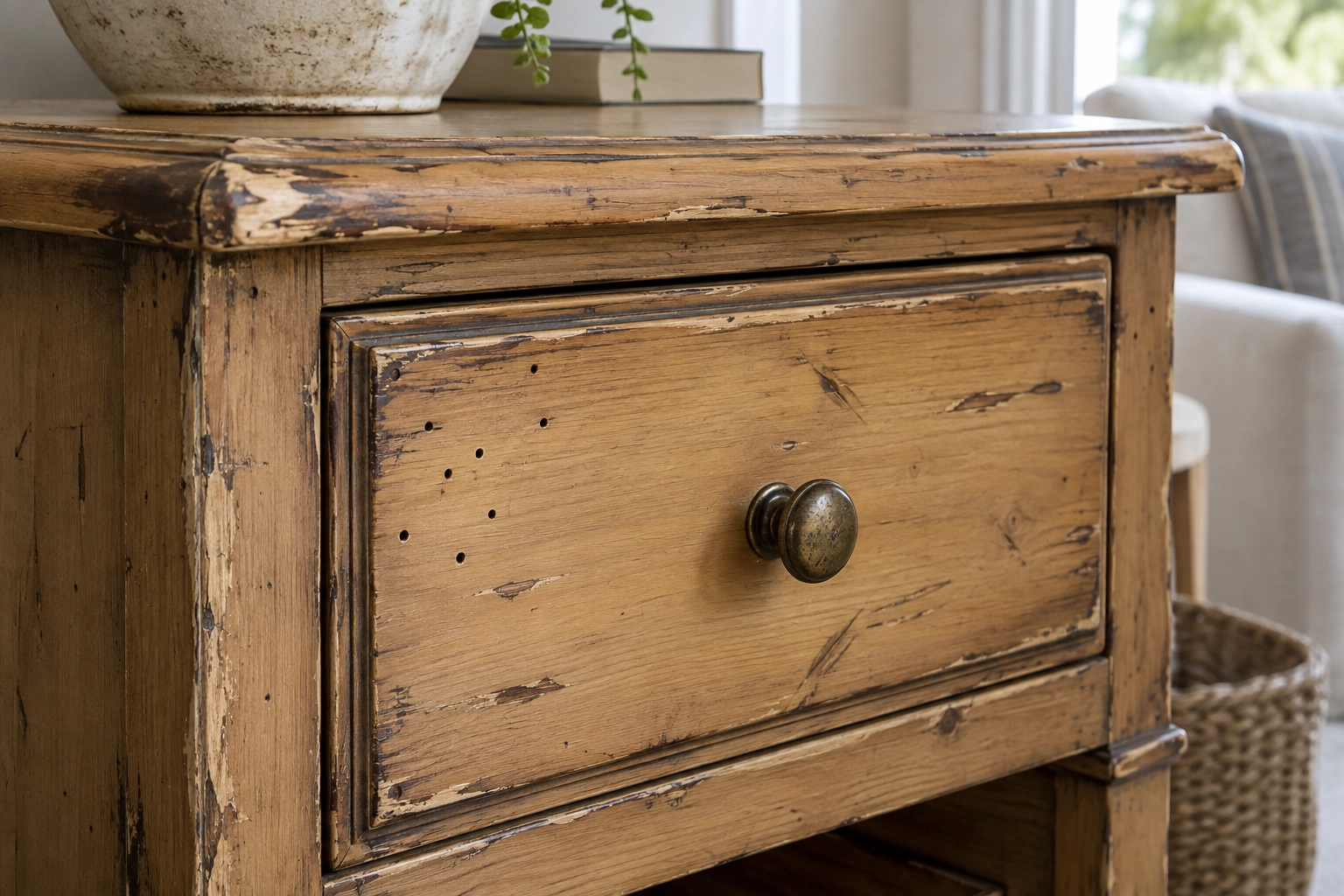
I have a predictable weakness for objects that look as though people have actually used them.
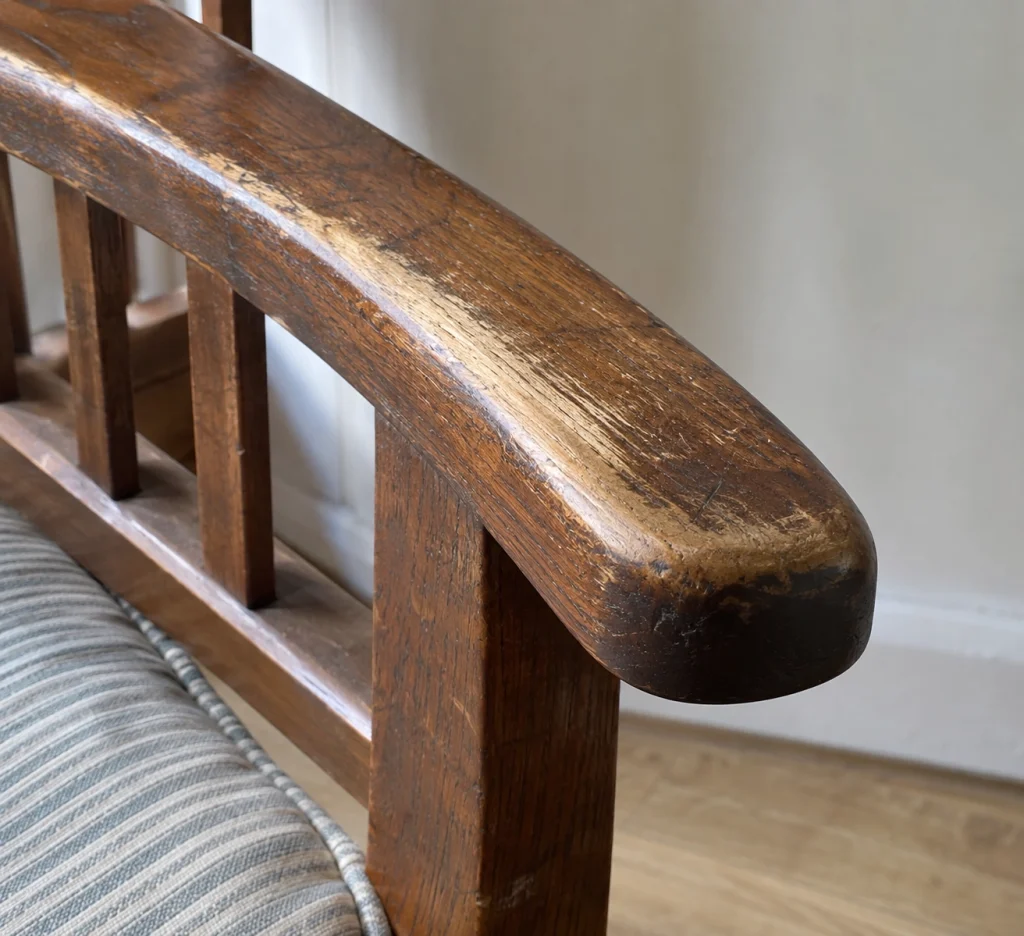
A wooden handle can become smoother where fingers repeatedly land. A tabletop can acquire scratches that bear very little relationship to where somebody designing an attractive scratch would have put them. Paint gets knocked at one awkward corner because that is the corner everybody catches. None of this automatically makes the object beautiful, but it does make the surface legible.
Then there is furniture that arrives pre-exhausted.
Pale wood has been darkened, corners have been rubbed back, recesses have been given a strategic dose of brown and the whole thing appears to have survived several generations despite having met Tuesday for the first time last week.
What I like about patina is the evidence
There is a useful word for the change I am talking about: patina, the distinctive worn appearance that an older finish acquires.
The US National Park Service Museum Handbook uses the term for the appearance of older finishes and immediately adds an important qualification: there can be a fine line between patina and a damaged finish. That qualification matters. Patina is not a certificate somebody hands an object once it has been alive long enough.
What makes genuine wear interesting to me is that it tends to be particular. One area has been handled more than another. One edge has taken the knocks. Something has faded unevenly or been rubbed smooth. The object has interacted with a room and with the people using it, and the results have not been art-directed afterwards.
That irregularity is often what I want from an old thing. It is physical evidence that the object has had a life before it arrived in front of me, although there is no requirement that I admire what that life did to it. I like the same evidence in second-hand clothes: wear can tell you what a garment has actually survived.
Distressing takes the consequence and skips the cause
Furniture finishing has an established term for deliberately creating the appearance of age: distressing, meaning intentional marks, worn-looking edges and other alterations applied to suggest previous use. Woodworker Scott Wunder uses the term for exactly this sort of deliberate ageing, including manufactured worm holes.
There is nothing inherently dishonest about the technique when everybody knows what they are looking at. It is decoration. My problem is that its decorative vocabulary consists largely of consequences borrowed from objects that acquired them accidentally.
Real wear follows whatever actually happened. Deliberate distressing has to anticipate what wear ought to look like and put it there in advance.
I ran into the same problem from the opposite direction with the Wulver: a supposedly old Shetland creature whose traditional patina turns out to have been acquired after Jessie Saxby created him in the twentieth century.
Once every edge has been rubbed back just enough, the recesses conveniently darkened and the damage distributed with excellent aesthetic judgement, I stop seeing age and start seeing a pattern representing age. I have no objection to an elaborate finish in itself: paint something blue, glaze it, cover it in flowers or make the drawer fronts red if the room can withstand them. It is the attempt to manufacture a past that interests me less.
Fake woodworm holes explain the problem rather well
Woodworm provides a particularly good example because genuine damage has a mechanism behind it.
The British Pest Control Association describes the familiar holes made by the Common Furniture Beetle as neat, round openings around 2 mm across. The larvae bore into the timber and can remain inside for roughly three years before the adult beetles emerge; those emerging beetles make the visible holes. In other words, the little circle on the surface is the end of something that has been happening inside the wood for years.
You can, of course, buy the look without troubling the beetles.
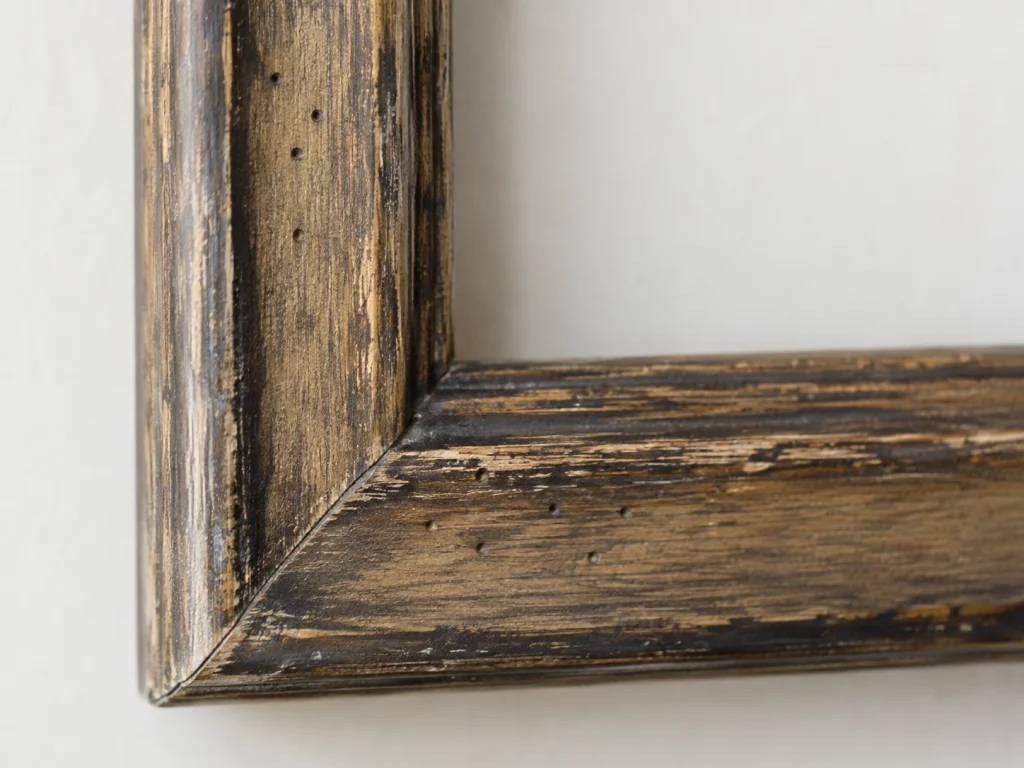
Colonial Pest Control describes artificial worm holes made with an ice pick, a finishing nail or a power drill fitted with a 1/16-inch bit. It even records fly-specking done with a toothpick dipped in black paint, should your new furniture require evidence of an imaginary fly population as well.
The difference becomes more interesting when somebody tries to fake the damage well. Scott Wunder of WunderWoods Custom Woodworking makes furniture and deliberately creates worm holes in pieces that need an aged appearance. His advice begins by studying genuinely insect-damaged timber.
Real holes vary in size. They tend to cluster, becoming less frequent away from the centre of activity. Not all of them meet the surface neatly at a right angle; some are oblong or become short trails. Wunder also notes that insect activity tends to concentrate around vulnerable parts of the timber — cracks, sapwood and softer or deteriorated areas — rather than distributing itself politely across an immaculate board.
His method for producing convincing fake holes is therefore an attempt to reproduce precisely those irregularities.
Genuine damage is located by the wood, the insects and whatever happened over time. Artificial damage is located by a person making decisions about where damage should appear. A skilled maker can study the real pattern closely enough to make those decisions extremely convincing, but they remain decisions.
The surface has acquired the evidence without acquiring the event.
Faux-aged pine is particularly trying
This is where my already difficult relationship with pine deteriorates further. I think pale pine furniture looks cheap. That is taste rather than revelation from the mountain.
What does not help is taking that pine and giving it a fictional CV.
The version I dislike most adds a murky brown finish, allows darker colour to gather around the details and then exposes lighter areas again at the edges so that the surface appears to have been worn through over years of handling. The result is meant to have history; to me it usually has costume.
There is something especially odd about taking a perfectly new piece of furniture and immediately making it impersonate one that has already spent forty years being knocked into by chairs. It has not earned a mysterious past. It has been issued one by the finishing department.
Sometimes the effect is attractive. Somebody can genuinely prefer the softness and variation that distressing adds to a new surface, and there is no tribunal waiting to confiscate the sideboard. I still think a new object usually looks better when it is allowed to admit that it is new.
At Ripon Cathedral, the brief for two replacement gargoyles was explicit: the carvings were to look new, not wear a manufactured medieval patina.
Genuine age is perfectly capable of making things worse
It would be very easy to turn all of this into the opposite piece and decide that genuine wear must therefore be precious. It isn’t: age can produce lovely surfaces alongside stains, broken edges, filthy crevices, damaged finishes and things that no longer work properly.
The Canadian Conservation Institute gives the distinction some useful difficulty. On unfinished wood, it notes that substances and deterioration products acquired during an object’s use may form part of what is collectively regarded as its patina, yet those traces can sometimes be difficult to distinguish from dirt. For conservators, removing one can mean removing the other.
For somebody living with ordinary objects rather than cataloguing a museum collection, the philosophical version is simpler. Something happening naturally does not make the result good.
That matters because patina has become an unusually flattering word. There are marks people call patina largely because “damage I happen to like” would spoil the mood. I am quite happy to like some damage without promoting every stain and dent into cultural heritage.
The same distinction applies to clothes. Wear can contribute character; dirt and deterioration do not become desirable because they arrived honestly. Furniture does not receive a special exemption merely because it has drawers.
New things need time if they are going to become old things
Perhaps this is what bothers me most about artificial ageing: the impatience of it. An object has barely entered the room before somebody has decided that what it really needs is evidence of the previous thirty years.
There is nothing inferior about a clean new surface. Fresh paint can look excellent, while an unworn edge says nothing at all about whether the thing has character. Use it long enough and that will change without anybody having to decide in advance where history ought to go.
Put things on it. Open the drawer five thousand times. Move house with it badly. Repair something when it eventually needs repairing. If the object lasts, the surface will record some of this and ignore the rest.
It may become beautiful. It may become battered. Life is perfectly capable of ruining the corners on its own.
Leave a Reply