In The Legend of Zelda: Breath of the Wild, Koko has a recipe for Tough Meat-Stuffed Pumpkin.
Calling it a recipe is generous.
Once the “Koko Cuisine” side quest is complete, the Adventure Log gives you this:
“Hollow out a fortified pumpkin and add any kind of meat. Bake until firm.”
Source: The Legend of Zelda: Breath of the Wild (Nintendo, 2017), “Koko Cuisine” side quest and completed Adventure Log.
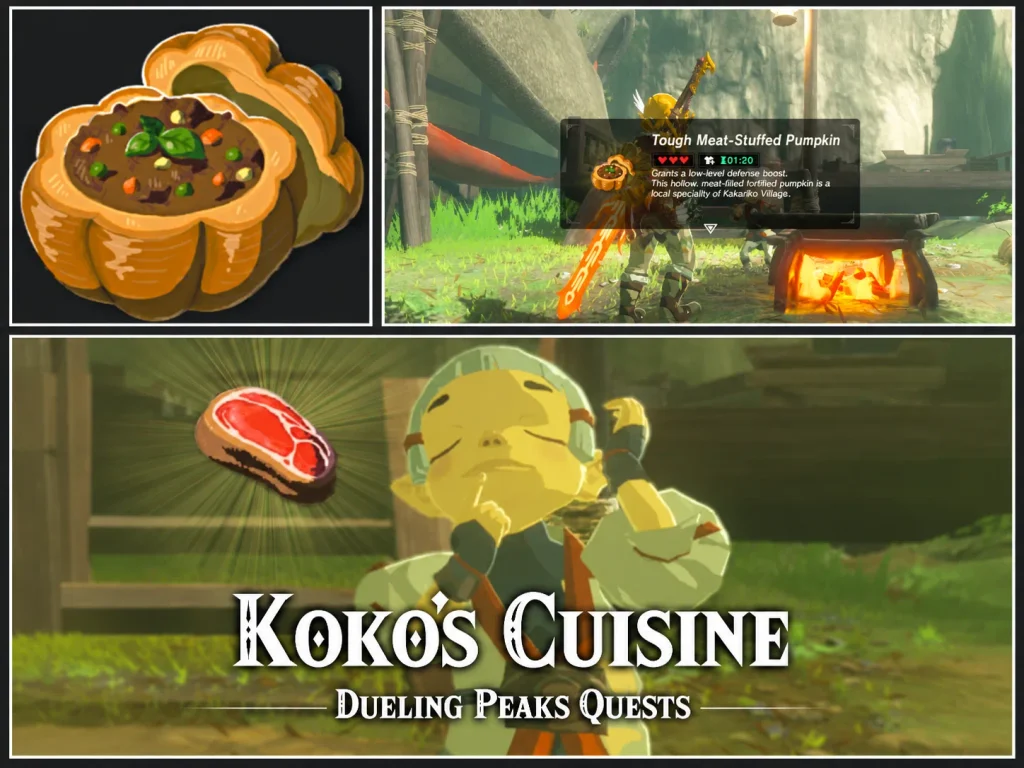
That is excellent videogame cooking. It is less useful when you are standing in an actual kitchen wondering whether putting unseasoned mince inside a vegetable counts as dinner.
The game gives us a little more than those instructions suggest. Koko originally wants Raw Meat because she is trying to recreate her mother’s version of the dish, although the completed recipe allows any meat. When she cooks it, she specifically notices how well the savoury meat works with the sweetness of the pumpkin.
That part sounded promising.
I did not want to reproduce the dish literally. I wanted to treat pumpkin and meat as the brief, then work out what had to happen before I would willingly serve the result to somebody.
This turned out to involve considerably more washing-up than it does in Hyrule.
Koko’s recipe is barely a recipe
Cooking in Breath of the Wild is necessarily abstract. Link can drop ingredients into a pot, wait through a short animation and receive a finished meal. Nobody makes him finely dice a shallot while wondering whether the mushrooms have released enough water yet.
That abstraction is part of why the food is appealing. Koko’s dish gives you its identity rather than its technique: sweet pumpkin, savoury meat, baked together.
Everything else is missing.
There is no instruction for browning the meat, no aromatics, no seasoning, no fat, no acid and nothing to stop the eventual texture becoming one enormous soft thing inside another enormous soft thing.
I decided the game could keep the idea. I was going to interfere with almost everything else.
The first problem was the pumpkin
I was already going out during my lunch break to drop off some parcels, so I added pumpkin hunting to the errand.
This was mid-September. The supermarket had plenty of butternut squash and nothing resembling the small round pumpkins I had imagined when I first chose the dish.
Butternut was close enough in the way that mattered: sweet orange flesh, robust enough to roast and capable of holding a filling once hollowed out.
I bought two.
The first surprise came when I cut one open. A butternut squash is not waiting politely to become a bowl. The stringy seed cavity occupies a relatively small bulb at the bottom; most of the vegetable is solid flesh.
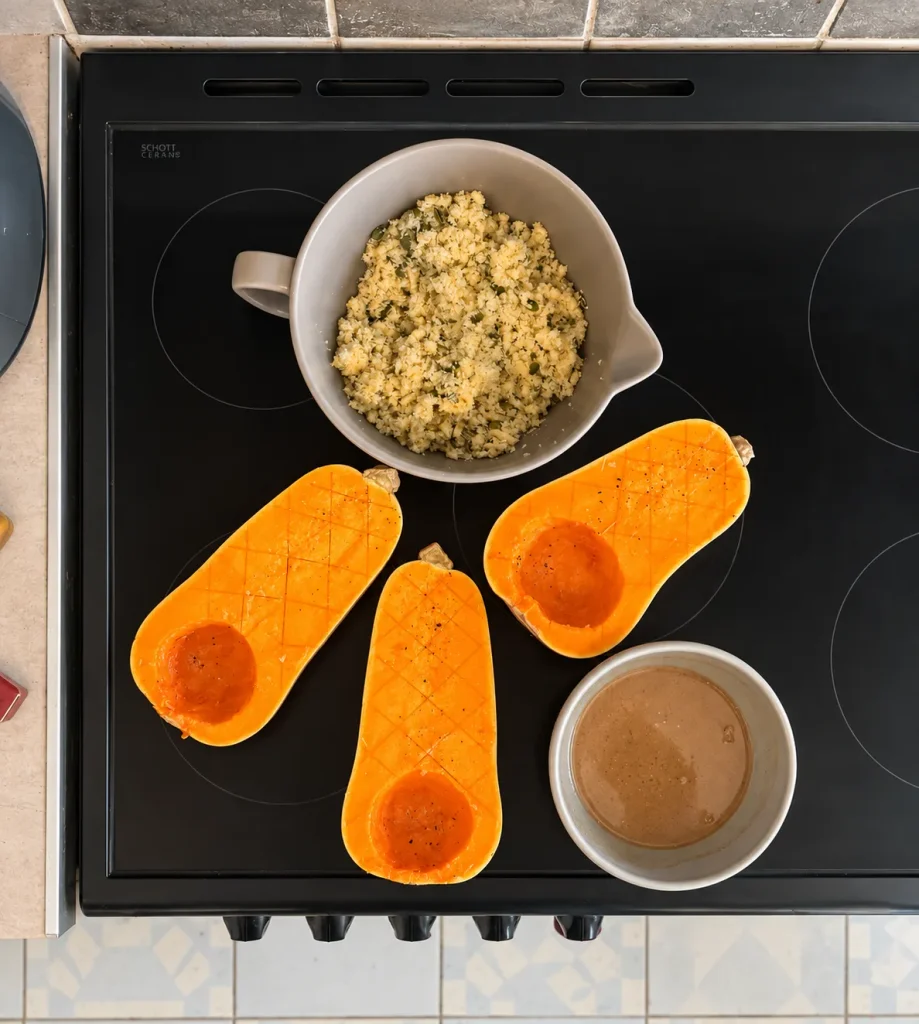
The game’s instruction to hollow out a pumpkin therefore became a two-stage job. I removed the seeds, scored and roasted the squash first, then scooped some of the softened flesh from the neck to extend the cavity into a long trough.
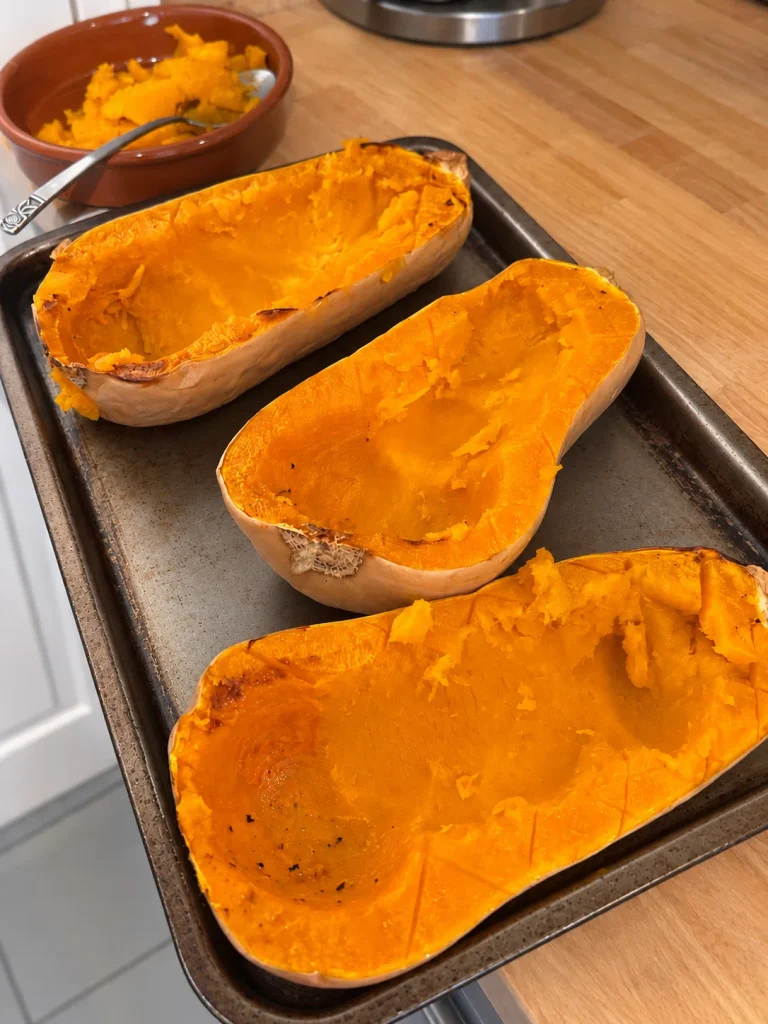
That flesh went back into the filling later. Nothing heroic was achieved by throwing perfectly good squash away.
I also made my first portioning decision here. There were three of us eating, so I roasted three halves and wrapped the fourth for another day.
The fourth half would spend the rest of the evening being right.
Fifty minutes before I turned anything on
My mise en place — chopping, measuring and arranging everything before cooking starts — took about fifty minutes.
That is slow.
I am also not a skilled chef, and pretending I chopped everything in seventeen breezy minutes would be useful to nobody.
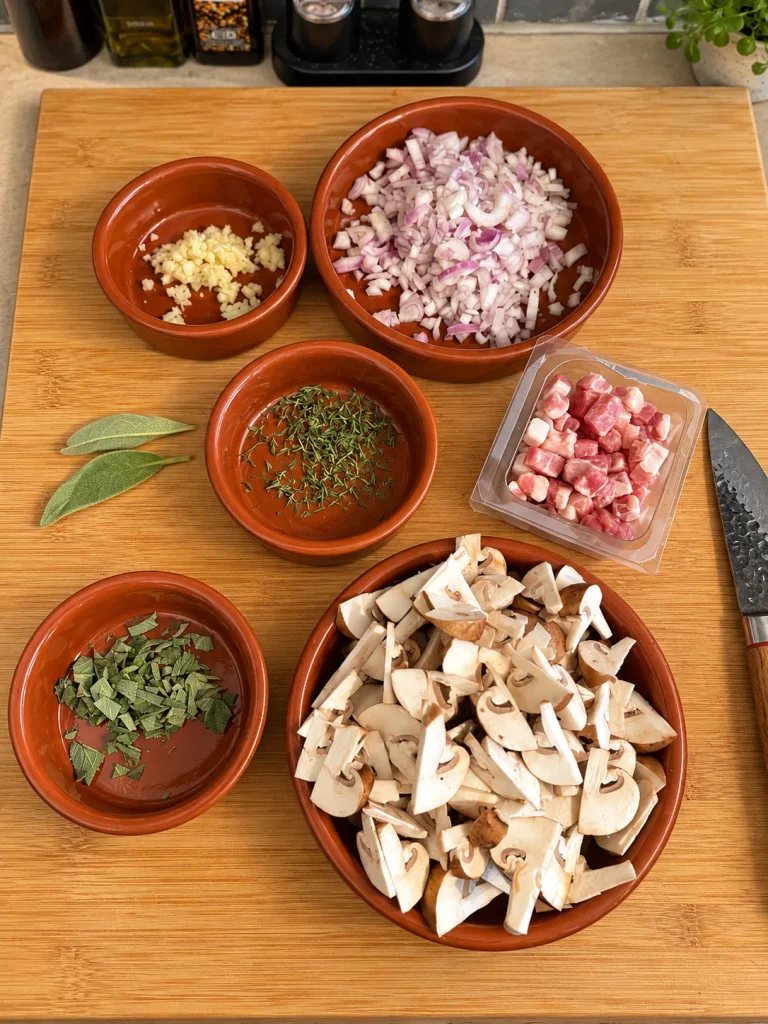
The little terracotta dishes in the photograph are the ramekins that baked cheeses come in; I keep them because they are excellent for organising ingredients before cooking and work just as well as tapas bowls afterwards.
I like doing all the preparation first because once heat is involved I only have to cook. I can wash bowls while something browns, wipe the board between stages and stop to take photographs without remembering halfway through that three cloves of garlic are still sitting intact beside the kettle.
Photographing the process made that even more useful. Trying to slice, measure, fry, clean and photograph simultaneously sounds like an excellent method for producing one burned dinner and twenty-seven blurry photographs.
I did discover that working without scales was irritating. Cups and visual estimates got me through it; the recipe at the end uses weights because I see no reason to inflict that inconvenience on anybody else.
The game gives you ingredients, not cooking
The meat became beef mince because I wanted something rich enough to stand against the squash. Then I started supplying all the things Hyrule had omitted.
Pancetta brought salt and pork fat. Chestnut mushrooms pushed the filling further towards savoury rather than merely meaty. Echalion shallots, sage and thyme gave it the autumnal direction I wanted without requiring anything to taste like potpourri.
I also used considerably more garlic than I am recommending to you.
This is because I like garlic and lack restraint. It is not because doubling the garlic is necessary to understand Zelda.
The actual cooking mattered more than the ingredient list.
I rendered the pancetta first and kept its fat in the pan. The beef went in in batches so it could brown rather than sit in a crowded pan turning grey. The mushrooms had the same treatment: high heat, enough time for their water to escape, then more time until the edges actually coloured.
Only after that did the shallots, garlic, sage and thyme go in.
For the liquid seasoning I mixed white miso, Worcestershire sauce, Dijon mustard, red-wine vinegar, beef stock and a very small amount of nutmeg. None of those ingredients was supposed to announce itself. They were there to make the filling taste as though it had more going on than beef wearing an autumn hat.
Once everything was back together, I mashed some of the roasted squash I had scooped out into the pan.
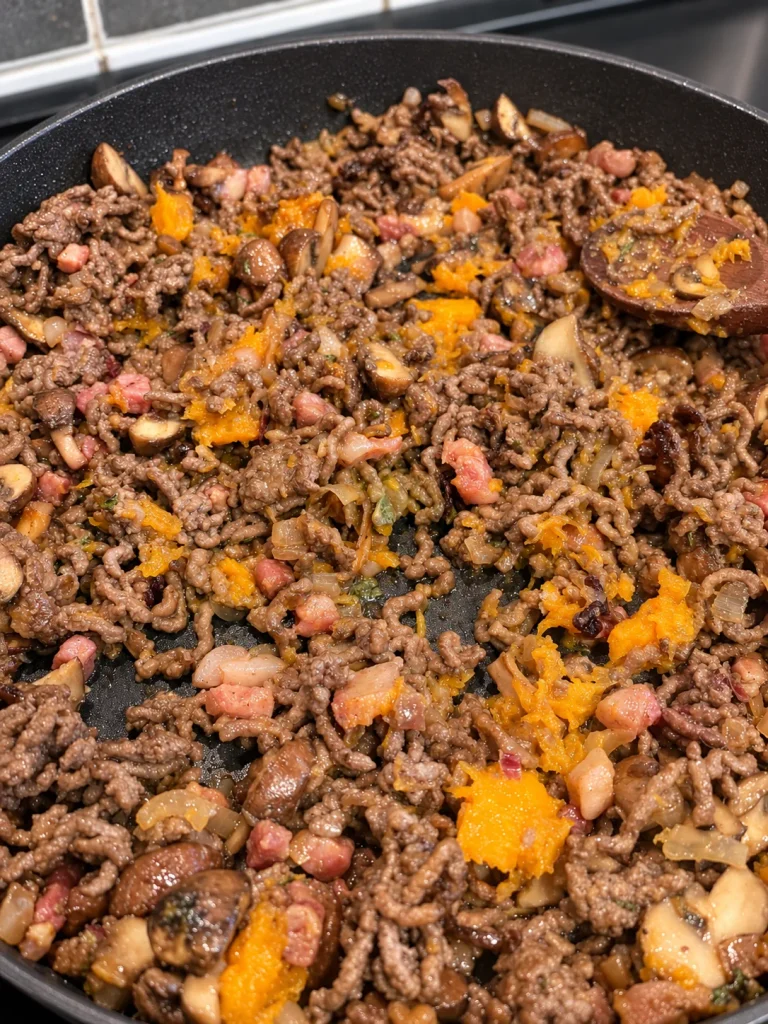
That was the point where the filling stopped feeling like something that happened to be sitting inside a vegetable. The squash sweetened it slightly, bound everything together and connected the centre of the dish to the shell around it.
I tasted the filling expecting to adjust it, then did nothing. No extra salt. No extra vinegar. No emergency condiment introduced because an article required a dramatic final correction.
It was already bloody good.
The fourth squash half was right
I filled the three roasted halves generously.
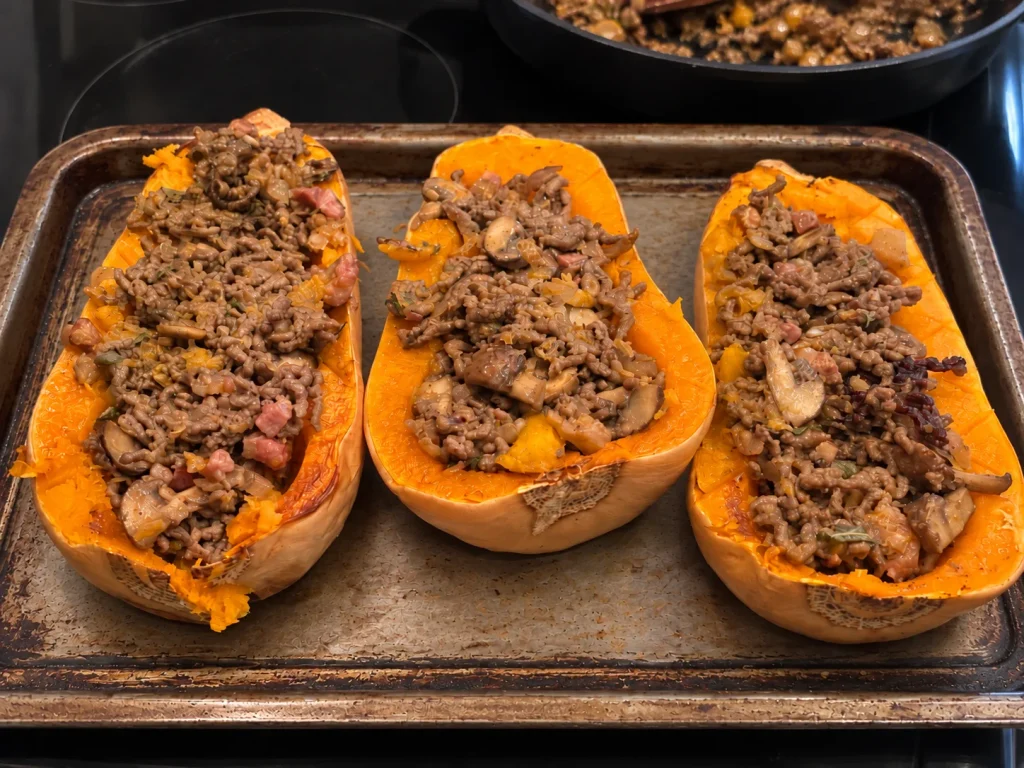
Then I looked at the pan. There was quite a lot left, along with far too much of the Cheddar, panko and pumpkin-seed topping for three portions.
At this point the fourth squash half sitting in the fridge had moved from laziness-related casualty to correct answer.
Still, three people were waiting for dinner, so I topped the ones I had with extra-mature Cheddar, panko, pumpkin seeds and butter and put them back into the oven until everything was browned and crisp at the edges.
There was one unnecessary diversion involving two spare sage leaves, which I decided would look lovely fried crisp over the top. They did not crisp, so I tried again.
Eventually they did, by which point two leaves of sage had received more technical attention than some entire meals I have cooked. They were fine. I would not bother next time.
The actual portioning mistake became obvious when we ate.
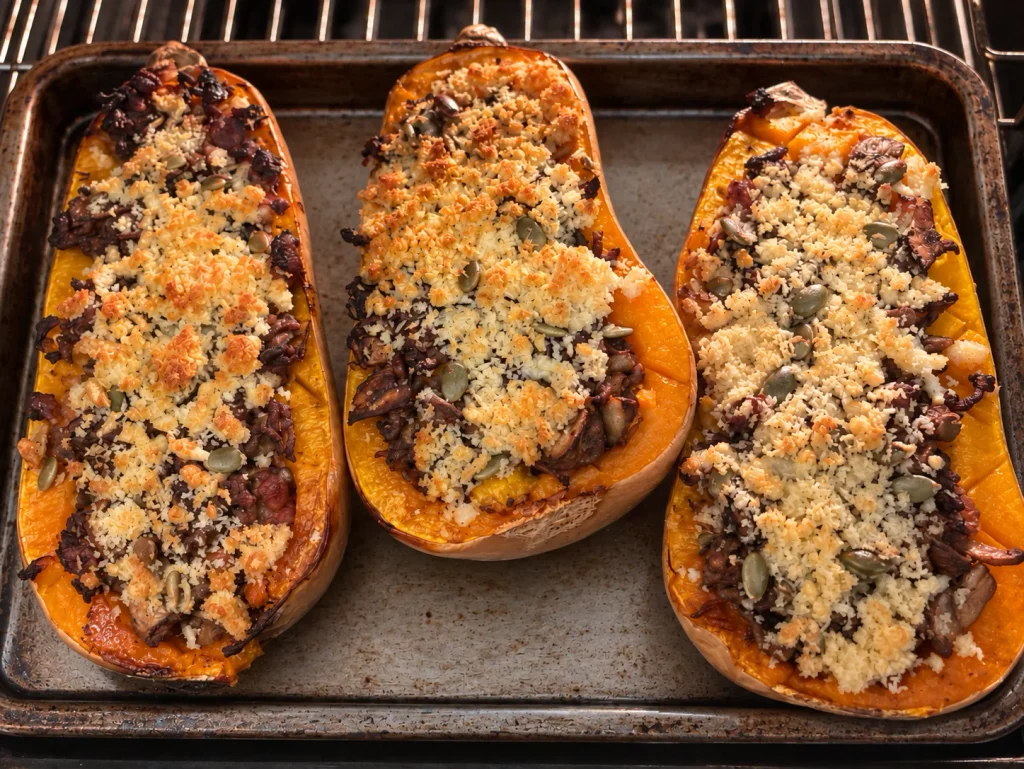
One half looks enormous, but it is a surprisingly restrained dinner masquerading as a boat full of beef. I wanted another one.
That settles the yield more usefully than dividing the weight of the ingredients on a calculator ever could. The filling and topping naturally wanted all four squash halves, and two halves would have been the proper meal.
So the recipe below serves two.
It was genuinely excellent
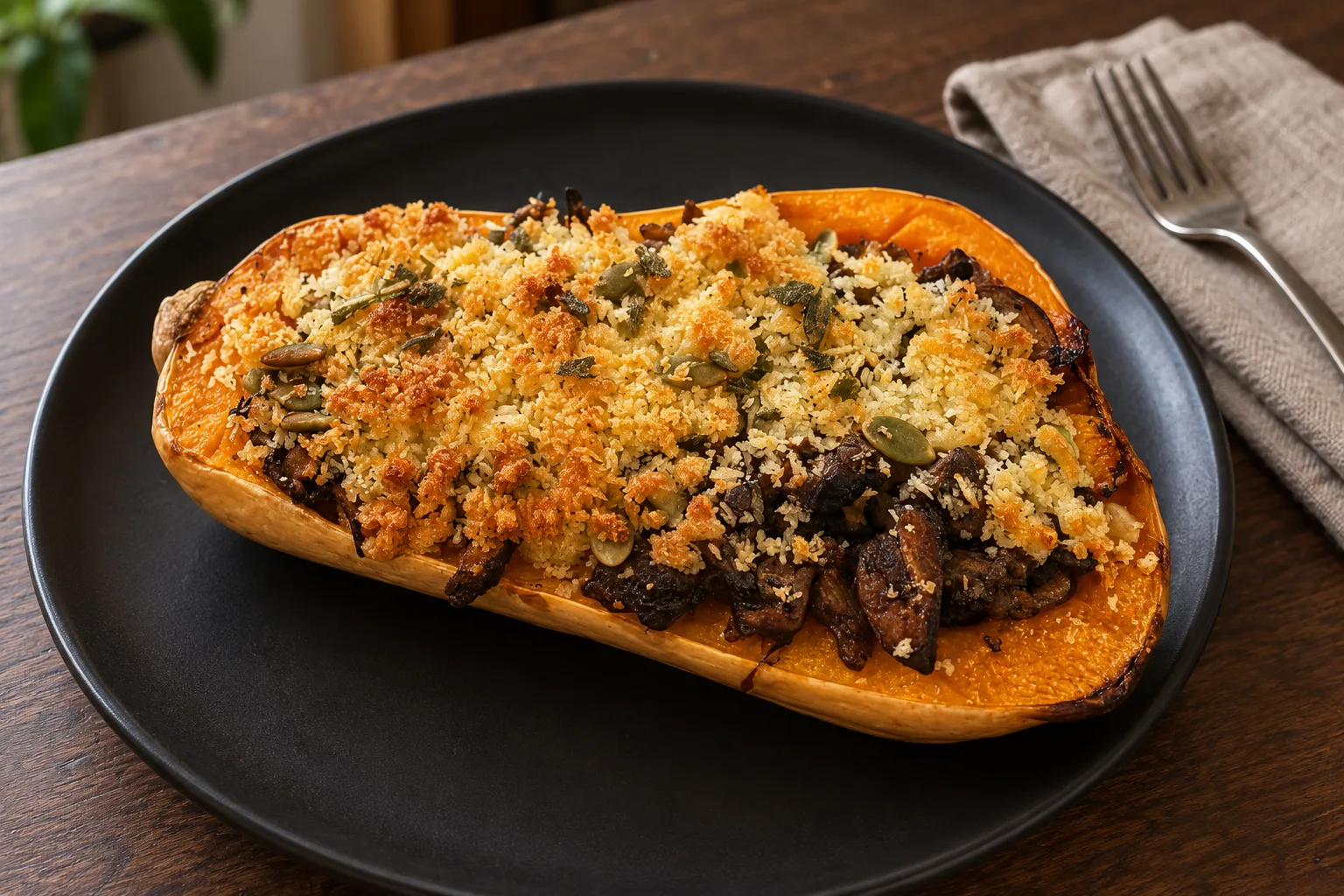
The squash had gone soft and properly sweet around the edges. The pancetta gave the filling little salty bursts against it, while the beef and browned chestnut mushrooms supplied the deep savoury part that stopped the whole thing becoming sweet autumn mush.
The panko topping mattered as well. Squash, minced beef and mushrooms are all capable of becoming texturally polite. Crisp breadcrumbs, toasted pumpkin seeds and browned Cheddar gave the fork something else to find.
And Koko was right about the part that interested me at the beginning. Savoury meat and sweet pumpkin really are the central relationship of the dish. Almost everything I added was there to make that contrast clearer rather than replace it.
It did not taste good for a videogame recipe.
It tasted like something I would make again.
Which is probably the best result a fictional two-ingredient recipe can hope for once it has been forced to survive Tesco, a Thursday evening and an actual appetite.
Koko-Inspired Meat-Stuffed Butternut Squash
Serves: 2 generously
Prep: about 50 minutes
Cook: 60–70 minutes
Total: about 1 hour 50 minutes–2 hours
Ingredients
For the squash and filling
- 2 medium butternut squashes
- 2 tbsp refined rapeseed oil, divided
- fine sea salt
- freshly ground black pepper
- 100g diced pancetta
- 500g beef mince, ideally around 20% fat
- 200g chestnut mushrooms, roughly chopped
- 2 large echalion shallots, finely diced
- 3 large garlic cloves, finely chopped or grated
- 8 fresh sage leaves, finely sliced
- leaves from 4–5 fresh thyme sprigs
- 1 heaped tbsp white miso
- 1 tbsp Worcestershire sauce
- 1 tsp Dijon mustard
- 1 tsp red-wine vinegar
- 100ml beef stock
- ⅛ tsp ground nutmeg
For the topping
- 75g panko breadcrumbs
- 75g extra-mature Cheddar, coarsely grated
- 25g pumpkin seeds
- 25g unsalted butter, melted
- freshly ground black pepper
Method
- Heat the oven to 200°C fan / 220°C conventional. Halve the butternut squashes lengthways and scoop out the seeds and stringy centres. Lightly score the cut flesh in a shallow crosshatch. Rub the four halves with roughly 1 tbsp of the rapeseed oil and season lightly with fine sea salt and black pepper.
- Place the squash halves cut-side down on a baking tray. Roast for 30 minutes, then test the thickest part of the neck with a small knife. Give them another 5–10 minutes if necessary. They should be mostly tender but still firm enough to hold their shape.
- While the squash roasts, mix the panko, Cheddar, pumpkin seeds and melted butter with a little black pepper. Set aside.
- In another bowl, stir together the miso, Worcestershire sauce, Dijon mustard, red-wine vinegar, beef stock and nutmeg until reasonably smooth.
- Put a large frying pan over medium heat. Add the pancetta without extra oil and cook for 6–8 minutes, until its fat has rendered and the edges are golden. Lift the pancetta out with a slotted spoon and leave the rendered fat in the pan.
- Increase the heat to medium-high. Brown the beef in two batches, giving each batch about 2 minutes undisturbed before turning and breaking it into rough pieces. Cook for another 2–3 minutes, then remove it from the pan. The beef will finish cooking later. Use a little of the remaining rapeseed oil if the pan becomes dry.
- Pour away excess fat if necessary, leaving roughly 1 tbsp in the pan. Turn the heat to high, add the mushrooms and leave them alone for the first 2 minutes. Continue cooking for another 4–6 minutes, stirring occasionally, until their liquid has evaporated and the edges are well browned. Remove them from the pan.
- Reduce the heat to medium. Add the shallots, using a little more of the remaining rapeseed oil if needed, and cook for 3–4 minutes until softened and beginning to colour. Add the garlic, sage and thyme and cook for another 45–60 seconds.
- Pour in the miso and stock mixture. Let it bubble for about 1 minute, scraping the browned residue from the bottom of the pan.
- Return the beef, pancetta and mushrooms. Simmer over medium-low heat for 3–4 minutes, stirring occasionally, until the beef is completely cooked through and the filling is glossy rather than wet.
- Remove the squash from the oven and leave it until cool enough to handle. Using a spoon, extend the seed cavities into long shallow troughs through the necks, leaving about 1.5cm of flesh against the skin so the halves remain sturdy. Keep the flesh you remove.
- Mash roughly a quarter of the scooped roasted squash flesh into the meat filling. Fold in more to taste if you want a sweeter, softer filling; keep the remainder for soup, mash or another meal. Cook for another 1–2 minutes, then taste.
- Spoon the filling generously into all four squash halves, mounding it slightly above the edges. Divide the panko mixture over the tops and press it down lightly.
- Return the stuffed squash to the oven for 15–20 minutes, until the topping is deeply golden, the pumpkin seeds are toasted and the squash is completely tender.
- Leave the stuffed squash to rest for 5–7 minutes before serving.
- Serve two halves per person and enjoy!
Questions about the recipe? Leave a comment below. If you need to swap an ingredient, something in the method is unclear, or your squash is behaving differently from mine, tell me what you’re working with and I’ll try to help.
Leave a Reply