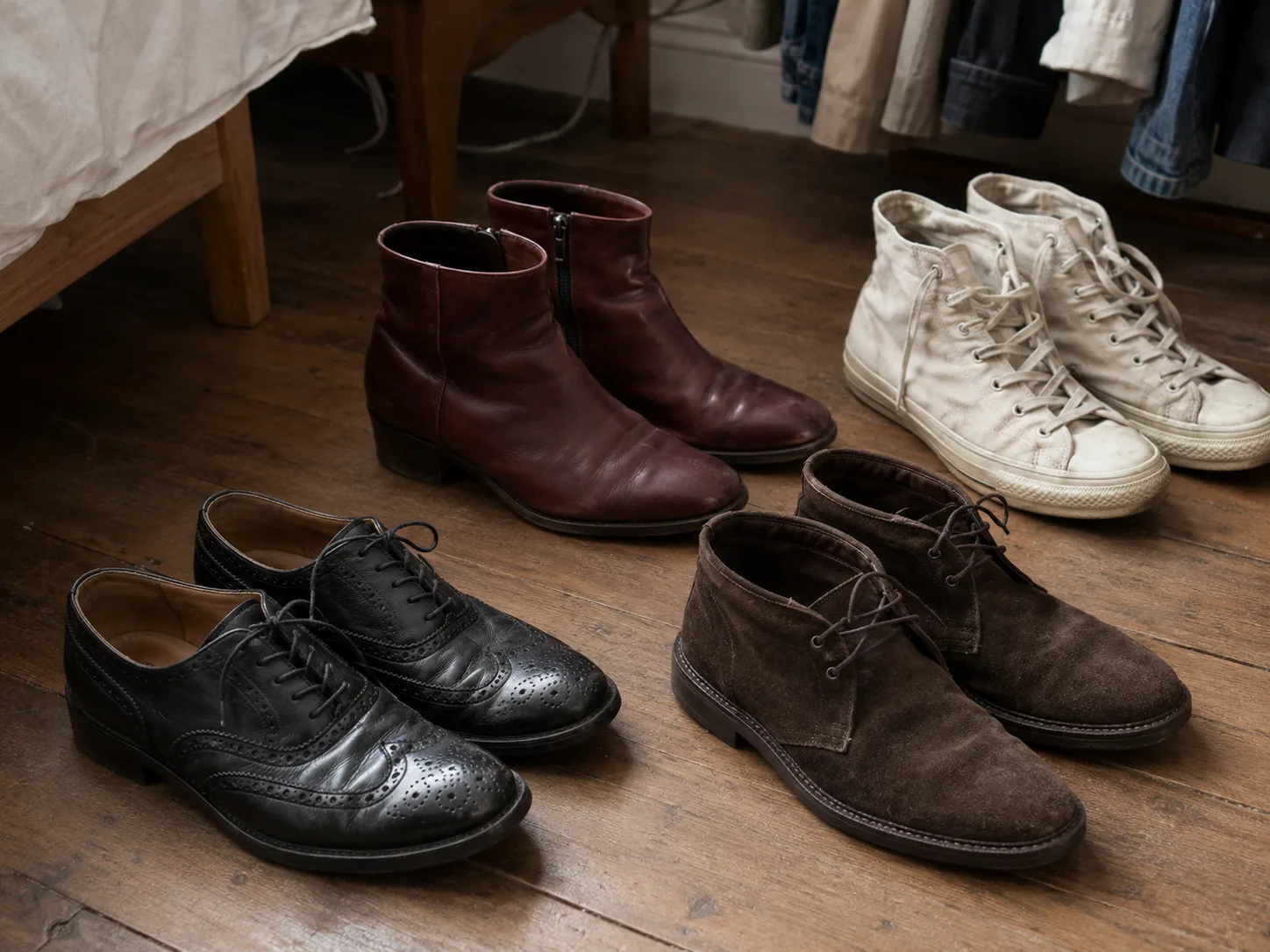
I had four pairs of shoes on the bedroom floor before I went shopping.
This was less organised than it sounds. I had started with the black brogues because I knew I had worn them for years, then fetched the burgundy boots because I wear those much less often, then the suede chukkas because suede changes differently, and finally a pair of grubby off-white high-tops because four pairs of serious leather footwear lined up beside the bed was beginning to look like evidence seized from a very specific crime.
The brogues are black pebbled leather, longwing style, with a broad round toe and enough wear now that nobody would mistake them for a recent purchase. I bought them second-hand about six years ago. The leather is creased, the lining has darkened and the polished edges of the broguing are softer than they used to be.
My burgundy ankle boots have had a quieter life. They are smooth leather with an almond toe, inside zip and a heel of about five and a half centimetres. I love them, but they work with perhaps four outfits without becoming the entire evening’s agenda. The leather has softened across the vamp and there are scuffs around the heels, although they still look comparatively smart.
The dark-brown suede chukkas were bought new around four years ago. Their nap is flatter over the toes, they have acquired some rain marks and the laces are beginning to fuzz. The canvas high-tops, only about fourteen months old, have managed to look older than all three. The off-white canvas is creased across the forefoot, the rubber has given up being particularly white and the fabric inside the heels has started to fuzz.
None of this told me anything clever about feet.
It told me something simpler: shoes do not remain neutral objects once somebody starts living in them.
Clothes record wear too, obviously. A shirt softens. Elbows shine. A trouser hem frays. Shoes seem to keep the record in more places at once. The upper bends, the inside changes, the sole wears and the whole thing becomes less like the object that came out of the box.
Which makes buying somebody else’s slightly different from finding a good second-hand jacket.
A cobbler can save it. That does not mean I should buy it
Later that week I went into a small pre-loved dress agency in Shrewsbury, rather than doing another circuit of the charity shops.
The clothes were more tightly edited, and the shoes had their own low shelving beside the fitting area, with a chair close enough that trying on a pair did not require balancing against a wall and hoping nobody needed to get past.
It was an excellent place to discover that cobblers are rather more optimistic about old shoes than I am.
In a March 2026 Guardian feature, four British cobblers — Joey Cope, Chris Hulse, Antony Frith and Trish Clarke — talked through what can often be repaired if a shoe is otherwise worth saving. Soles, heels and other worn components are not necessarily the end of the story.
That is useful advice if you already own the shoes.
I am asking a slightly different question when I am standing in a shop deciding whether to hand over money for them.
A cobbler can quite reasonably look at an old pair and think about what can be rebuilt. I have to decide whether I want to begin my ownership with the repair, the cost of the repair and whatever else the previous owner has already contributed.
Those are different calculations.
Repairability increases a shoe’s possibilities.
It does not create an obligation to buy it.
What looks alarming is not always what matters
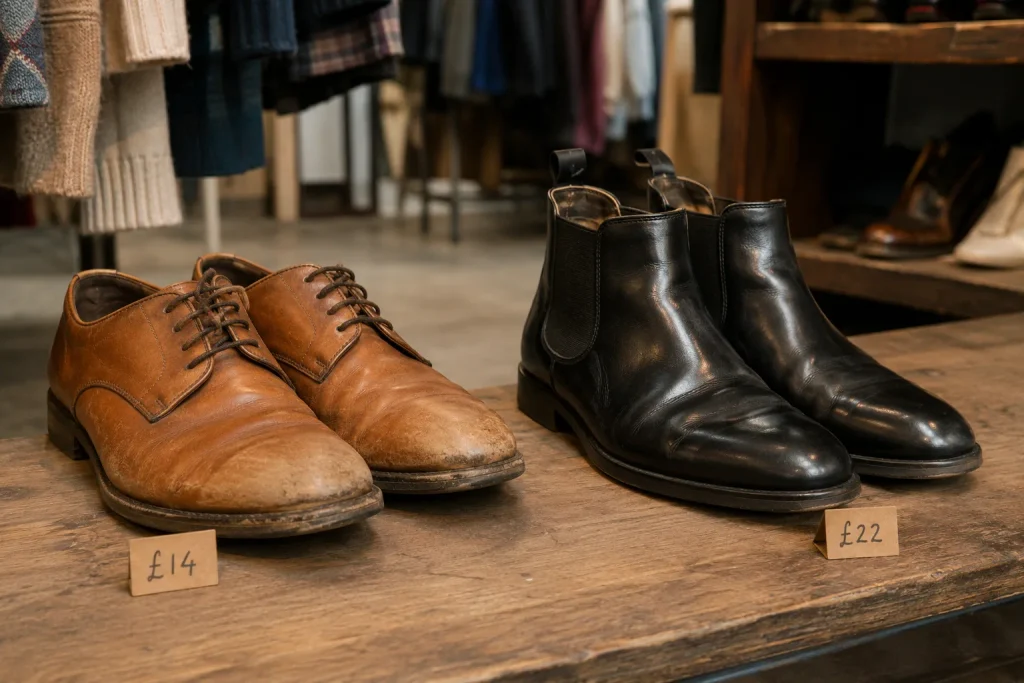
The first pair I picked up were tan leather derbies for £14.
They looked dreadful.
The toes were scuffed pale at the edges. The leather soles had been scratched almost grey. The heel pieces had enough visible wear that I initially put them back without even trying them.
Then I picked them up again.
The leather above the sole still felt flexible. I could not see any split running through it. The visible stitching was together. Inside, the lining was worn but intact.
Squirrel Hill Shoe Repair’s guide to thrifted shoes makes a useful distinction here: worn soles and heels may be replaceable, while the condition of the upper, interior and underlying structure can matter more than whichever bit looks most dramatic from three feet away.
I was doing exactly what that advice warns against — allowing the ugliest part of the shoe to make the decision before I had looked at the rest.
It still did not make me want them.
They were a warm tan that would have spent most of its life arguing with my trousers, and the shape was perfectly respectable in the way hotel conference rooms are perfectly respectable.
£14 was cheap. I still did not need them.
The next pair reversed the problem.
Black Chelsea boots, £22, narrow almond toe, glossy leather, clean black soles. From a few feet away they looked considerably better than the derbies.
Somebody had polished them properly.
Inside, the polish ceased to be relevant.
The lining at both heels was rubbed through in places. The insoles were darkened and visibly depressed from wear. One pull tab was beginning to separate where it joined the boot.
I do not know what a cobbler would have charged to deal with that particular combination, and I would not pretend to know whether all of it needed dealing with at once.
I only knew that my interest in the boots was not strong enough to pay £22 for the privilege of finding out.
That became the useful hierarchy.
A worn-looking sole under leather I actually liked might still be worth investigating. A beautifully polished upper did not get to overrule everything I found once I turned the shoe over and looked inside.
That is my buying judgement, rather than a cobbler’s rule.
A repair professional has more options available than I do. I am still allowed to hear what can be done and decide I would rather start with another pair.
The shoe remembers where it bent
The most useful thing I learned while researching this article was also the least dramatic to look at.
A shoe has a flex line: the forepart region where it bends as the foot moves. In footwear testing, SATRA places the flexing line across the forepart joint region so the shoe can be repeatedly bent under controlled conditions.
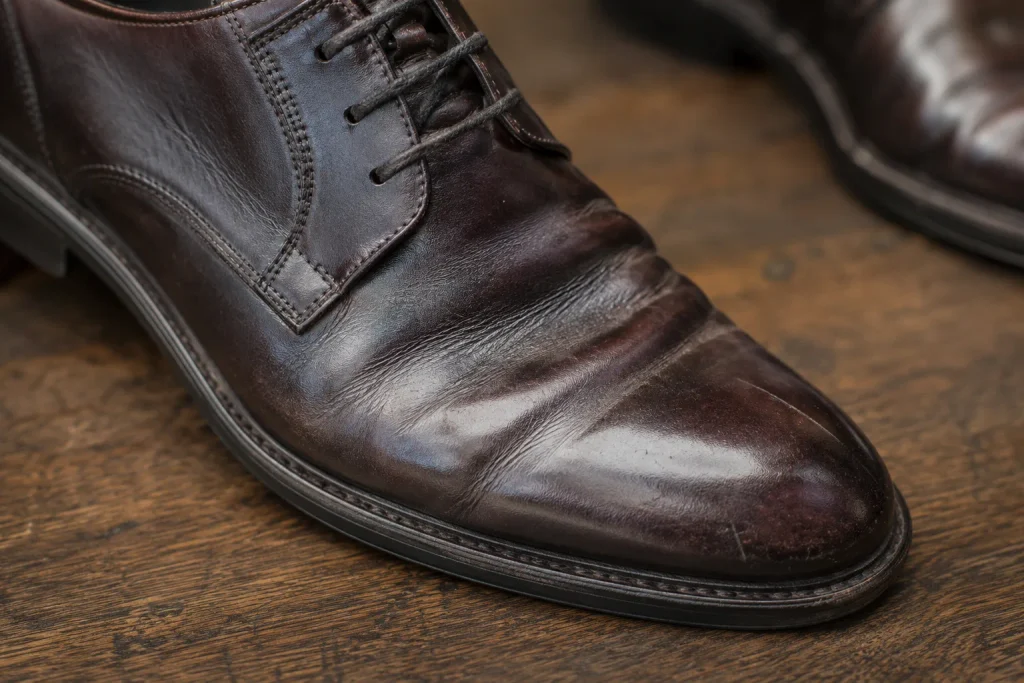
That technical definition does not tell you whether to buy a pair of second-hand boots.
The question I found useful came from putting it beside something Jesper Ingevaldsson has written about creasing on Shoegazing. Leather that has developed established creases through wear does not simply forget them. They may be reduced cosmetically, but the leather has already flexed there, which is one reason he recommends actually trying used shoes rather than assuming an attractive pair will behave like new ones.
My question became:
Where has this shoe already learned to bend, and what happens when I ask it to bend with me?
That is my synthesis, not SATRA’s shopping advice.
It is also where second-hand footwear stops behaving quite like most of the other things I buy.
A worn heel may be replaceable. A sole may have another one stitched or bonded on. Scuffs can sometimes be improved enough that nobody except you remembers where they were.
An established fold across the upper belongs more intimately to the life the shoe has already had.
I do not mean that every crease is a defect. Leather shoes crease because feet bend and leather is not sheet metal. A perfectly smooth second-hand shoe may simply be a shoe nobody wore.
The useful question is whether the existing object works when your foot arrives inside it.
The pair I nearly bought
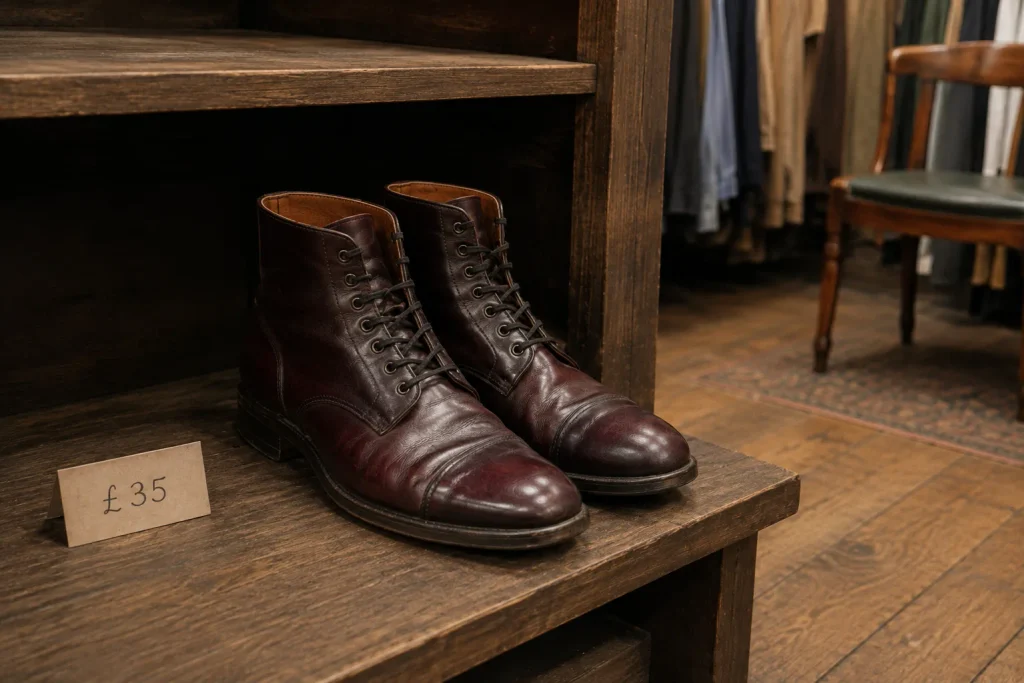
They were on the bottom shelf.
Oxblood ankle boots, £35.
No recognisable maker. The internal marking gave me a size and very little else. The upper was smooth leather, dark enough to look brown-black until the light caught it and brought out the wine-red underneath. Seven pairs of small dark eyelets, cap toes and a shape somewhere between almond and square.
The heel was about four centimetres: enough to alter the line of a trouser without turning the boots into something I would have to plan an evening around.
There was visible stitching around the sole edge. That did not give me enough information to start announcing Goodyear welts at strangers, so I left the construction unnamed.
The soles were well worn. The tan leather lining had darkened with use. There were small scuffs at the toes.
The uppers were otherwise excellent.
And they had creased.
Both boots had a clear established fold across the vamp. The crease on the left was stronger and sat slightly farther forward than the one on the right.
That was all I could honestly say from looking at them.
I had no idea why the difference was there, and nothing useful would have been gained by inventing a previous owner’s feet to explain it.
The boots were still beautiful.
Annoyingly so.
I already had the chocolate flared trousers in mind.
The oxblood would have worked with those immediately. Charcoal tailoring too. Dark denim. Several shirts. The heel was interesting without being theatrical, and the colour had lost enough uniformity to look better than it probably had when new.
This is precisely the point at which I become vulnerable to my own arguments.
The boots were £35. The leather looked good. Any eventual work to the sole could at least be investigated. I had already spent several minutes imagining outfits, which is generally when an item gains a legal team and begins petitioning for residence.
I tried them on.
Standing still, they were excellent.
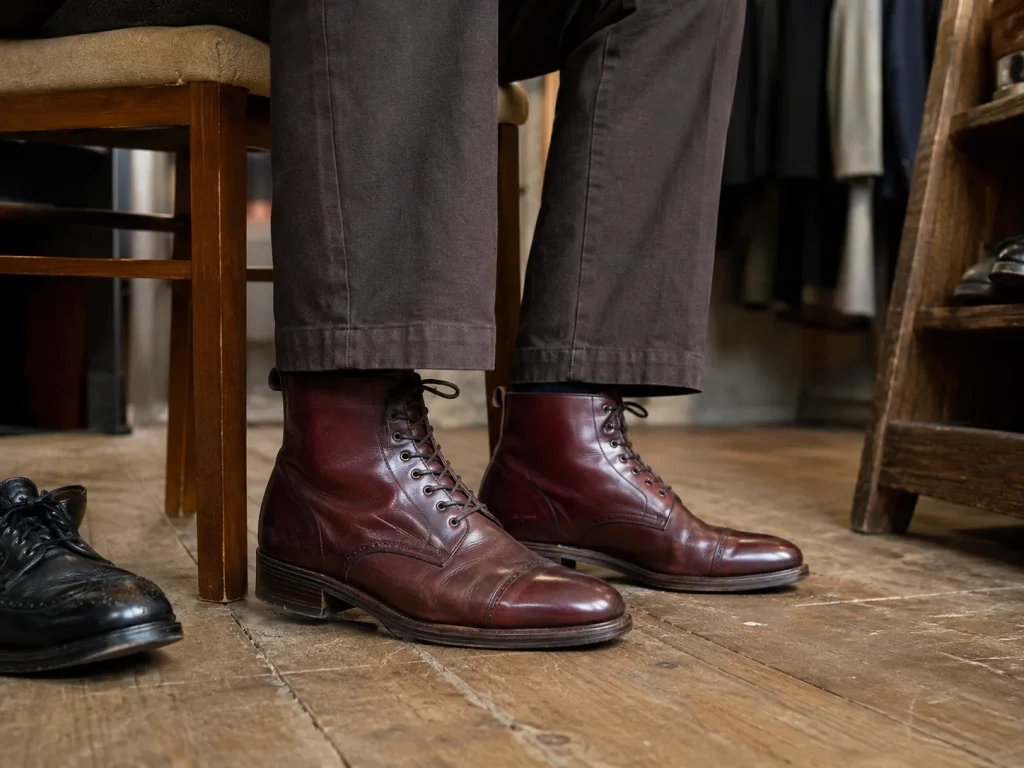
The length felt right. The width felt right. My heel felt secure. Nothing pinched.
I stood in front of the mirror and disliked how pleased I was.
Then I walked.
The right boot was not quite what I expected, but I could have kept walking in it.
The left answered more clearly.
As my foot bent, the established crease came down farther forward than felt comfortable. I could see the stronger fold I had noticed on the shelf. Now I could feel it as well, pressing into the top of my forefoot when I stepped.
I walked to the end of the shop and back.
Then once more, more slowly.
Nothing changed.
The boots were not ruined. I had no evidence that anything catastrophic was wrong with them. A cobbler might have looked at the soles and seen years of possible future maintenance.
None of that changed the way the left boot felt on my foot.
And I was not buying a hypothetical repaired shoe. I was buying this pair, already worn, already bent, for £35, because I wanted them to become mine.
They did not.
I unlaced them and pulled them off.
The paper stuffing went back into the toes. I set the left boot beside the right on the shelf rather than leaving one listing drunkenly against the other.
Then I sat down again.
The black brogues were under the chair where I had left them. Six years of softened grain leather, knocked heel edges and polish worked into the broguing.
I put them on.
I tied the laces.
Leave a Reply