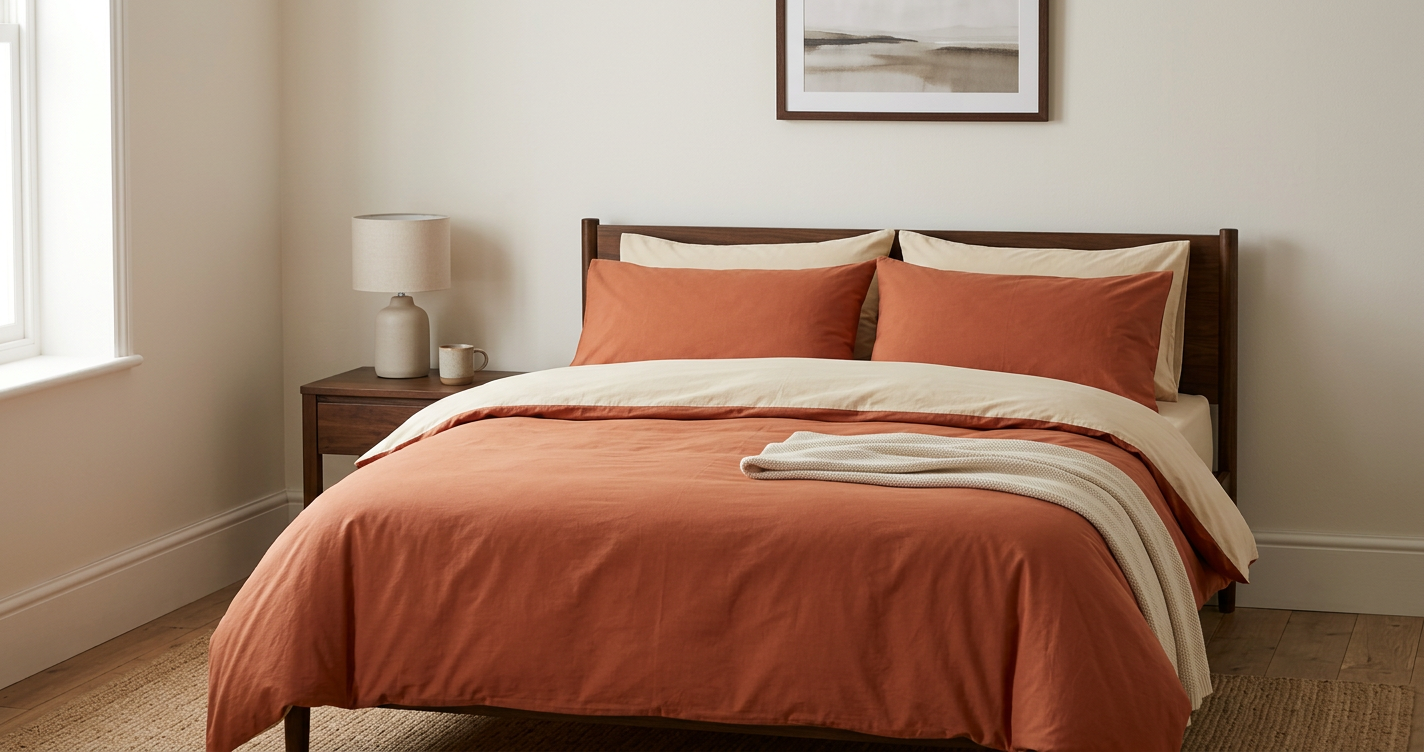
Until now, I bought bedding by three criteria: I liked the pattern, the packet said the right bed size and it was cheap enough. B&M, The Range, job done. Then James’s mum offered to buy us new bedding for Christmas because we are getting a new mattress, and I somehow spent an entire day learning what percale meant.
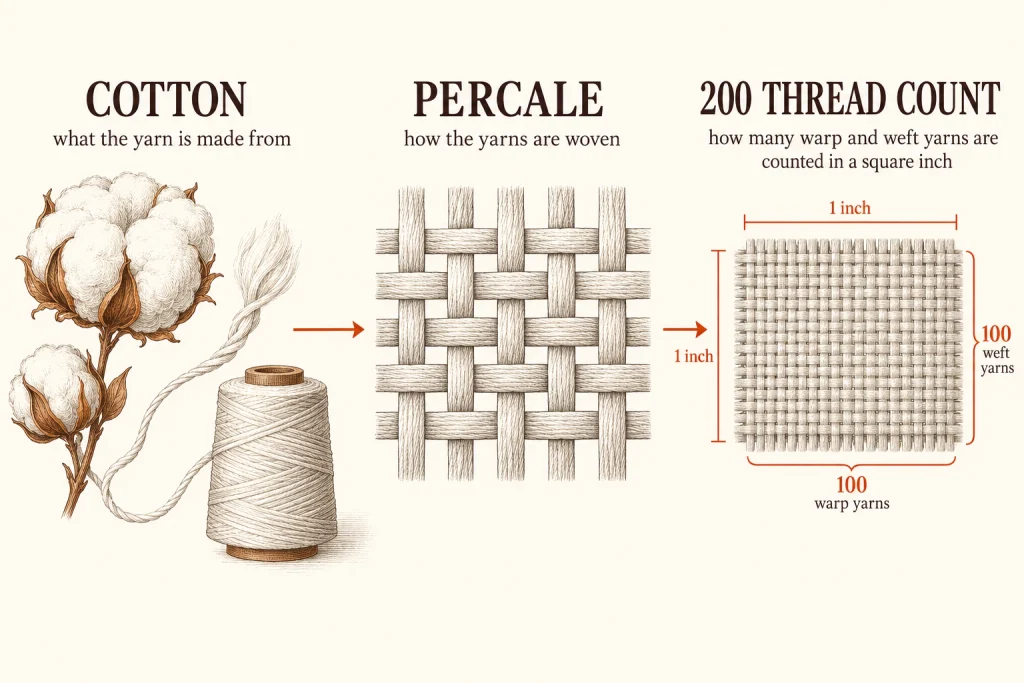
There seems to be a point in adulthood when this sort of information suddenly becomes interesting. Maybe you are getting your own place, replacing the mattress you have had for years or simply becoming the sort of person who would like to know what they are spending a couple of hundred pounds on. I have not slept in our new bedding yet, so this is not a review of it. This is the guide I needed when I realised that cotton, percale and 200 thread count are three different pieces of information.
Start with the fibre, then the construction
The easiest way into bedding labels is to separate fibre from construction.
Fibre tells you what the yarn is made from: cotton, polyester, flax, regenerated cellulose or silk. Construction tells you what has then been done with that yarn: woven as percale or sateen, brushed into flannel, knitted as jersey.
A label saying 100% cotton percale is therefore giving you two pieces of information. Cotton is the fibre. Percale is the weave.
Once you separate those two questions, bedding labels become considerably less annoying.
Bedding materials at a glance
| Material or construction | What it is | Main benefit | Main drawback |
|---|---|---|---|
| Cotton | Natural cellulose fibre from the cotton plant | Absorbent and durable | Wrinkles and can shrink |
| Polyester / polycotton | Synthetic polyester, or polyester blended with cotton | Wrinkle-resistant and easy-care | Polyester absorbs little moisture and can attract static, oils and pills |
| Linen | Bast fibre from the flax plant | Strong, absorbent and quick-drying | Wrinkles readily; repeated hard creasing can weaken it |
| Bamboo-derived viscose | Regenerated cellulose made using bamboo as the plant source | Absorbent and drapes well | Conventional viscose loses strength when wet and can shrink or stretch |
| Bamboo-derived lyocell | Regenerated cellulose produced by the lyocell process | Strong when wet with good drape and shape stability | Can fibrillate under wet abrasion unless controlled in processing |
| Silk | Natural protein fibre produced by silk-secreting insects | Smooth, absorbent and strong | Light and perspiration weaken it, and production is expensive |
| Percale | Plain weave, usually one-over, one-under | Crisp, matte surface | Wrinkles more readily than sateen |
| Sateen | Weave using longer yarn floats | Smooth, drapey and less prone to wrinkling | Longer floats make it more prone to snagging |
| Flannel | Usually woven fabric brushed to raise a soft nap | Soft, fuzzy surface suited to colder-weather bedding | The napped surface can pill |
| Jersey | Knitted fabric made from interlocking loops | Stretchy, relaxed and T-shirt-like | Can pill and stretch out with age |
Cotton: the useful default
Cotton is a natural cellulose fibre taken from the cotton plant.
The George Washington University Textile Museum describes cotton as absorbent, soft to the touch and strong when wet. University of Georgia Extension likewise lists absorbency and durability among its advantages. That helps explain why cotton is so common in household textiles without requiring us to pretend that every cotton sheet is automatically marvellous.
The drawbacks are equally ordinary. Cotton wrinkles, and the fibre swells in water, which can contribute to shrinkage. Consumer Reports’ sheet tests have found measurable shrinkage in cotton sheets, sometimes enough to affect whether a fitted sheet still fits after repeated washing.
And 100% cotton is not a quality grade. Consumer Reports has found large differences between cotton sheets in strength, softness, shrinkage and fit despite the same broad fibre description. Fibre is one part of the decision, not the result.
Polyester and polycotton: easier care, different compromises
Polycotton is simply cotton blended with polyester.
Polyester is a synthetic fibre. University of Georgia Extension describes it as strong, wrinkle-resistant and well suited to wash-and-wear use; adding synthetic fibres to blends can improve wrinkle recovery, strength and dimensional stability. That is the practical argument for polycotton: easier care and less enthusiasm for becoming a crumpled map between washes.
The polyester part brings its own compromises. It absorbs little moisture, can accumulate static, may pill and readily holds oily soil and perspiration odours. The Textile Museum gives much the same warning: low perspiration absorbency, static, oily stains and stubborn pilling all sit on polyester’s debit side.
That does not make polycotton the fraudulent cousin of proper sheets. It means you are trading some of cotton’s absorbency for polyester’s resilience and easier care. Whether that is a good deal depends on what annoys you more.
Linen: strong, absorbent and extremely committed to looking rumpled
Linen comes from the bast fibre inside the stem of the flax plant.
The Textile Museum describes it as strong when wet and dry, absorbent and good at wicking moisture. University of Georgia Extension adds that it dries quickly and is strong and durable.
Its great nuisance is also exceptionally well documented: linen wrinkles badly. University of Georgia Extension says repeated sharp creasing in the same place can eventually weaken the fibre. If your idea of an immaculate bed requires every surface to resemble freshly iced royal stationery, linen has chosen not to cooperate.
Linen also begins to expose the limitations of comparing every sheet by thread count. GSM — grams per square metre — is simply a measure of fabric weight rather than thread density. A larger GSM means a heavier fabric, not an automatic improvement in quality.
“Bamboo” is usually not the fibre name you think it is
The soft bedding sold under the word bamboo is usually not cloth made by taking long bamboo fibres from a plant and spinning them directly.
It is generally regenerated cellulose. Bamboo is processed into pulp; the cellulose becomes the raw material for a manufactured fibre such as viscose, also called rayon, or lyocell.
That distinction is not pedantry. Those fibres have their own properties and their own recognised names.
Bamboo-derived viscose
Viscose is a regenerated cellulose fibre produced by the viscose process.
University of Georgia Extension describes conventional rayon as absorbent, versatile and easy to dye, with good drape among regenerated cellulosic fibres. Its disadvantages include wrinkling, reduced strength when wet and a tendency to shrink or stretch unless treated.
Consumer Reports’ own sheet tests are a useful warning against turning “bamboo” into a performance promise: the bamboo-viscose sheets it tested were highly absorbent, but its fitted samples also showed substantial shrinkage during repeated laundering. That finding belongs to the products tested rather than every viscose sheet on Earth, but it is a good reason to read beyond the plant name.
Bamboo-derived lyocell
Lyocell is also regenerated cellulose, but it is produced by a different process.
A review published in the peer-reviewed journal BioResources compares lyocell with conventional viscose and reports high strength, including good strength when wet, good draping characteristics and good shape stability.
Its characteristic technical nuisance is fibrillation — tiny fibrous elements separating at the surface under wet abrasion. Manufacturing and finishing can be adjusted to control it, but it is a genuine property of the fibre rather than a decorative word invented by somebody’s bedding department.
What should “bamboo” say on the label?
In the United States, the Federal Trade Commission is explicit: textiles may be called bamboo as the fibre only when they are made directly from actual bamboo fibre. Rayon or viscose produced using bamboo as the cellulose source should be described as rayon or viscose made from bamboo. The FTC also warns that processed rayon does not automatically retain supposed antibacterial properties of the original plant.
Great Britain reaches much the same practical point through its fibre-labelling rules. GOV.UK says textile products must state their fibre content, and the legislation says only recognised fibre names may be used in the fibre-composition declaration. Viscose and lyocell appear on that statutory list; bamboo does not.
So if a product page shouts BAMBOO in forty-eight-point type, keep reading until you find the actual fibre composition.
Silk: genuinely different, genuinely expensive
Silk is a natural protein fibre produced by silk-secreting insects.
The Textile Museum describes silk as absorbent, smooth, soft, strong and good at draping. Its long filament structure gives it a surface quite unlike cotton or linen.
The same source gives the other half of the bargain. Light and perspiration weaken silk, insects can attack it, and the labour involved in production contributes to its high cost.
Silk bedding is therefore not merely cotton bedding for people who own a chaise longue. It is a different fibre with different care demands and a different price.
If you already own silk rather than merely considering it, my guide to looking after velvet, silk and other delicate fabrics deals with the care side.
Then choose the construction
Once you know what the fibre is, the next useful question is what sort of fabric has been made from it.
This is why two sets both labelled 100% cotton can have quite different surfaces. The fibre may be the same while the construction is not.
Percale: crisp and plain-woven
Percale is a plain weave: the yarns interlace in a simple one-over, one-under pattern.
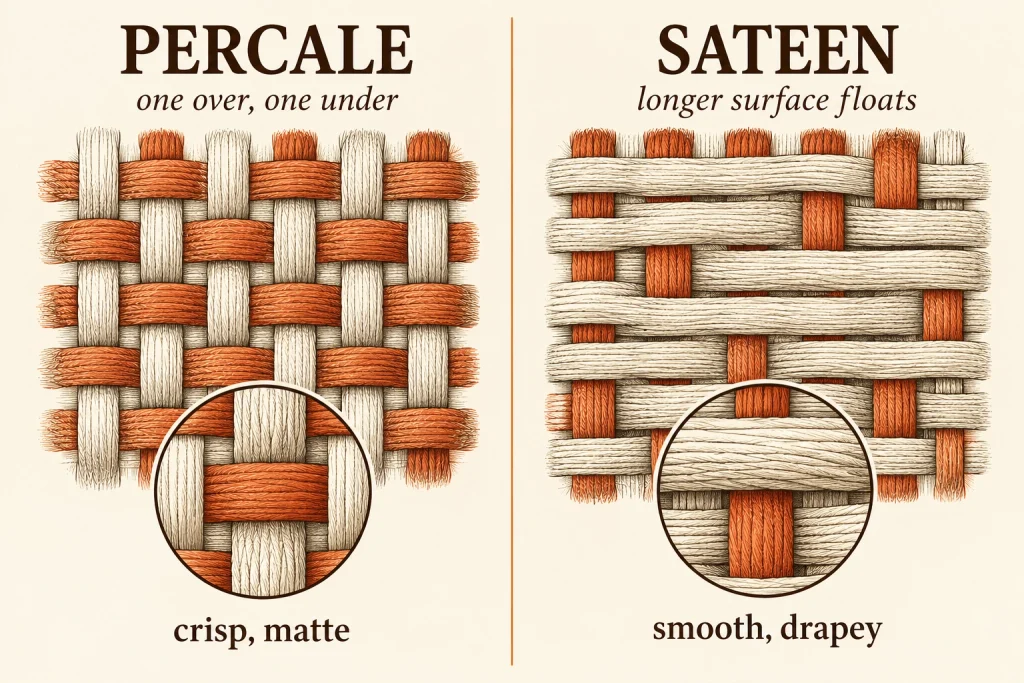
Consumer Reports describes the result as crisp with a matte finish. Cotton Incorporated — a research and marketing company funded by US Upland cotton growers and cotton-product importers — says in its CottonWorks guide that percale is a plain weave with a crisper hand.
That is what percale usefully tells you. It does not guarantee that the cotton is excellent, that the sewing is good or that you personally will enjoy sleeping on it. It tells you what sort of woven surface you are buying.
Wrinkling is one of percale’s drawbacks; CottonWorks notes that higher-thread-count percale can wrinkle excessively. If you want a smooth, lustrous bed that looks freshly composed at all hours, percale is not particularly interested in your ambitions.
Sateen: smoother, drapier and easier to snag
Sateen is also woven, but its yarns use longer floats across the surface instead of interlacing at every crossing.
Consumer Reports describes sateen sheets as smoother, drapier and somewhat glossier than percale. CottonWorks classifies sateen as a satin weave and describes a smooth, silk-like hand.
The longer floats also make the structure more vulnerable to snagging. That is the trade: smoother surface and less wrinkling, but more exposed yarn on the face of the cloth.
James hates the feel of satin. Sateen is not satin, but because he dislikes that smoother, slicker sort of surface, I was hardly going to conduct a vigorous campaign for it. I like both; percale therefore won without bloodshed.
Flannel: the fuzzy surface is the point
Flannel is usually a woven fabric whose surface has been brushed to raise a nap — a layer of lifted fibres on the surface.
CottonWorks describes flannel as a brushed plain- or twill-weave fabric, with brushing used to give it softness and warmth.
That soft raised surface is its main attraction if what you want is cosy bedding rather than crisp or silky bedding.
It also creates a weakness: napped flannel is susceptible to pilling. A peer-reviewed textile study found substantial pilling in the cotton flannel it tested and linked that behaviour to low-twist yarns and the napped surface.
My guide to what pilling actually tells you about a jumper goes further into why fibre, yarn and fabric construction all affect what happens at the surface.
Jersey: your T-shirt became a fitted sheet
Jersey is knitted rather than woven. Its interlocking loops give the fabric natural stretch.
CottonWorks lists single jersey as a knitted sheet construction and notes that conventional thread count is not applicable to knitted sheets.
That makes jersey forgiving and relaxed rather than crisp and structured. Utah State University Extension notes the other side of the bargain: jersey sheets can pill with age and their stretch can become greater over time, making them less dimensionally stable than some woven alternatives.
If you love sleeping in an old T-shirt, that may sound splendid. If you want the bed to crackle faintly when you get into it, probably not.
Thread count is a measurement, not a score
Then there is the number bedding manufacturers have managed to turn into a competitive sport.
Thread count is the number of vertical and horizontal yarns in one square inch of woven fabric.
Two hundred. Four hundred. Eight hundred.
It looks wonderfully like someone has already done the difficult work and assigned each sheet a score.
They have not.
Consumer Reports’ current laboratory testing finds no reliable relationship between a higher claimed thread count and better sheet performance.
Multi-ply yarns can make the number look grander
There is another reason to resist worshipping the number.
A yarn can itself be made from two or more finer yarns twisted together. Consumer Reports notes that manufacturers have sometimes inflated advertised thread counts by counting those individual plies separately rather than counting the resulting yarn as one thread.
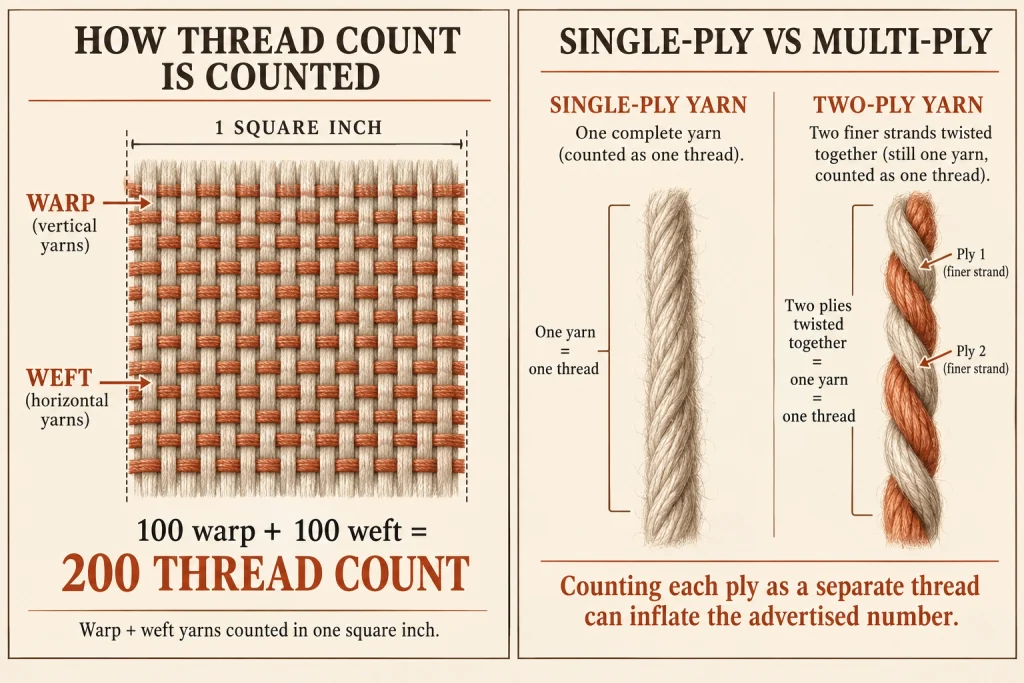
So an enormous number on the packet can tell you something about the arithmetic used on the packet without telling you that the sheet is better.
That mattered in my own order because the burnt orange I wanted was available in 200-thread-count cotton percale rather than the higher-count options I had been looking at, and we had a £100–£200 budget. The research did not reveal that 200 was secretly the supreme number. It revealed that a larger one was not sufficient reason to abandon the colour, construction and price I actually wanted.
Thread count does not suit every kind of bedding
Thread count is principally useful for woven cloth.
GSM — grams per square metre — measures fabric weight rather than the number of yarns in a woven square inch. If a linen or flannel specification gives you GSM, do not treat it as another version of thread count: it is measuring something different.
Jersey is knitted rather than woven, so a conventional warp-and-weft thread count simply is not the right measurement for its construction.
Silk has yet another traditional measure, momme, based on fabric weight. Bedding has apparently decided that one number would have been too easy.
Measure the actual things on the bed
After fibre, construction and thread count, one of the most important specifications is also the dullest: will it physically fit?
Do not stop at the bed-size name.
Measure the duvet itself. Measure the mattress width and length. Then measure the mattress depth, including any topper that lives on it.
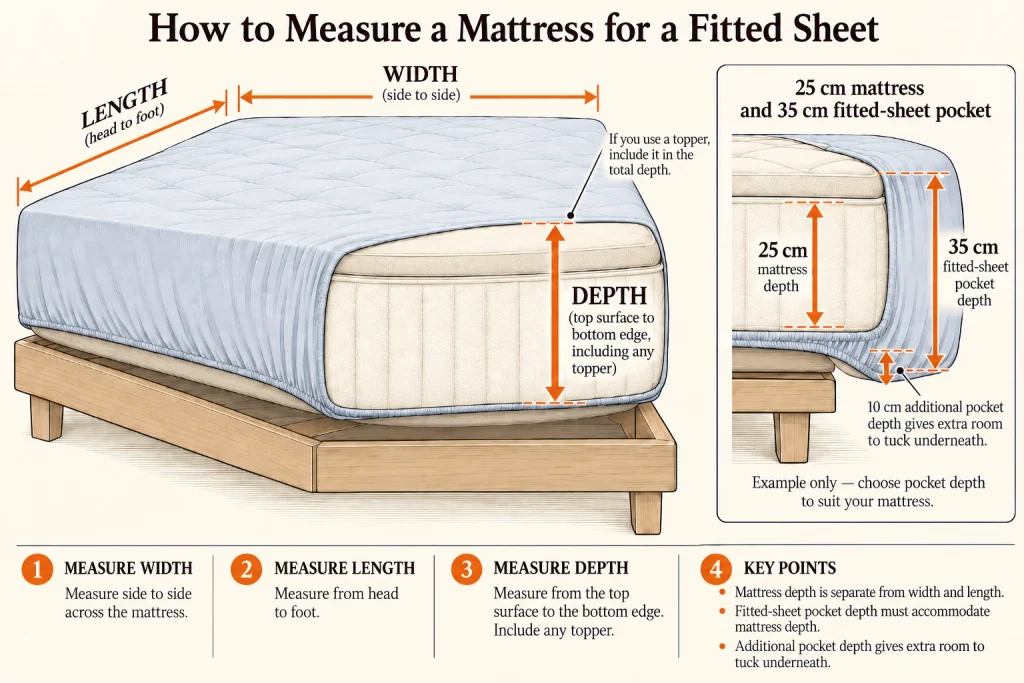
Consumer Reports recommends measuring mattress height in more than one place, away from the corners, and including a mattress pad or topper. It also recommends allowing some extra depth because fitted sheets can shrink in laundering; its laboratory tests have found enough shrinkage in some sheets to change which mattress depths they will fit.
Our current mattress is about 25 cm deep. I ordered a 35 cm fitted-sheet depth because the replacement mattress may be thicker and I would rather tuck away some excess cloth than discover the new sheet stops halfway down the side like a crop top.
The same principle applies to the duvet. Ours measures 200 × 200 cm, so that is the duvet-cover size I ordered. The physical object gets the final vote, not my confidence in what the word double ought to mean.
Try a smaller piece before buying the whole bed
If you understand all the terminology and still have no idea whether you actually like percale, sateen, linen or bamboo-derived viscose, you do not have to begin by buying an entire bed’s worth.
If the range is sold separately, buy one pillowcase in the material or construction first. It is a relatively small commitment and enough fabric to discover whether you dislike the surface against your face.
If you are shopping in person, handle the display bedding too — but use that to judge texture, not to decide how hot or cool the material will be overnight.
Check the returns policy before committing to a complete set as well. Some bedding is returnable only unused; other retailers explicitly let you sleep in it.
A few retailers go considerably further. Panda London currently advertises a 30-night trial on its bedding, and its product pages say you can sleep in, wash and dry it before deciding. Its general terms currently contain contradictory wording about used bamboo bedding, so I would confirm the applicable return policy with Panda before ordering. Scooms currently gives a first Egyptian-cotton or linen bed-linen order a 60-sleeps trial, with a full refund if it is returned within that period. Those are retailer policies, not independent judgements about the products, and I would check the current terms immediately before ordering because policies have an irritating habit of changing after somebody writes them down.
There is even a slightly stranger form of try-before-you-buy if you already know a hotel bed you like. Premier Inn sells versions of the mattress, pillows, duvets and bedding used in its hotels for people to buy at home. If you have stayed there, you have at least encountered some of the range before ordering it, which is more information than stroking a sealed packet under strip lighting.
I did none of this. I read an unreasonable number of labels instead.
Then the orange still won
After all of that, I chose burnt orange.
The duvet cover is burnt orange on one side and cream on the other, with a cream fitted sheet and matching pillowcases. We are hoping to move into our own place in 2027, and I do not yet know what the bedroom will eventually look like, so a strong colour without a complicated pattern gives me something I like now without requiring every future curtain, cushion and lampshade to swear allegiance to it.
I did not become a person who buys bedding by spreadsheet.
I learned that cotton was the fibre, percale was the weave, 200 was the thread count and 35 cm was the sheet depth.
Then the colour still decided.
The difference is that this time I knew exactly what I was trading to get it.
Leave a Reply