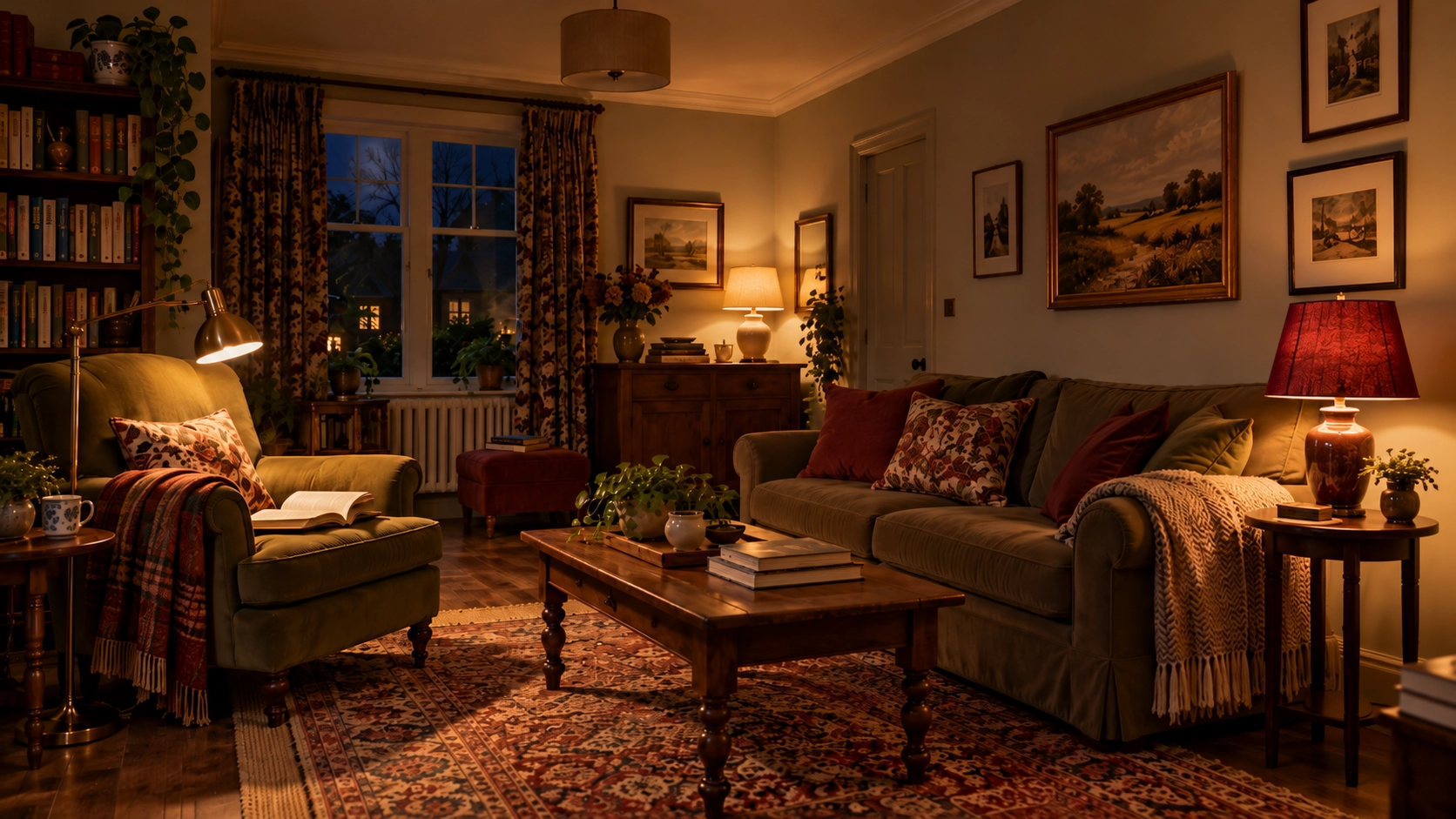
The clocks have gone back, and the living room is once again being asked to function in darkness before anyone has quite finished with the afternoon.
The obvious response is to turn on the big light. One press of the switch and the entire room appears: sofa, bookcase, television, the questionable pile of things on the coffee table. Everything is visible, whether anybody particularly wanted to look at it or not.
I have nothing against ceiling lights. They are excellent when you need to clean, find something you have dropped or see the whole room properly. The trouble begins when that one fitting is expected to provide every kind of lighting you might want throughout an evening.
Reading requires light in a particular place. Watching television calls for something different. Sitting with a drink and doing absolutely nothing productive is another matter entirely.
None of this requires new wiring, a different ceiling fitting or an expensive collection of matching lamps. A few carefully positioned lights can take over the jobs the big light has been doing rather indiscriminately, and second-hand shops can be good places to look for the objects themselves.
The important part is deciding what each lamp needs to do before bringing it home.
Start with what actually happens in the living room
Before buying a lamp, look at the room with the main ceiling light on.
Where do people sit and read? Which table is used for sewing or a crossword? Where do people walk between the sofa and the door? What needs to remain visible when the television is on?
That is more useful than deciding every corner needs a beautiful pool of light.
A lamp beside an armchair might illuminate a book without shining into anybody’s eyes. One on a sideboard might light the furniture and surrounding wall. A smaller lamp might make a gloomy corner feel connected to the seating area. Designers have terms for these different jobs — task, ambient and accent lighting — but the point is deciding what each lamp should do.
I like rooms with darker corners. A little unevenness gives furniture, books and objects more presence than uniformly bright lighting does. That preference comes after making sure people have enough light to use the room comfortably.
Darkness can be decorative. It should not make finding the door an unnecessarily exciting activity.
Put the lamp where its light is useful
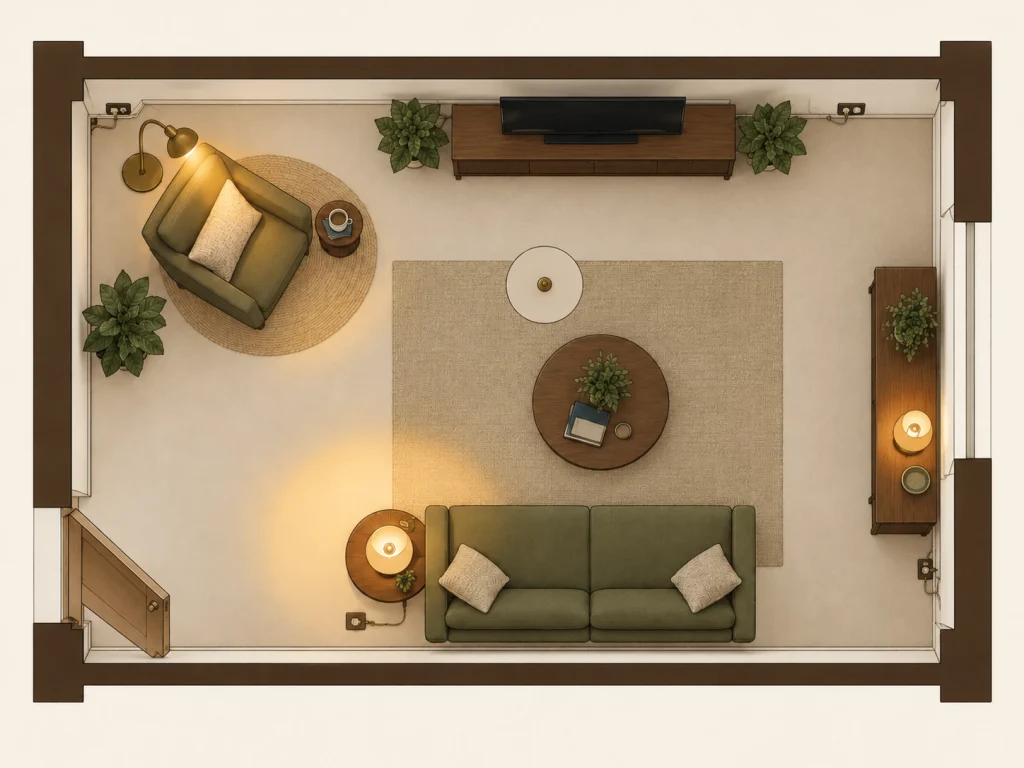
A reading lamp belongs near the reading position. This sounds offensively obvious until you see how many lamps have been placed according to where the furniture looks balanced.
A beautiful standard lamp standing three feet beyond the armchair might contribute plenty to the room while leaving the page in shadow.
An adjustable floor or table lamp is useful because you can direct light towards the book. Keep the bulb out of your direct line of sight. If your hand or head casts a shadow, try the other side of the chair or adjust the angle.
Visibility Scotland’s guidance on lighting and glare recommends positioning a reading light between the person and the material, generally below eye level, and adjusting it to avoid shadows.
The sofa is used for reading, conversation, television and the occasional laptop balanced in a position no manufacturer would endorse.
A table lamp on a nearby cabinet may provide useful background light. Sit down and check whether the shade exposes the bulb in your eyeline, or whether the light reaches anything you actually use.
When watching television, look for reflections in the screen and light falling directly into your eyes. Moving a lamp to the side or directing it towards a wall may work better than placing it opposite the television.
An uplighter — a lamp designed to throw light upwards — can illuminate a wider area indirectly, depending on the surrounding surfaces.
There is no fixed number. Two well-positioned lamps may outperform six attractive objects all illuminating approximately the same bit of carpet.
The lampshade can ruin the arrangement
A lamp base gets most of the attention in second-hand shops. Brass, ceramic, wood, smoked glass: some of it is extremely handsome.
Then somebody puts a terrible lampshade on top.
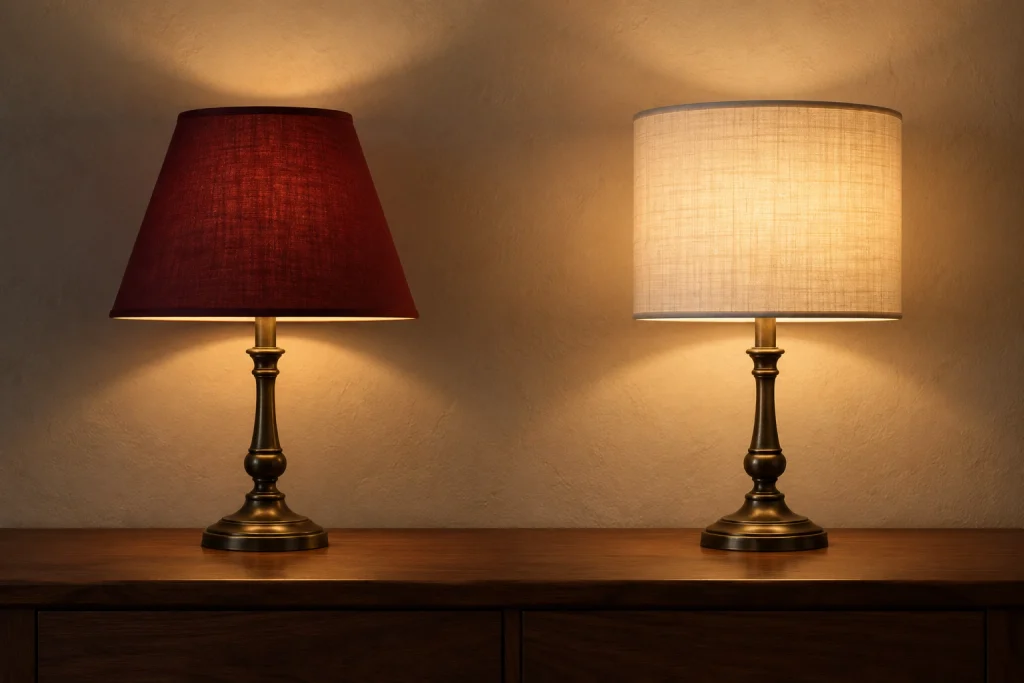
A shade changes more than the lamp’s appearance. Its shape, material and lining affect where the light goes and how much passes through the sides.
An empire shade is the familiar tapered design, narrower at the top and wider at the bottom. It directs much of the light downwards. British lighting maker Jim Lawrence describes this downward spread as characteristic of the style.
A cylindrical shade with translucent sides allows light through its fabric and open ends. An opaque lining may produce a very different effect, even when the outside shape looks similar.
I have a weakness for a pleated shade — one whose fabric is arranged in repeated folds. The texture can be wonderful, particularly in dark fabric beside polished brass or wood. But see it illuminated if possible. Something beautifully rich in daylight might allow very little light through its sides.
Fine for casting light downwards; less useful for brightening a gloomy corner.
Proportion matters too. A tiny shade on a substantial ceramic base can look absurd; an enormous one on a narrow stem can swallow the base.
For a separate second-hand shade, measure its top diameter, bottom diameter and height, and check the fitting. Some sit directly on the lamp holder; others need a shade carrier, a support between the lamp and shade. A pleasing shape is little consolation when it will not attach to the lamp you own.
Choose the bulb for the job
I prefer warm-coloured bulbs for evening lighting, but colour will not rescue a badly placed lamp.
Two numbers help. Lumens measure how much visible light a bulb produces. Kelvin describes its colour temperature: lower numbers generally mean warmer-looking light; higher ones, cooler white.
The Energy Saving Trust identifies around 2,700–3,000K as a warm-white range for household lighting. Lumens are more useful than watts for judging brightness: watts measure power, and LEDs use much less electricity than older incandescent bulbs for comparable light.
The Trust gives approximately 470 lumens for a traditional 40-watt bulb and 800 for a 60-watt bulb.
A lamp illuminating a cabinet may need relatively little output. Reading may require more, especially through a shade or from further away.
Try the bulb in position. A bright bulb behind a thick shade and a lower-output bulb in an exposed fitting can feel quite different.
Check the fitting: a bayonet cap pushes in and twists into place; an Edison screw screws into its holder. Use the specified type and never exceed the lamp’s maximum bulb wattage.
For adjustable brightness, use a dimmable LED and compatible dimming equipment. The Energy Saving Trust warns that not all LEDs work with all dimmers.
I would rather have one properly useful reading light and a gentler lamp elsewhere than compromise both with identical bulbs. Matching colour temperature can help a room feel coherent; matching brightness matters less when the lamps have different jobs.
Buying second-hand lamps without buying trouble
An unusual ceramic glaze, a substantial brass stem or smoked-glass base can make a second-hand lamp appealing. But age is evidence of appearance, not electrical safety.
Electrical Safety First advises avoiding second-hand lamps because their history is unknown. If you buy one, be selective about the seller and condition.
Commercial sellers of second-hand electrical goods in Great Britain must supply safe products. Business Companion’s Trading Standards guidance specifies requirements for approved plugs and correct fuses. Private sales are different. I would favour a seller who can explain what inspection and testing has been carried out.
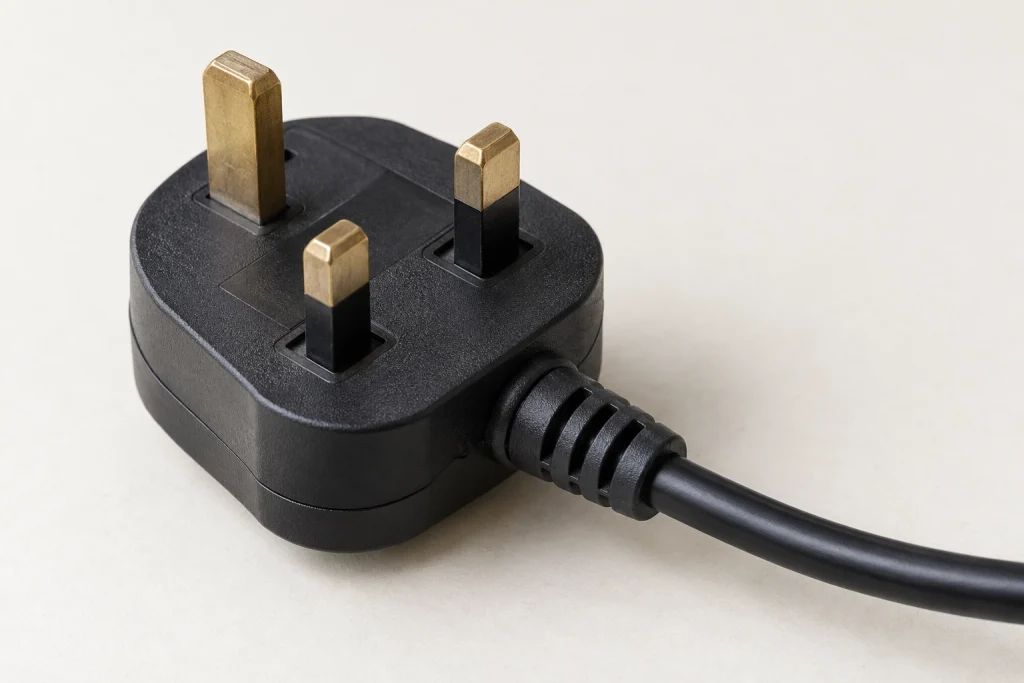
Check before buying:
- Plug and fuse: A suitable UK three-pin plug in good condition, with the appropriate fuse confirmed by the seller.
- Cable: No fraying, exposed wires, damaged insulation or suspicious repairs.
- Base and fittings: Stable, secure, with no visible damage around the switch or bulb holder.
- Overheating: No scorching, discolouration or unexplained alterations.
- Testing: Ask what checks were carried out, and when.
A dated PAT label is reassurance that testing took place, not proof the lamp is safe. Trading Standards warns that testing can miss hazards. The Office for Product Safety and Standards also recommends checking for recalls and modifications.
If the electrical condition is doubtful, leave the lamp behind or have it assessed and repaired by a competent electrical professional before use. No DIY rewiring. At home, keep the lamp stable, leads clear of walking routes and the fitting away from curtains or other flammable materials; use a compatible bulb within its rating.
Alternatively, buy a second-hand shade you love and pair it with a suitable modern electrical fitting. You can enjoy the older design without insisting on old wiring.
Arrange the lamps before buying another one
Start with the lamps you already own. A plain modern lamp may work better than a dramatic second-hand one that lights nothing useful.
Move lamps before adding any. Check the sockets: a floor lamp that requires a trailing cable across a doorway is a poor fit, however beautifully its base suits the wallpaper.
Other people use the room. They need to move, reach tables and sit comfortably without negotiating an obstacle course of decorative lighting.
As with making a modern room feel old-world without filling it with clutter, objects earn their place through use, not merely style.
A lamp might eventually earn its place for its shape, material or sheer eccentricity. I am quite prepared to forgive a wonderful object a little inconvenience. But it still has to provide some light worth having, or there is no particular reason to give it a plug socket.
The big light can stay. When it is time to hoover beneath the sofa or retrieve something that has vanished behind a chair, I shall be very pleased it exists.
For the rest of the evening, I would rather be able to see the book in my hands without illuminating every other possession I own.
Leave a Reply