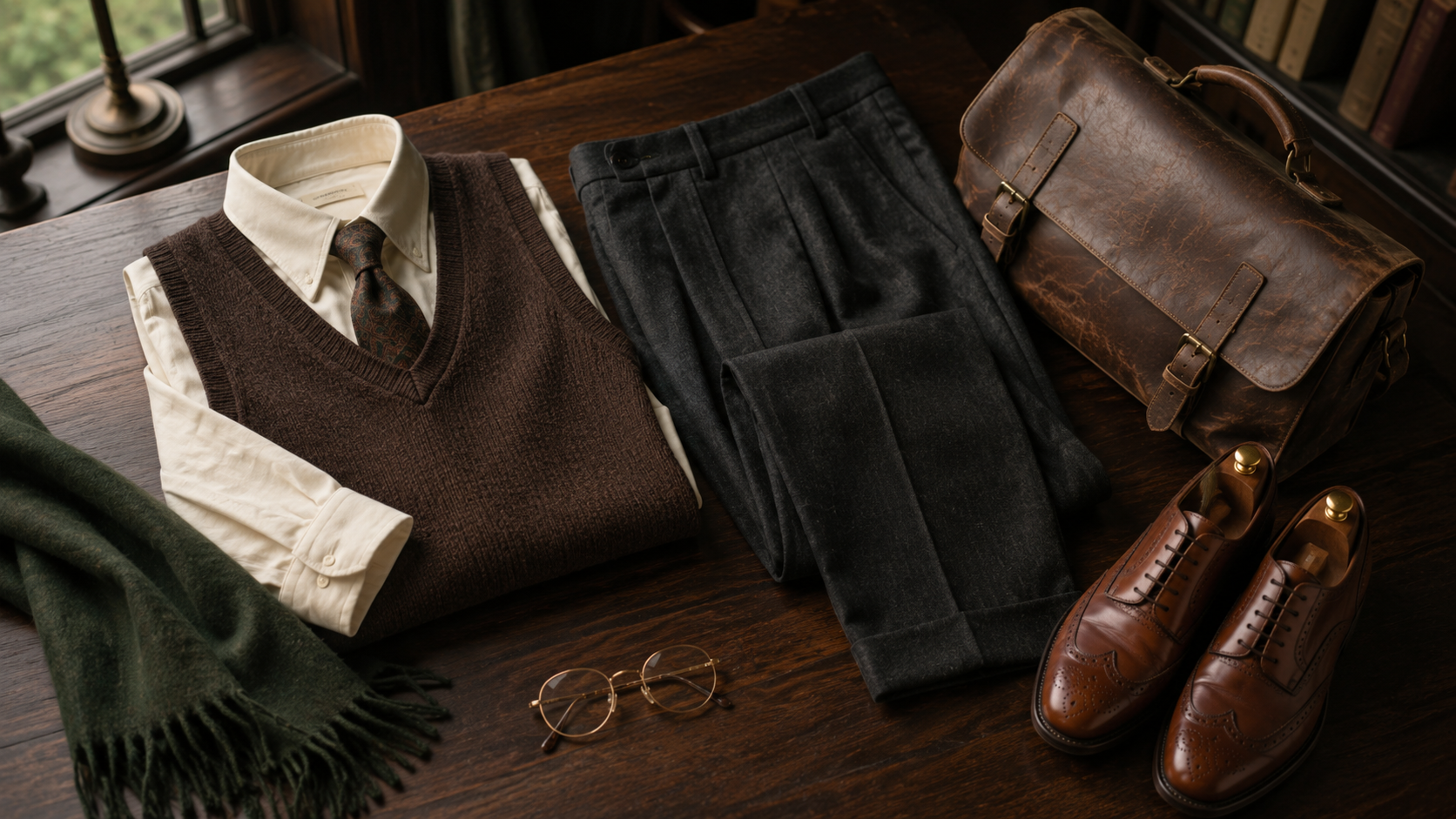
Dark academia is easy to recognise in photographs: shadowed libraries, old books, severe coats and enough brown wool to upholster a respectable country house.
Strip away the scenery and the clothes are less mysterious. The look draws heavily on traditional tailoring, collegiate and school-uniform references, dark knitwear, leather footwear and subdued colour, with enough texture to stop the whole thing becoming a brown administrative exercise.
In Dark Academia: Bookishness, Readerly Self-Fashioning and the Digital Afterlife of Donna Tartt’s ‘The Secret History’, literary scholar Simone Murray describes dark academia as an online performance of bookishness and identifies The Secret History as its defining text. That helps explain the libraries, elite-university references and cultivated melancholy. It does not make fictional-student impersonation a dress code.
The useful version has to survive after the scenery disappears: at work, on the bus, in bad weather or over a drink somewhere whose walls have never met an oak panel.
Start with shape, then add the atmosphere
Dark academia is often treated as a shopping list: blazer, tie, satchel, brogues, round glasses and perhaps a cap placed at a thoughtful angle. Shape is a more useful place to begin.
Look at where garments finish and how their volumes relate. A shorter sweater vest can sharpen the relationship between a shirt and higher-rise trousers. Fuller trousers give heavier knitwear or a patterned shirt enough weight beneath it. A long coat can pull several layers into one vertical line rather than leaving every hem to finish at a different point.
Once the silhouette works, colour and texture can do the quieter work. I naturally gravitate towards espresso and tobacco brown, forest and olive green, rust, burgundy, charcoal, cream and the occasional navy or black. They do not need to share exactly the same temperature; they need enough restraint and repetition to belong together.
Texture matters because a dark outfit can otherwise become visually flat. Wool and wool-blend tailoring, corduroy, brushed cotton, cable knitting, small checks and leather all catch light differently and give the eye more to read.
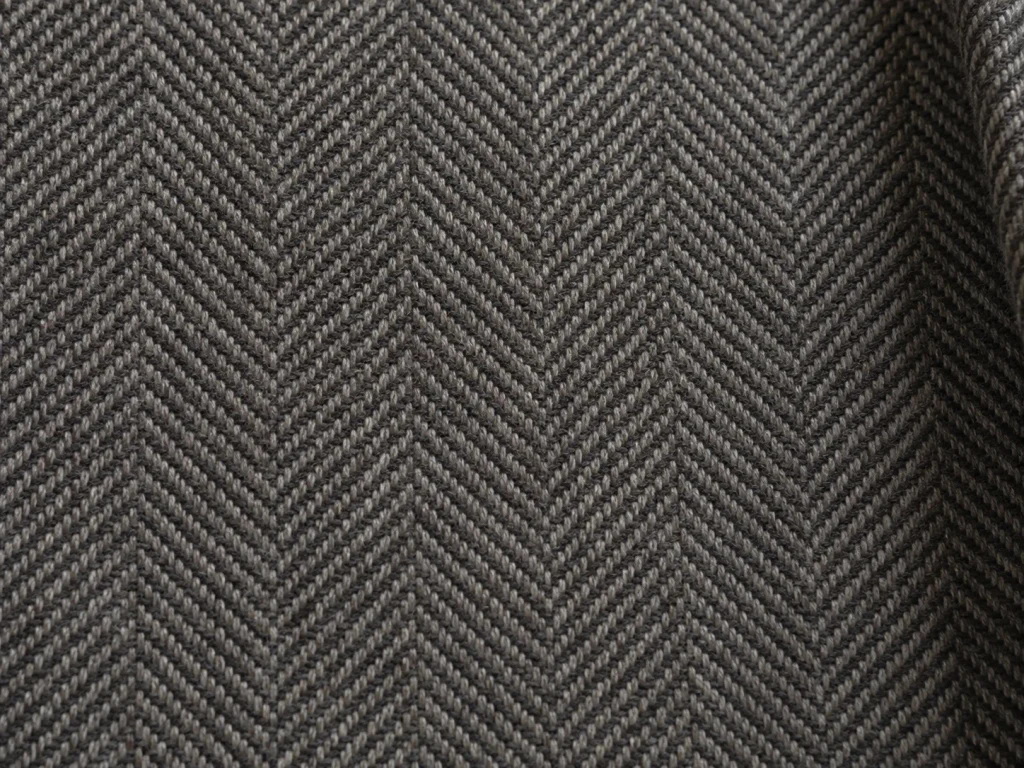
One useful thing to recognise is herringbone, a broken twill in which sections of right- and left-running twill alternate to form the familiar V-shaped pattern. Cotton Incorporated defines the construction in those terms. Once you know what you are looking for, it becomes much easier to identify on jackets and coats instead of calling every textured wool “tweed”.
Fibre content is useful evidence, not a quality score. Wool often gives this style the dry surface, body and warmth I want, but a well-cut blend with the right handle is more useful than pure wool chosen because the label sounds superior.
Historical accuracy is not the test. The clothes need enough agreement in line, colour and surface to make sense without requiring the reader to recognise an aesthetic category.
Build the middle of the outfit around proportion
A sweater vest earns its place because it adds colour, texture and a clear collegiate reference without the bulk of another full layer.
Length matters more than whether the vest looks sufficiently academic. A shorter vest works particularly well with higher-rise trousers because the waistband remains part of the outfit. A long vest over equally long shirting can turn the middle of the body into a tube of knitwear with several collars attempting to escape from it.
Shirts need enough room to sit comfortably beneath the layer above them without pulling at the armholes or bunching heavily around the waist. White and cream are obvious choices, but pale blue, faded olive, muted stripes and small checks are often easier to wear regularly.
Pleated wool trousers are especially useful because the pleats give room through the hip while the waistband keeps the outfit defined. Look for a rise that works with the shirts and knitwear you already own, pleats that fall rather than pull open, enough room to sit and walk, and cloth with enough body to hang cleanly.
Fuller trousers can also balance a large or strongly patterned shirt. I tested that properly in how to wear a dramatic shirt without looking like costume, where the more restrained trouser was not automatically the better partner.
Wide-leg trousers, corduroys, pleated skirts, chinos and dark straight-leg jeans can all do the same broader job through different shapes. Choose according to the weather, the journey and the clothes you actually need to wear that day.
Let the shoes establish the finish
Shoes have a disproportionate effect on this look because they decide whether the outfit feels polished, collegiate, practical or heavy.
Cognac brogues bring warmth to charcoal, dark green and navy. Dark brown or black boots give fuller trousers and long coats more visual weight. Loafers make the whole thing lighter and more collegiate, while sturdier lace-up boots are usually the better choice when the pavement is wet.
Choose for the day as well as the outfit. Leather shoes do not need to look new, but they should look cared for: clean uppers, intact laces and sound heels contribute more than another decorative accessory.
A beautifully arranged outfit loses some of its authority when the shoes appear to have recently survived a minor archaeological excavation.
Second-hand footwear needs a stricter buying test because the sole, lining, heel and established creases have already been shaped by somebody else’s wear. My guide to buying second-hand shoes — and when not to goes into that properly, including the point at which repairability stops being a good reason to buy.
Use outerwear to complete the silhouette
A long dark coat is one of the clearest ways to pull the outfit together because it gives several layers one strong outer line.
Brown, charcoal, deep green, black and muted camel all work. More important is whether the coat has enough room through the shoulders and chest to sit comfortably over the knitwear and shirts underneath without pulling when you move.
It does not need to reach the ankle. Knee-length and three-quarter coats still give the outfit useful vertical length and are often considerably easier to live with.
Milder weather changes the garment rather than the principle. A trench coat can provide the same long line; a tweed or herringbone jacket shortens it while keeping the texture; an ordinary raincoat is entirely sensible when the weather has chosen realism over aesthetics.
Outerwear has to protect the clothes underneath and suit the journey. A coat that looks excellent only while standing still in an impressive doorway has a fairly narrow range of professional skills.
If you are buying the coat second-hand, my guide to buying a second-hand wool coat goes through shoulder fit, linings, wear and the faults worth leaving behind.
Choose accessories that earn their place
Accessories work best when they add something the outfit actually needs.
A vintage leather satchel makes sense because it can carry real belongings while reinforcing the texture and formality of the clothes. Before buying one second-hand, inspect the strap anchors, stitching, corners, base and fastenings rather than being distracted by handsome scuffing and a brass buckle. Atmosphere is of limited comfort when the bottom of the bag deposits your laptop onto the pavement.
Spectacles, a watch, scarf, belt or ring can all add detail without becoming props. Modern objects are not a problem simply because the rest of the outfit looks older; use the bag, watch or umbrella that genuinely suits the day.
A notebook belongs if you use one. It does not need to provide documentary evidence that you have been translating Latin since breakfast.
Hats are optional. So are ties, scarves, rings and every other recognisable dark-academia accessory. Choose the ones that improve the outfit or solve a practical problem and leave the rest alone.
Three dark academia outfits for ordinary life
For an ordinary workday
Start with a cream or pale-blue collared shirt and a brown, forest-green or burgundy sweater vest. Add charcoal or deep-brown pleated trousers and cognac brogues or dark leather boots.
A patterned tie can add another layer of detail if the colours already connect to the knitwear or trousers. Add a leather satchel when you actually need one.
This version gives you the collegiate references without asking any individual garment to become a costume piece.
For a wet or casual day
Wear a substantial cotton shirt or plain knit with dark corduroys, chinos or straight-leg jeans. Add leather boots and a practical jacket or raincoat.
Keep some continuity through colour and texture rather than trying to preserve the full tailored silhouette in weather that has other plans.
For cold weather
Layer a shirt beneath a sweater vest, cardigan or roll neck, then add fuller wool trousers, substantial boots and a long coat.
A scarf in rust, forest green or a muted check can bring colour nearer the face. Thick socks and a sensible sole matter because the extra layers should be doing practical work as well as making the outfit richer.
Autumn and winter suit dark academia particularly well because the materials associated with the look — wool, heavier leather, knitwear and layered outerwear — are useful at exactly the point when you want to wear more of them.
Make the references agree with each other
A tie, sweater vest, long coat, brogues and satchel can all appear in the same outfit without turning it into fancy dress. The number of recognisable pieces matters less than whether they seem to belong to the same person.
Look for agreement in proportion, colour, texture and formality. A substantial coat can sit comfortably with noticeable boots; a patterned tie can work against textured tailoring when the colours connect; an ordinary raincoat or pair of dark jeans can belong because their shape and usefulness fit the rest of the clothes.
Trouble starts when each piece is independently performing a different version of “academic”: school-uniform tie, 1920s cap, professorial satchel, ornate waistcoat, all equally determined to explain themselves. Editing one of those references may help, but adding a plain garment purely to neutralise everything else is not automatically the answer.
The broader principle is the same one I use when building a storybook wardrobe without looking like costume: once the reference has given you the shape, material or mood you wanted, the clothes still need enough internal logic to function without it.
Look second-hand before buying an entirely new wardrobe
Dark academia is particularly well suited to second-hand shopping because many of its strongest garments are ordinary categories that have existed for decades.
Search for the garment rather than relying only on the name of the aesthetic: pleated wool trousers, sweater vest, herringbone blazer, tweed jacket, cable-knit vest, brown leather satchel, brogues, long wool coat, corduroy trousers or patterned tie. That can work very well when those words preserve the qualities you actually want, but it is not a universal rule; I tested the difference in How to Find Fantasy-Inspired Clothes Second-Hand.
Then judge the individual garment on its own condition and fit. A £12 jacket is not a bargain if the shoulders are wrong, and a beautiful knit is less interesting when the ribbing has collapsed or the surface condition already bothers you.
Small, contained faults can be worth dealing with; structural problems deserve more suspicion. Trouser hems, loose buttons and a simple seam opening are very different propositions from major shoulder work, failing fused construction or cloth that is already worn through.
Knitwear deserves its own inspection too; my guide to what pilling actually tells you about a jumper looks at surface wear, fibre loss and when grooming is only disguising a recurring problem.
Once the garment is worth keeping, basic maintenance matters more than the label. Brushed cloth, sound buttons, clean shoes and restored shape do far more to make second-hand clothes look expensive than chasing a prestigious name.
Dark academia without the gatekeeping
Dark academia borrows much of its atmosphere from an idealised version of elite academic life. Murray notes the novel’s idealisation of a retrograde version of Anglo-American university culture.
You can take the tailoring, books, dark wool, old leather and collegiate references without pretending that access to those institutions is part of the outfit.
A second-hand blazer does not become more convincing because it was photographed beneath a Gothic quadrangle. Pleated trousers do not require a prestigious degree. The clothes can borrow an academic visual language without requiring the wearer to perform social credentials alongside them.
That is one reason I prefer the practical version of dark academia. Once the setting stops doing the work, the clothes have to stand on their own: fit, proportion, texture, colour and whether you actually want to wear them.
Build around what you genuinely enjoy
The useful parts of dark academia are probably the ones you would keep even if the name disappeared tomorrow.
That might be pleated trousers because you like the shape, herringbone because you enjoy the texture, dark knitwear because it works with the rest of your wardrobe, or old leather shoes because you prefer them after they have softened with wear.
Once those preferences become your own, the aesthetic matters less. You no longer need every outfit to prove that it belongs to dark academia; the clothes have simply become part of how you dress.
The strongest dark academia outfits carry enough of the library in their shape, cloth and colour that they still make sense when the scenery disappears.